
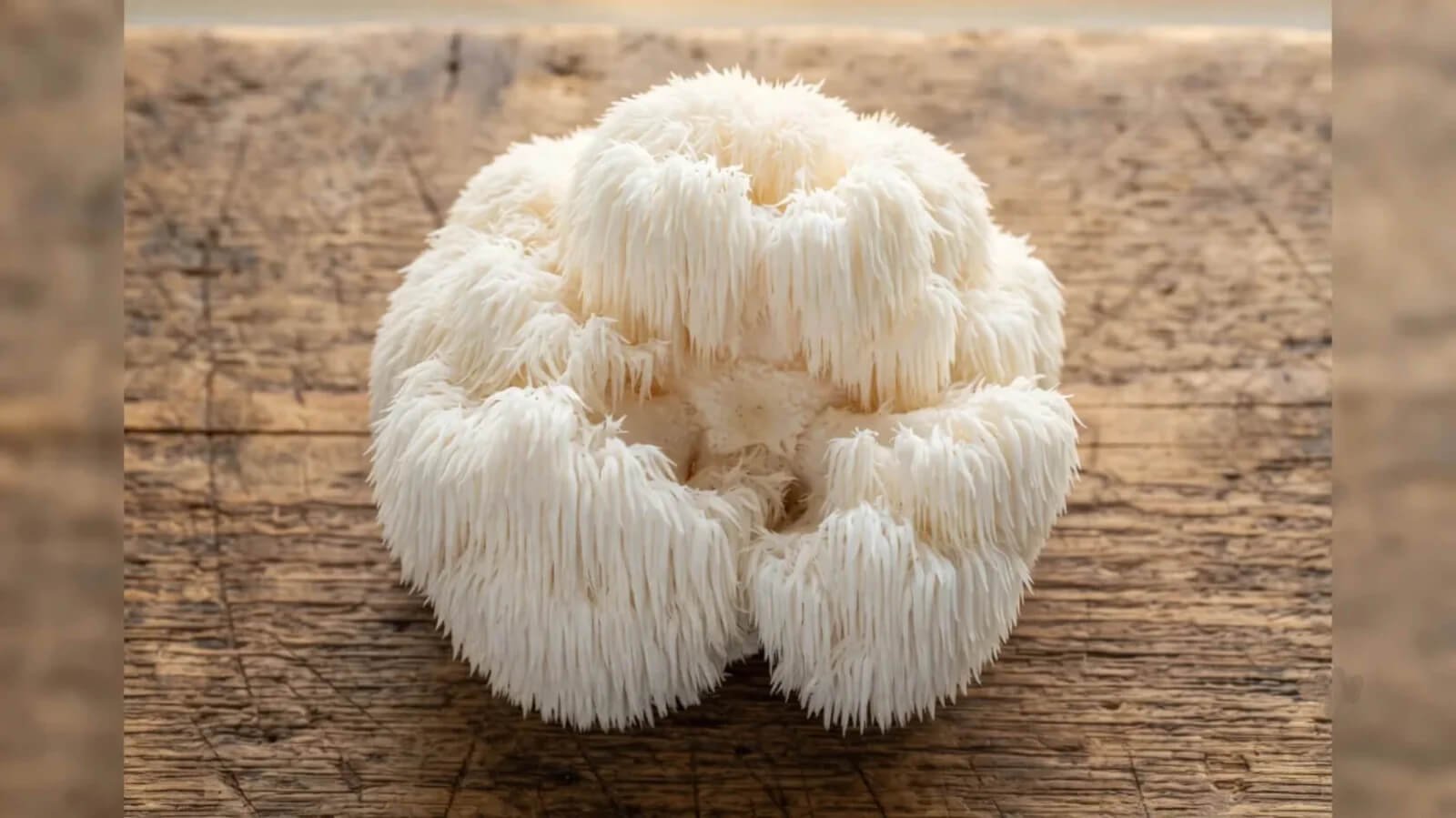
Lion’s Mane mushroom benefits your brain in one standout way: it helps your body make more Nerve Growth Factor (NGF), the protein that keeps brain cells alive and talking to each other.
Here’s my honest story. The first time I tried Lion’s Mane, I felt nothing — and almost quit after a week. Then around day 20, I realized I hadn’t reached for my usual 3 p.m. coffee in days. That slow, quiet change is exactly what the research keeps finding.
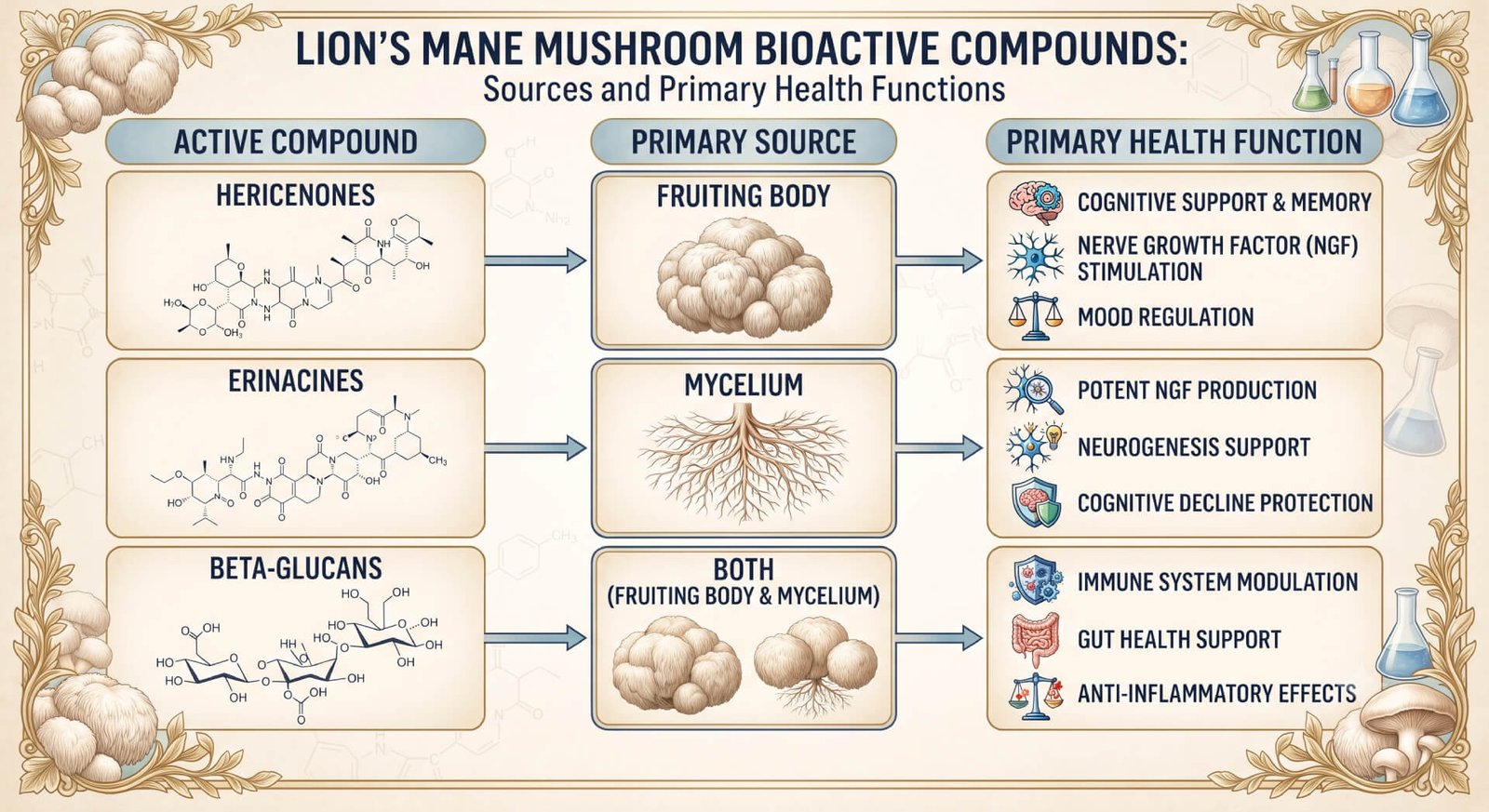
Hericium erinaceus — the shaggy white mushroom that looks like a lion’s mane — makes two compounds you won’t find together in any other edible fungus: hericenones and erinacines. Both push your brain to make more NGF, which helps neurons survive, form new connections, and hold off age-related memory slips. A September 2025 review in Frontiers in Nutrition pulled together clinical and lab studies and reported real signals for brain, mood, and nerve health.
Big human trials are still running, so treat Lion’s Mane as strong support, not a cure. This guide covers all 7 benefits, how it makes you feel, the right dose, side effects, and how to pick a product that actually works.
Quick Facts
- Scientific name: Hericium erinaceus (aka yamabushitake, monkey head, bearded tooth)
- Grows on: hardwood trees — oak, beech, walnut, maple
- Star compounds: hericenones + erinacines (found together nowhere else)
- Best-studied benefit: memory and nerve support
- Common research dose: 3–5 g powder or 1 g extract per day
- FDA status: legal supplement in the U.S.; not approved to treat any disease

Table of Contents
ToggleWhat Is Lion's Mane Mushroom?
ion’s Mane is an edible mushroom that grows as a cluster of soft, white spines hanging from one base — picture a frozen white waterfall on a tree trunk. Unlike the hard, black look of chaga or the flat, layered shape of turkey tail, Lion’s Mane is soft, pale, and safe to eat straight off the log.
Cooks across China, Japan, India, and Korea have used it as a seafood-style meat swap for hundreds of years. Old-school herbalists reached for it to calm upset stomachs, prop up weak immunity, and clear mental fog. Western labs only got serious about it in the 1990s, and the studies really picked up speed after 2020.
Lion's Mane at a Glance
|
Attribute
|
Detail
|
|---|---|
|
Scientific name
|
Hericium erinaceus
|
|
Other names
|
Yamabushitake, monkey head, bearded tooth fungus
|
|
Grows on
|
Oak, beech, walnut, maple
|
|
Native regions
|
North America, Europe, East Asia
|
|
Key compounds
|
Hericenones, erinacines, beta-glucans, polyphenols, terpenoids
|
|
Traditional use
|
Digestion, mental clarity, immune strength
|
|
Human trials (2026)
|
Several small-to-medium; larger ones ongoing
|
Top 7 Lion's Mane Mushroom Benefits (Backed by Research)
1. Helps Grow and Repair Brain Cells
Lion’s Mane helps your brain build new cells by raising NGF, the protein neurons need to grow and repair. In animal studies, the extract cut memory loss and slowed damage from amyloid-beta plaques — the sticky deposits tied to Alzheimer’s. Researchers also confirmed that erinacine A and S cross the blood-brain barrier in rats, so these compounds reach brain tissue directly.
2. Sharpens Memory and Focus in Older Adults
Lion’s Mane can improve memory in older adults, and one human trial shows it clearly. Adults aged 50+ with mild Alzheimer’s symptoms took 1 g of extract per day for 49 weeks and scored better on cognition tests than the placebo group. Results in young, healthy people are more of a mixed bag — some studies show a small lift, others show nothing. So the memory perk looks strongest where the brain needs the most help.
3. Eases Mild Anxiety and Low Mood
Lion’s Mane may lift mild anxiety and low mood at the same time. In one study, people who took three 400 mg capsules per day for 8 weeks reported lower depression and anxiety scores — and slept better — than the placebo group. Researchers think two things drive this: less brain inflammation and more new cells in the hippocampus, the mood-and-memory hub.
4. Guards Against Nerve Damage and Decline
Lion’s Mane protects nerves by pushing your body’s own NGF production, which helps nerve cells survive and repair. Once nerve cells die, the body can’t bring them back — so protection matters more than repair. Several animal studies show the extract slows amyloid-beta buildup and blunts the oxidative stress that speeds up nerve damage. That’s why people with a family history of dementia watch this research closely, even though prevention trials in humans are still thin.
5. Calms Chronic Inflammation
Lion’s Mane lowers inflammation through several routes at once, not just one. A 2025 narrative review in Nutrients looked at dozens of studies and found that its polysaccharides, terpenoids, and phenolic compounds each cut inflammatory markers on their own. Hitting the problem from a few angles is what makes it stand out from single-target supplements.
6. Strengthens Your Immune Defense
Lion’s Mane backs up your immune system, mostly thanks to its beta-glucans. These compounds switch on macrophages, natural killer cells, and dendritic cells — the crew that spots and clears germs and rogue cells. Animal studies keep showing better pathogen clearance when Lion’s Mane is added to the diet. Scientists have studied mushroom beta-glucans this way for decades, and Lion’s Mane is a strong source.
7. Supports Gut and Digestive Health
Lion’s Mane helps your gut in three ways: it feeds good bacteria, calms gut inflammation, and strengthens the gut lining. A healthy lining works like a bouncer — nutrients get in, junk stays out. When it weakens, toxins and food bits leak into the blood and set off body-wide inflammation. Lion’s Mane polysaccharides appear to tighten the “junction” proteins that hold the gut wall together, at least in animal models. It’s one of the most underrated perks on this list.
Most Lion’s Mane research so far comes from animal studies and small human trials. The results look promising, but they’re not final. Treat Lion’s Mane as support for a healthy routine — not a swap for medical care.
Does Lion's Mane Make You Feel Anything?
Lion’s Mane won’t get you high, buzzed, or spaced out — it has zero psychoactive effect and isn’t related to “magic” mushrooms at all. What most people feel is a slow, quiet change over 2–4 weeks: clearer thinking, a steadier mood, and less afternoon brain fog. If you’re waiting for a rush, you’ll miss it.
Is Lion's Mane Like Adderall?
No, and this one matters. Adderall is a prescription stimulant that floods your brain with dopamine and norepinephrine fast. Lion’s Mane works slowly by helping your brain grow and repair cells through NGF. No jitters, no crash, no rush — and it’s not a replacement for ADHD medication. If you have ADHD, talk to your doctor before adding it, and never drop a prescribed med on your own.
Why Do Some People Feel "Weird" After Taking It?
A few reasons. Too big a dose can bring on a light headache or a queasy stomach. A mild mushroom sensitivity can make you feel off. And sometimes it’s just the placebo effect. But if “weird” means dizzy, itchy, or short of breath, stop right away and see a doctor — that points to an allergy.
What's Inside Lion's Mane: Active Compounds
- Hericenones — sit in the fruiting body; spark NGF in brain tissue; unique to Hericium erinaceus
- Erinacines — sit in the mycelium; also raise NGF; A and S cross the blood-brain barrier in animals
- Beta-glucans — polysaccharides that switch on immune cells; found throughout the mushroom
- Polyphenols — gallic, caffeic, and p-coumaric acids; add antioxidant protection
- Terpenoids — help calm inflammation and fight microbes
- Peptides — small proteins with germ-fighting, cell-protecting jobs
How to Take Lion's Mane Mushroom
The simplest way to take Lion’s Mane is a capsule or a scoop of powder in your morning coffee — most people use 1 g of extract or 3–5 g of powder per day.
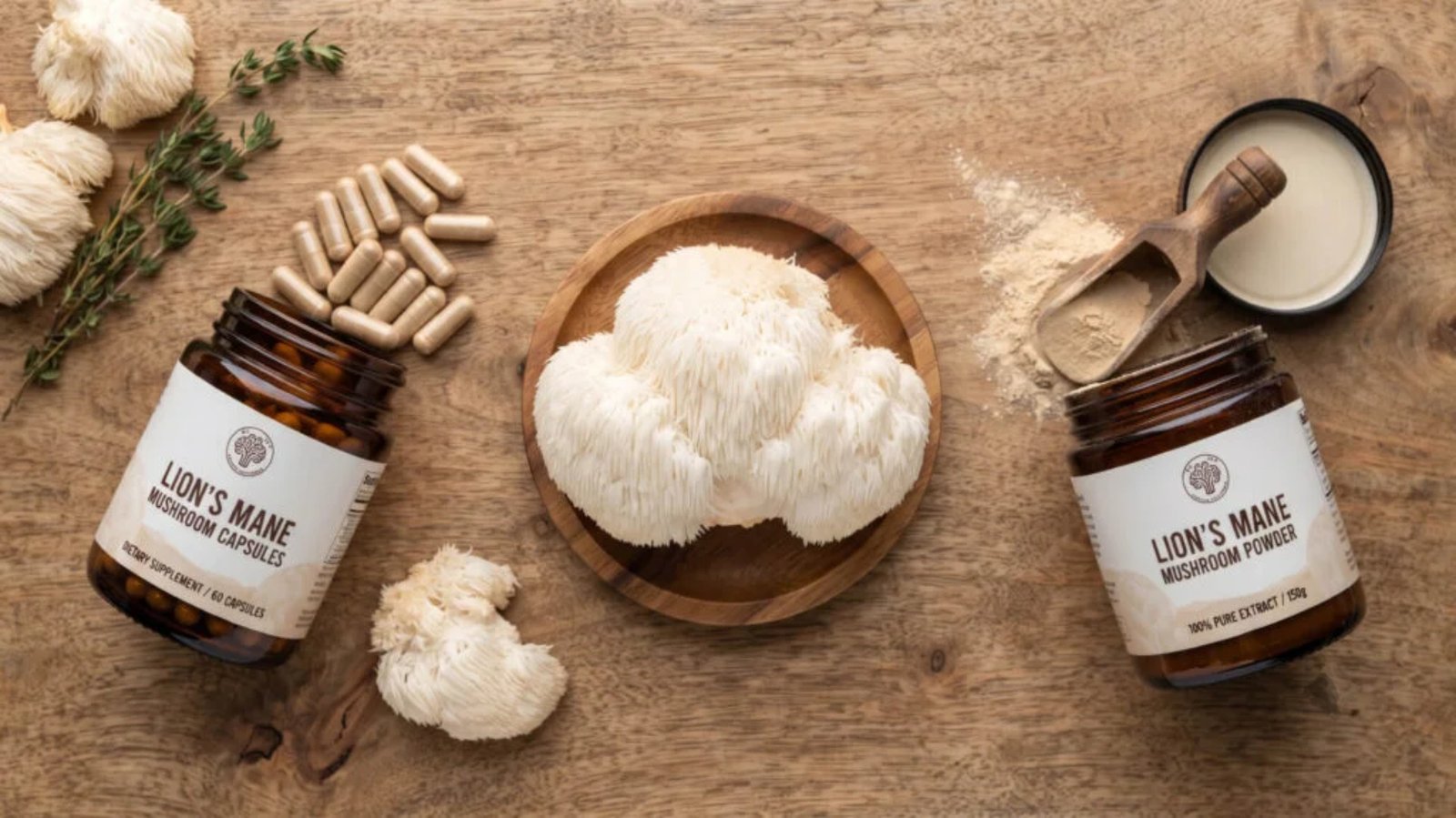
Lion’s Mane comes in five main forms:
- Capsules or tablets — easiest; look for standardized extracts with listed hericenone content
- Powder — mixes into coffee, smoothies, soups, or oatmeal
- Tea — dried pieces or powder steeped 10–15 minutes in hot water
- Tincture — liquid drops under the tongue; absorbs fast
- Fresh or cooked — great sautéed in butter; tastes seafood-like
|
Form
|
Typical Daily Dose
|
Best For
|
|---|---|---|
|
Capsules
|
500–1000 mg, 1–3× per day
|
Convenience
|
|
Powder
|
1–2 tsp (3–5 g)
|
Flexible use, cooking
|
|
Tea
|
1–2 tsp dried per cup
|
Easing in gently
|
|
Tincture
|
1–2 mL, 1–2× per day
|
Fast absorption
|
|
Fresh mushroom
|
50–100 g cooked
|
Food-first fans
|
What the studies actually used:
- Memory/cognition: 3–5 g powder per day
- Alzheimer’s trial: 1 g extract per day for 49 weeks
- Mood/stress trial: 1.8 g per day for 28 days
- Anxiety/depression trial: 1.2 g per day (three 400 mg caps) for 8 weeks
Morning or Night — When's Best?
There’s no hard rule; pick your goal. Take it in the morning for focus and clarity through the day. Take it in the evening for the calmer, mood-and-sleep side. Splitting the dose (half morning, half night) works fine too.
No official daily amount exists yet, since the big trials are still running. Follow the label and check with your doctor for a dose that fits you.
Hericium erinaceus — the shaggy white mushroom that looks like a lion’s mane — makes two compounds you won’t find together in any other edible fungus: hericenones and erinacines. Both push your brain to make more NGF, which helps neurons survive, form new connections, and hold off age-related memory slips. A September 2025 review in Frontiers in Nutrition pulled together clinical and lab studies and reported real signals for brain, mood, and nerve health.
Lion's Mane Side Effects and Safety
Lion’s Mane is safe for most healthy adults — three formal toxicology reviews found no harm even at high doses. Still, side effects and drug interactions can happen.
Common (and Usually Mild) Side Effects
- Stomach upset — gas, loose stools, or nausea in the first few days
- Skin itch or rash — in people sensitive to mushrooms
- These usually fade fast once you lower the dose
Is Lion's Mane Hard on the Liver?
For most people, no. Lion’s Mane isn’t known to harm the liver, and a few animal studies even hint it may protect liver cells. Rare case reports link some mushroom supplements to liver irritation, usually from low-quality or contaminated products — so buy from brands that show third-party lab testing.
Medications to Watch (What Not to Mix It With)
- Blood thinners (warfarin, aspirin, clopidogrel) — may raise bleeding risk
- Diabetes meds and insulin — may lower blood sugar further; keep an eye on it
- Immunosuppressants — beta-glucans stir the immune system, which can clash with transplant or autoimmune drugs
- Antidepressants — talk to your doctor before mixing with any psychiatric medication
Who Should Skip It (or Ask First)
- People with a mushroom allergy
- Pregnant or breastfeeding people (no safety data yet)
- Anyone in chemo or cancer treatment (ask your oncologist)
- People heading into surgery (stop 2 weeks before)
- Children (check with a pediatrician)
Lion's Mane vs. Other Functional Mushrooms
|
Mushroom
|
Main Benefit
|
Unique Compounds
|
Human Evidence
|
|---|---|---|---|
|
Lion's Mane
|
Brain, nerve repair
|
Hericenones, erinacines
|
Several small–medium trials
|
|
Antioxidant, immune
|
Polyphenols, betulinic acid
|
Very limited
|
|
|
Stress, immune balance
|
Triterpenes, beta-glucans
|
Limited
|
|
|
Cordyceps
|
Energy, endurance
|
Cordycepin, adenosine
|
A few small trials
|
|
Turkey Tail
|
Gut, cancer support
|
PSK, PSP
|
Moderate (adjunct)
|
Lion's Mane Mushroom: Your Questions Answered
Q1: What does Lion's Mane do for your body?
A1. Lion’s Mane works on five fronts. It helps your brain make more NGF (for memory and focus), lifts mild low mood, calms inflammation, backs up your immune cells, and supports your gut lining. The brain benefit is the best-studied one.
Q2: What happens if you take Lion's Mane every day?
A2. For most healthy adults, taking it each day is safe — and it’s actually how it works best, since the benefits build with steady use. Some people get mild gas or loose stools in the first week, which usually settles. Long-term data past one year is thin, so a short break now and then is smart on high doses.
Q3: What does Lion's Mane make you feel like?
A3. Not much on day one. Lion’s Mane isn’t a pill you feel kick in. Most people notice a slow, quiet shift over 2–4 weeks — clearer thinking, less afternoon fog, a steadier mood.
Q4: Is Lion's Mane like Adderall?
A4. No. Adderall is a fast-acting stimulant; Lion’s Mane works slowly through NGF with no jitters or crash. It’s not a substitute for ADHD medication.
Q5: Should I take Lion's Mane if I have ADHD?
A5. Ask your doctor first. No trial has tested it for ADHD. Some people report better focus, and the mechanism makes that believable — but it’s not proven. Never stop a prescribed med to try it.
Q6: What is the downside of Lion's Mane?
A6. The downsides are mostly small — early stomach upset, possible allergy in mushroom-sensitive people, and a few drug interactions. The biggest honest limit is that much of the research is still animal-based.
Q7: Is Lion's Mane hard on the liver?
A7. For most people, no — some animal studies even suggest it protects liver cells. Rare liver issues tie back to low-quality supplements, so choose lab-tested brands.
Q8: What should you not mix Lion's Mane with?
A8. Be careful with blood thinners, diabetes meds or insulin, immunosuppressants, and psychiatric medications. Check with your doctor before combining any of these.
Q9: When shouldn't you take Lion's Mane?
A9. Skip it (or ask a doctor first) if you’re pregnant or breastfeeding, allergic to mushrooms, having surgery within two weeks, or going through cancer treatment.
Q10: Is it better to take Lion's Mane at night or in the morning?
A10. No hard rule — morning for focus, evening for the calming and sleep side. Splitting the dose works too.
Q11: How fast does Lion's Mane work?
A11. Focus and mood shifts often show up in 2–4 weeks; memory and nerve benefits can take a few months. Skip the week-one judgment — the slow build is normal.
Q12: Can I take Lion's Mane with coffee?
A12. Yes. Stirring the powder into morning coffee is one of the most popular ways to take it, with no known clash. shop now
Q13: Does Lion's Mane give you a buzz or a high?
A13. No. It has zero psychoactive effect and won’t get you high or buzzed. What people call a “buzz” is usually just sharper focus once it kicks in after a few weeks.
Key Takeaways
- Lion’s Mane benefits come from hericenones and erinacines — a combo no other edible mushroom has.
- Human trials back its use for memory in older adults with mild decline, plus mood and stress.
- Extra perks — anti-inflammatory, immune, and gut support — rest on lab and animal work for now.
- It won’t get you high and isn’t like Adderall; the effect is slow and subtle.
- Side effects are mild and short, mostly early stomach upset.
- If you take blood thinners, have a mushroom allergy, or face cancer treatment, ask your doctor first.