
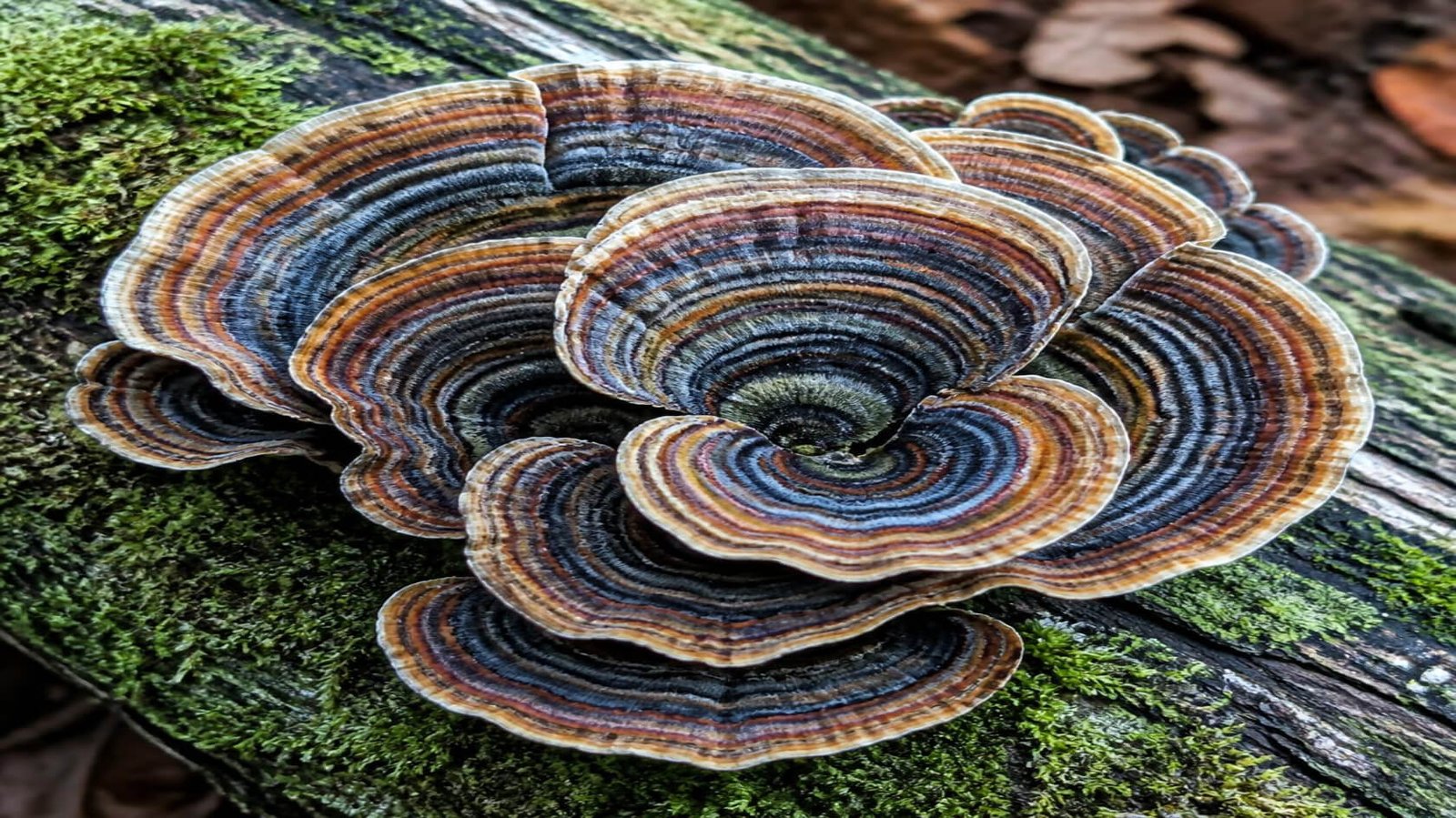
Turkey tail mushroom benefits your body mainly by waking up your immune system — its polysaccharides switch on the same defense cells that fight infections and patrol for damaged cells.
I first came across turkey tail on a damp autumn hike, growing in colorful fans across an old fallen oak. I had no idea the same mushroom sitting on that log had decades of cancer research behind it. That surprise sent me down a rabbit hole, and I’ve been brewing turkey tail into my morning tea for a little over a year now. I won’t pretend it’s a magic bulb that flips overnight — but through two cold seasons I’ve bounced back faster than I used to, and that’s enough to keep it in my routine.
You’ll spot turkey tail on almost any dead log — thin, fan-shaped, with rings of brown, rust, blue-grey, and cream that really do look like a wild turkey’s tail feathers. Scientists call it Trametes versicolor (older name Coriolus versicolor), and in China it’s known as Yun Zhi. It’s been part of traditional East Asian medicine for centuries, but what makes it stand out today is this: unlike most functional mushrooms, turkey tail has real human clinical trials behind it, and one of its compounds is an approved cancer-support drug in Japan.
Quick Facts
- Scientific name: Trametes versicolor (syn. Coriolus versicolor); “Yun Zhi” in China
Looks like: thin, fan-shaped brackets with colorful concentric rings - Grows on: dead hardwood logs and stumps worldwide — one of the most common forest fungi
Star compounds: PSK (Krestin), PSP, and beta-glucans - Best-studied use: immune support, including alongside cancer treatment
Common research dose: 3–9 g/day of extract
Table of Contents
ToggleWhat Is Turkey Tail Mushroom?
Turkey tail is a thin, tough bracket fungus that grows in overlapping clusters on dead wood. Its top shows bands of color; the underside is white to cream with tiny pores (no gills). Because it’s woody and leathery, you don’t eat it like a button mushroom — people brew it into tea or take it as an extract instead.
Where Does Turkey's Tail Grow?
Turkey tail is one of the most widespread mushrooms on earth. It grows on fallen logs and dead stumps in forests across North America, Europe, and Asia, showing up year-round on more than 70 kinds of hardwood. It’s a decomposer — it breaks down dead wood — so you’ll almost never find it on healthy living trees. Because harmless look-alikes exist (like false turkey tail), correct identification matters if you ever forage; the white pore surface underneath is the key giveaway.
Turkey Tail at a Glance
|
Attribute
|
Detail
|
|---|---|
|
Scientific name
|
Trametes versicolor (syn. Coriolus versicolor)
|
|
Common names
|
Turkey tail, Yun Zhi, cloud mushroom
|
|
Grows on
|
Dead hardwood logs and stumps
|
|
Key compounds
|
PSK, PSP, beta-glucans, phenolics, triterpenoids
|
|
Traditional use
|
Immune support, lung and gut health
|
|
Human evidence
|
Strong for immune/cancer-adjunct; growing for gut
|
Top 6 Turkey Tail Mushroom Benefits
1. Strengthens the Immune System
Turkey tail’s biggest strength is immune support, and this is where the science is strongest. Its beta-glucans and protein-bound polysaccharides act like an alarm bell for your innate immune system — they bind to receptors on macrophages, natural killer (NK) cells, and T-cells and switch them into a more active state. Researchers classify it as a “nonspecific immune modulator,” meaning it nudges overall immune activity up rather than targeting one single germ.
2. Delivers PSK and PSP — Compounds Studied in Cancer Care
Turkey tail is the source of PSK (polysaccharide-K, sold as Krestin) and PSP (polysaccharopeptide) — two of the most researched mushroom compounds in the world. In Japan, PSK has been an approved adjuvant cancer therapy since the 1970s, used alongside surgery and chemotherapy for gastric, colorectal, and lung cancers. A pooled analysis of gastric cancer trials found better overall survival when PSK was added to chemotherapy.
Important: Turkey tail is not a cancer cure and shouldn’t replace any medical treatment. In studies it’s used alongside standard care to support the immune system. If you’re in cancer treatment, only use it with your oncologist’s approval
3. Supports Immune Recovery During Cancer Treatment
Beyond the lab, turkey tail has been tested on people. A well-known Phase 1 clinical trial gave breast cancer patients up to 9 g of turkey tail per day after radiation. It was safe and well tolerated, and the 6 g dose was linked to improved NK cell activity and a faster rebound of immune cells that radiation had knocked down. That’s a meaningful finding, because treatments like radiation often leave the immune system depleted.
4. Feeds a Healthier Gut Microbiome
Turkey tail works like a prebiotic — food for your good gut bacteria. In a randomized trial in healthy volunteers, its PSP fraction shifted the gut microbiome in a favorable direction, encouraging beneficial Bifidobacterium and Lactobacillus while nudging down less desirable
species. A balanced microbiome is tied to better digestion, steadier immunity, and even mood, which makes this one of turkey tail’s most promising everyday perks.
5. Provides Antioxidant Protection
Turkey tail is loaded with antioxidants. Analyses have identified dozens of phenolic compounds — including flavonoids like quercetin and baicalein — that help neutralize the free radicals behind oxidative stress and everyday cellular wear. This antioxidant load is part of why the mushroom is linked to anti-aging and general wellness in traditional use.
6. May Support Antimicrobial and Anti-Inflammatory Defense
Turkey tail also shows antimicrobial and anti-inflammatory activity in lab studies. Extracts have slowed the growth of certain bacteria and calmed markers of inflammation in test-tube research. It’s early, mostly in vitro evidence, but it fits the traditional use of turkey tail for lung and respiratory support.
Note: Turkey tail’s immune and cancer-adjunct evidence is genuinely strong, but its gut, antioxidant, and antimicrobial benefits still lean on early or lab-based research. Treat it as support for a healthy routine, not a treatment.
What's Inside Turkey Tail: Key Compounds
- PSK (Polysaccharide-K / Krestin) — a protein-bound beta-glucan; the compound approved in Japan for cancer support
- PSP (Polysaccharopeptide) — a close cousin of PSK, studied mostly in China; strong prebiotic and immune activity
- Beta-glucans — turkey tail extract can be around 40% beta-D-glucan, the main immune-activating fiber
- Phenolics & flavonoids — quercetin, baicalein and 35+ others provide antioxidant power
- Triterpenoids — add anti-inflammatory and antimicrobial support
Like other functional mushrooms, turkey tail’s power comes mostly from its beta-glucans.
Common Ways to Take Turkey Tail
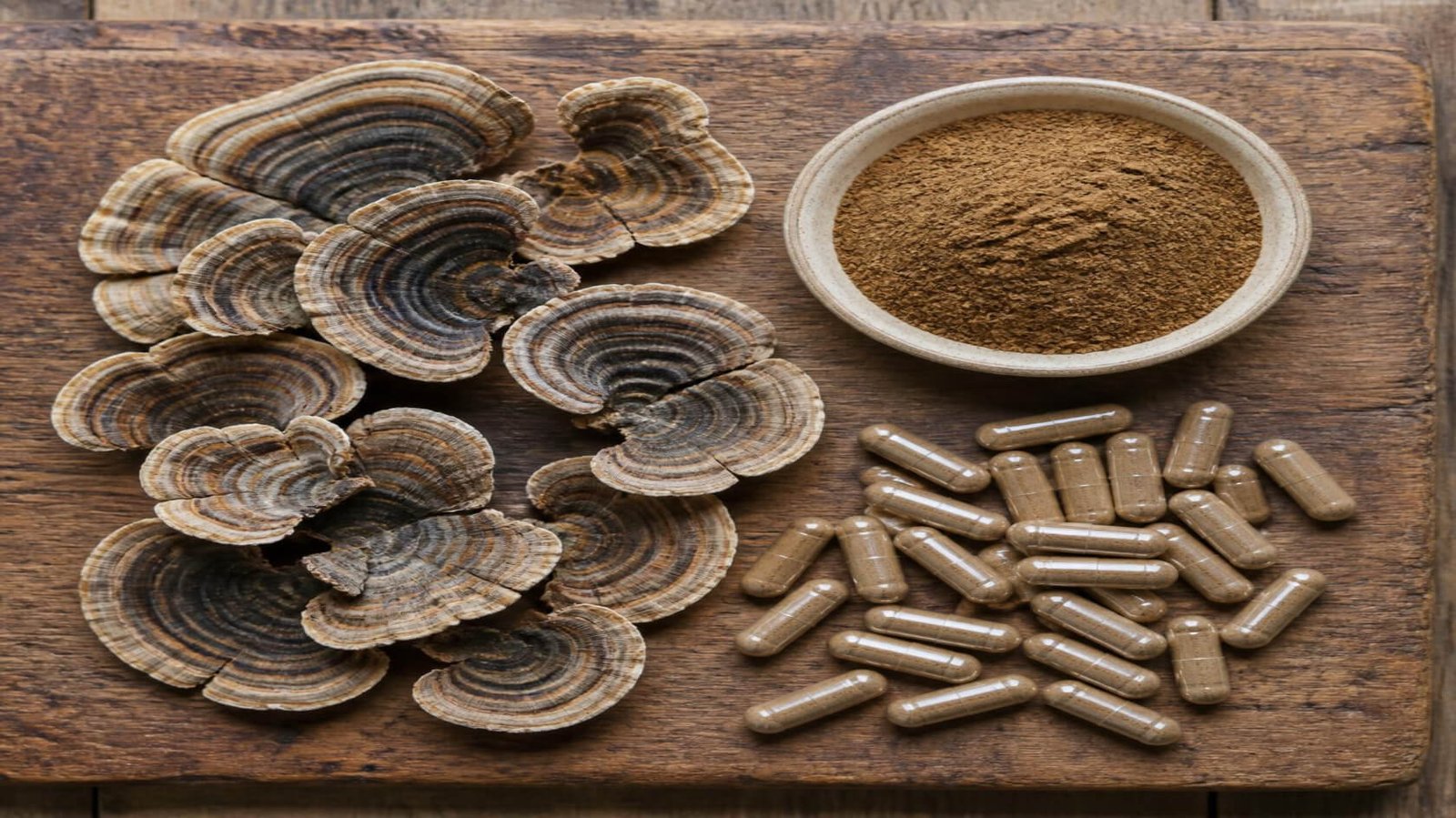
Because turkey tail is too tough and woody to chew, you use it as a tea, an extract, or a powder — not as a cooked vegetable. Most research used 3–9 g of extract per day.
Here are the main forms:
- Extract powder — mix into coffee, smoothies, or warm drinks; easiest way to hit a real dose
- Capsules — convenient and pre-measured; look for a stated PSK/PSP or beta-glucan content
- Tea / decoction — simmer dried turkey tail 30–60 minutes to pull out the polysaccharides
- Tincture — a liquid, often dual-extracted, that’s fast to take
|
Form
|
Typical Daily Dose
|
Best For
|
|---|---|---|
|
Extract powder
|
½–1 tsp (1–3 g)
|
Flexible daily use
|
|
Capsules
|
1–3 g
|
Convenience
|
|
Tea/decoction
|
2–3 g simmered
|
Traditional, soothing
|
|
Tincture
|
per label
|
Fast, on-the-go
|
Want the exact simmer time, water ratio, and troubleshooting tips for making turkey tail tea or broth at home?
See our complete step-by-step guide: How to Cook Turkey Tail Mushrooms
If you like a mushroom brew, you can pair it with chaga tea for an earthy, everyday cup.
Morning or Night?
There’s no strict rule. Turkey tail isn’t a stimulant and won’t keep you awake, so morning or evening both work. Pick a time you’ll remember daily, since the benefits build with steady use
Responsible Use: Understanding Turkey Tail Safety
When exploring functional mushrooms, it’s natural to wonder about safety and potential effects. Clinical evaluations—including a Phase 1 trial showing turkey tail was well tolerated even at 9 grams per day—demonstrate a strong safety record. However, like any wellness supplement, responsible use and proper awareness matter.
Here is what you need to know about incorporating turkey tail into your daily routine:
Mild and Temporary Adjustments
Some individuals may notice minor digestive changes (such as mild gas, bloating, or loose stools) or darkened stools when first starting. These effects are generally harmless, stem from the mushroom’s natural fiber, and typically fade as your gut adjusts or if you slightly lower the serving size.
Who Should Consult a Doctor First
Because turkey tail actively interacts with biological systems, a few specific groups should check with a healthcare professional before adding it to their routine:
- Individuals on immunosuppressant drugs: Since turkey tail naturally stimulates immune activity, it may interact with these medications.
- Anyone currently in cancer treatment: Always coordinate with your oncologist before combining supplements with conventional medical care.
- Pregnant or breastfeeding individuals: Due to limited safety data specific to these stages, it is best to consult a doctor first.
- People with known mushroom allergies: Anyone with a hypersensitivity to fungi should avoid use.
Turkey Tail Mushroom: Your Questions Answered
Q1: What is turkey tail mushroom good for?
A1.Turkey tail is best known for immune support. Its PSK and PSP polysaccharides activate immune cells, feed healthy gut bacteria, and provide antioxidants. In Japan, its PSK extract is even used alongside chemotherapy.
Q2: What cancers has turkey tail been studied for?
A2. PSK from turkey tail has been studied most in gastric, colorectal, and lung cancers, and PSP in lung cancer — always as an adjuvant (support) alongside standard treatment, not a replacement. A Phase 1 trial also tested it in breast cancer patients after radiation. It is not a proven cure for any cancer.
Q3: How much turkey tail should I take?
A3.How do you use turkey tail mushrooms?” with a more specific dosage question, since “how do you use” overlapped with the new post’s territory) A3. Most research used 3–9 g of extract per day, typically split into one or two servings. Homemade tea and standardized capsules are the two most common ways people reach this range.
Q4: Is turkey tail good for your liver?
A4. Early research suggests turkey tail’s antioxidants may support liver cells, and it isn’t known to harm the liver in healthy people. As with any supplement, choose lab-tested products and ask your doctor if you have liver disease.
Q5: Is turkey tail mushroom vegan?
A5. Yes. Turkey tail is a fungus, not an animal product, so it’s suitable for vegans and vegetarians — just check that capsule shells are plant-based
Q6: How long does turkey tail take to work?
Q7: Does turkey tail have caffeine or make you feel anything?
A7. No caffeine and no “high” — it isn’t psychoactive. Most people don’t feel an immediate effect; the benefits are internal and gradual.
Q8: Can you take turkey tail every day?
A8. For most healthy adults, yes — daily use is how it was studied. If you’re on medication or have an immune condition, check with your doctor first.
Key Takeaways
Turkey tail’s main benefit is immune support, backed by real human trials
- Its compounds PSK and PSP are studied in cancer care — PSK is an approved adjuvant therapy in Japan.
- It acts as a prebiotic, feeding beneficial gut bacteria.
- It’s taken as an extract, capsule, tincture, or simmered tea — not as a cooked vegetable. See our full cooking guide here.
- It’s very safe for most people, with only mild digestive effects.
- If you’re on immune drugs or in cancer treatment, talk to your doctor first.