
We may earn a commission from links in this post, at no extra cost to you. Learn more
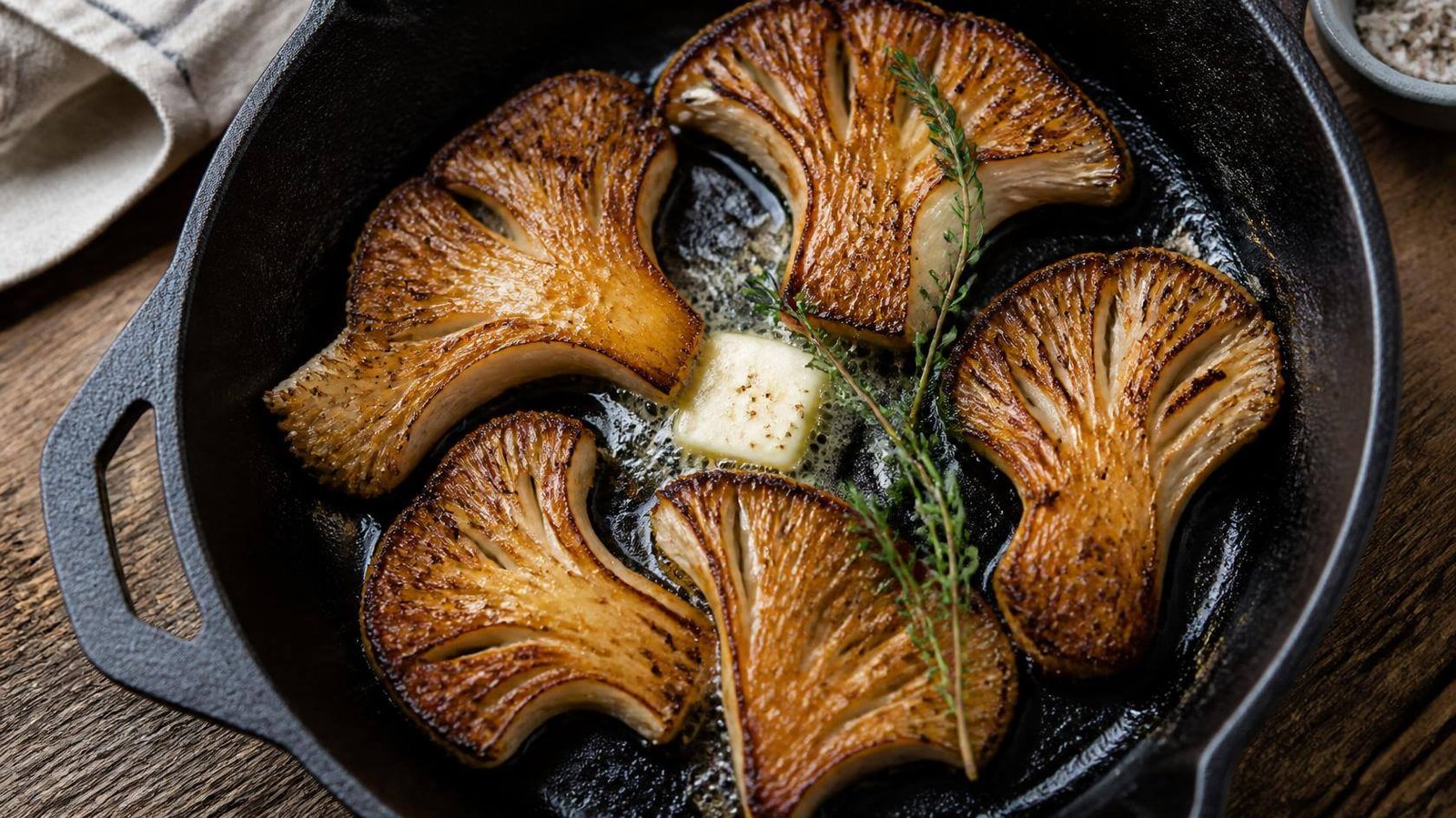
To cook lion’s mane mushroom, tear or slice it into ½-inch pieces, sear it in a dry pan first for 4–5 minutes until the water cooks off, then add butter or oil and brown both sides for another 3–4 minutes. Season at the end. That dry-pan step is what separates a golden, crab-like bite from a pale, squeaky mess.
It isn’t. You just cooked it like a button mushroom.
Third time I gave it space and cooked it in two batches. Golden, crisp at the edges, pulled apart like crab meat. Same mushroom, same pan, same butter. The only thing that changed was crowding.
Table of Contents
ToggleWhat Does Lion's Mane Mushroom Taste Like?
Cooked lion’s mane mushroom tastes close to crab or lobster — mildly sweet, savory, with a stringy pull that breaks apart in shreds instead of slices. Raw, it tastes like almost nothing, with a damp cotton texture nobody enjoys.
The seafood comparison is not marketing talk. The shredded fibers hold butter the same way crab meat does, which is why “lion’s mane crab cakes” became the most repeated recipe on the internet.
One warning: an older or overripe head can taste slightly bitter. Fix that in the prep section below.
Is It Better to Eat Lion's Mane Mushroom Raw or Cooked?
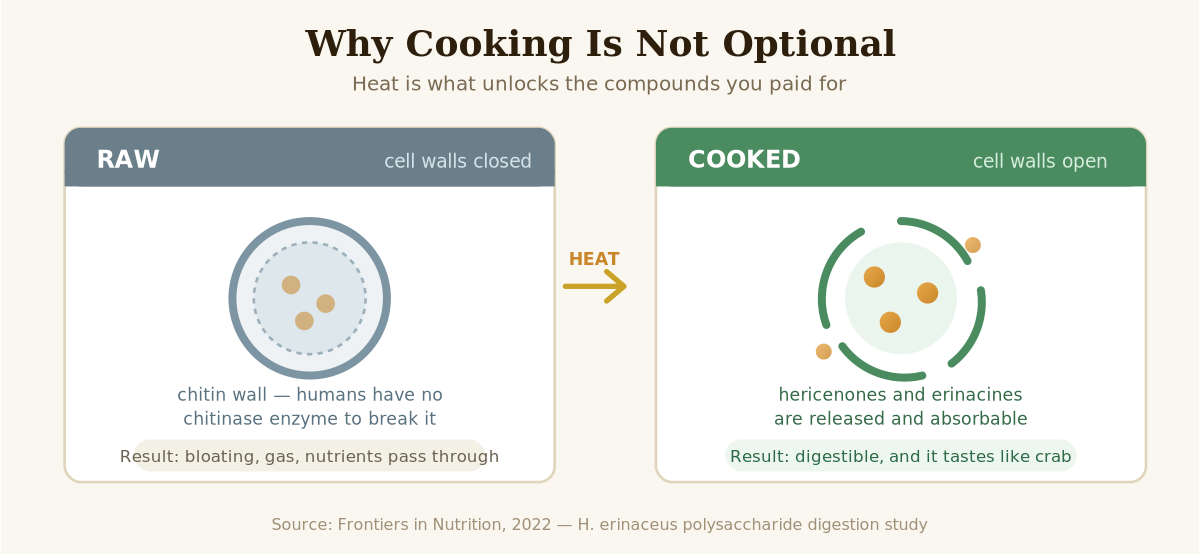
Cooked. Always. Raw lion’s mane mushroom is not poisonous, but your body cannot break it down properly.
Mushroom cell walls are built from chitin — the same fibrous material found in insect shells. Humans do not produce chitinase, the enzyme needed to digest it. Eat lion’s mane mushroom raw and most of it passes through you undigested, often with bloating, gas, or stomach cramps along the way.
- It becomes digestible — no more bloating
- The active compounds become available — hericenones and erinacines, the compounds studied for lion’s mane’s brain benefits, are locked behind chitin walls until heat opens them
Research backs this up: a 2022 digestion study in Frontiers in Nutrition found that Hericium erinaceus polysaccharides pass through saliva, stomach acid, and the small intestine largely intact — they only break down once gut bacteria get to them.
So cooking is not only about flavor. Skip it and you lose most of the reason you bought the mushroom.
💡 The squeak test: Bite one piece. If it squeaks against your teeth, the chitin has not broken down yet — give it 2 more minutes per side.
What You Need
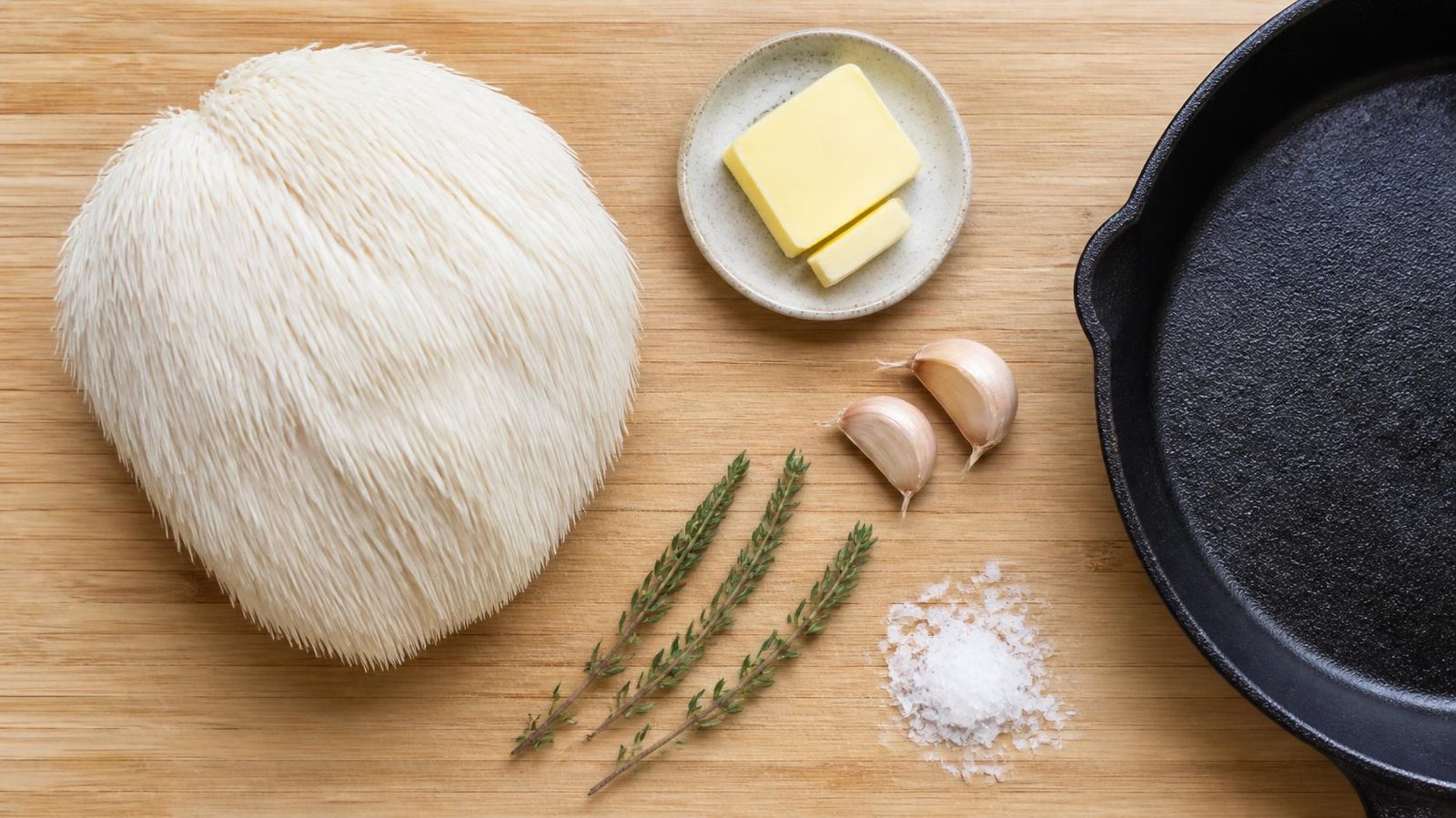
Nothing unusual. Five things:
- 8 oz fresh lion’s mane (about one medium head)
- 1 tbsp butter — salted works, browns better than oil
- 1 tbsp neutral oil — avocado or grapeseed, high smoke point
- Salt — kosher or sea salt, added at the end
- A cast iron or stainless skillet — nonstick will not give you a crust
Optional but good: 1 clove garlic (crushed, not minced), 2 sprigs thyme, a squeeze of lemon.
Fresh lion’s mane is worth the hunt, but it is not something most stores carry every week. On the days you cannot find it, a lion’s mane coffee gives you the same mushroom in a form that keeps in the cupboard.
How to Prepare Lion's Mane Mushroom Before Cooking
Prep decides your texture before the pan gets involved. Three steps:
Step 1 — Do Not Wash It
Never run lion’s mane mushroom under the tap. Those soft spines soak up water instantly and hold it, which guarantees a soggy result no matter how hot your pan is.
Instead, brush off dirt with a dry pastry brush or a soft kitchen cloth. For a stubborn spot, wipe with a barely damp paper towel, then pat dry.
Wild-foraged and genuinely dirty? Rinse quickly, then spread the pieces on a towel and let them air-dry for 20–30 minutes before cooking.
Step 2 — Trim the Base
Cut away the tough, woody bottom where the mushroom attached to wood or the grow block. It stays chewy no matter how long you cook it. Any yellowed or brown spines come off too — those are the parts that turn bitter.
Fresh lion’s mane mushroom is white to cream colored. Yellow means it is aging. Slimy means throw it out.
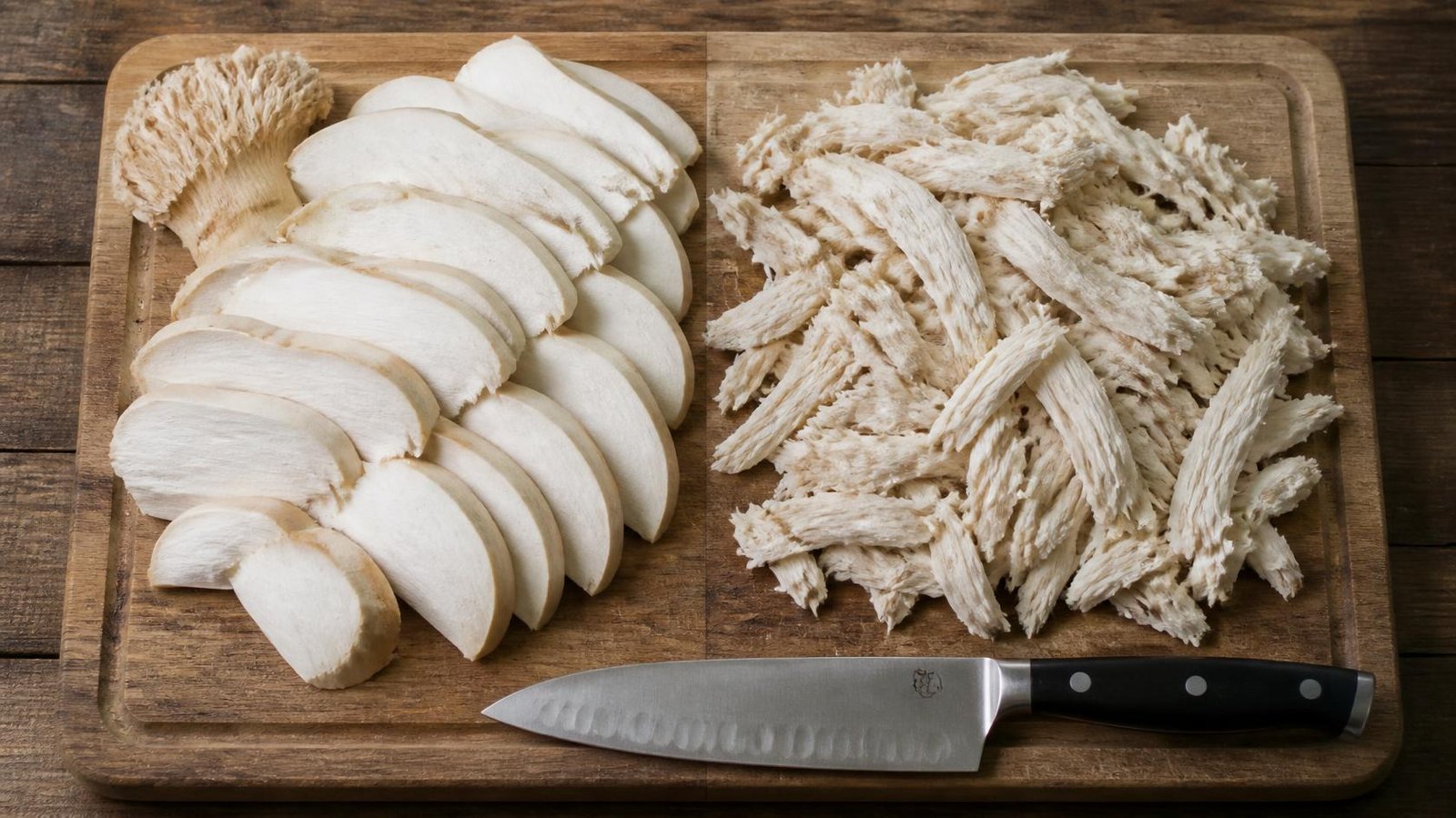
Step 3 — Slice or Tear
Both work, and they give you different results:
|
Method
|
Thickness
|
Best for
|
Texture
|
|---|---|---|---|
|
Slice (knife)
|
½ inch
|
Steaks, sandwiches, side dish
|
Firm, meaty, holds shape
|
|
Tear (hands)
|
Bite-size shreds
|
Tacos, pasta, "crab" cakes
|
Stringy, shreddy, seafood-like
|
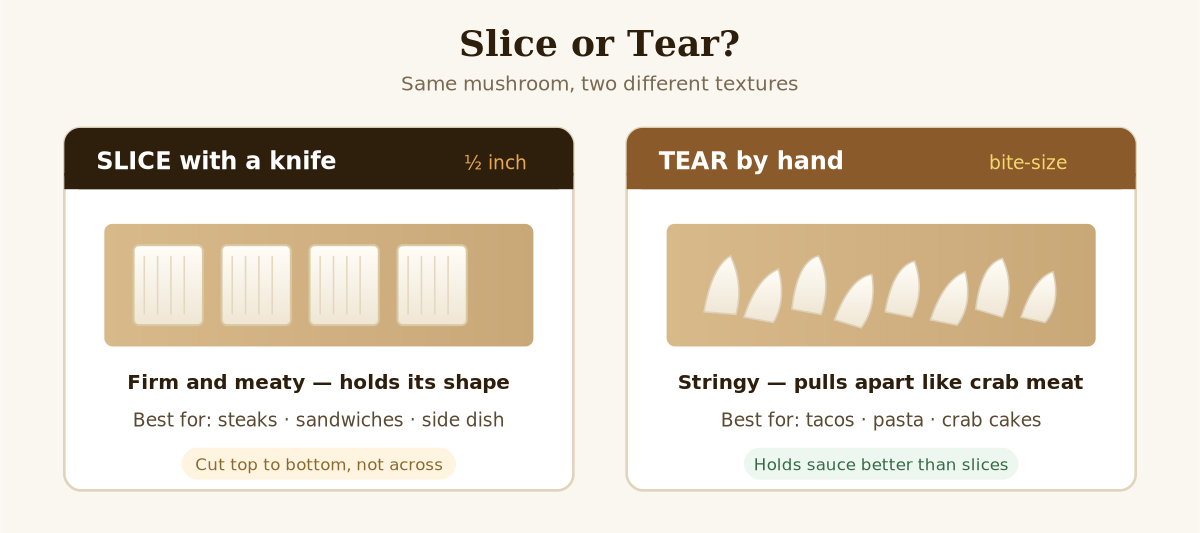
For steaks, cut top to bottom through the head, not across. Cutting with the grain keeps the fibers connected so the slabs hold together in the pan.
How to Cook Lion's Mane Mushroom: Step by Step
Total time: 12 minutes. Serves 2.
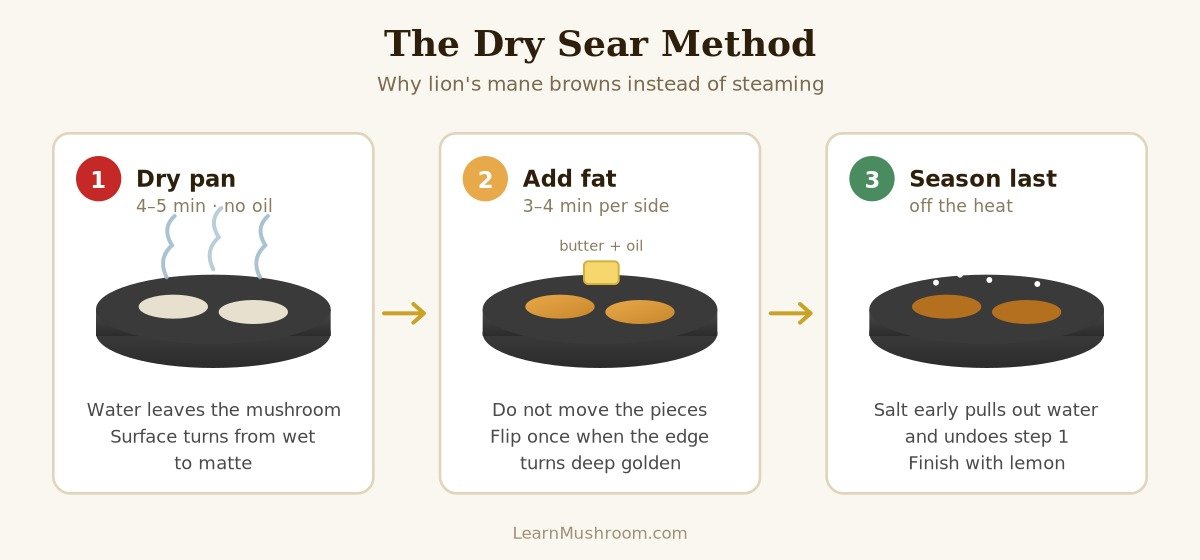
Step 1 — Dry Sear First (4–5 minutes)
Heat your skillet over medium. No oil yet. Lay the pieces flat in a single layer with space between them.
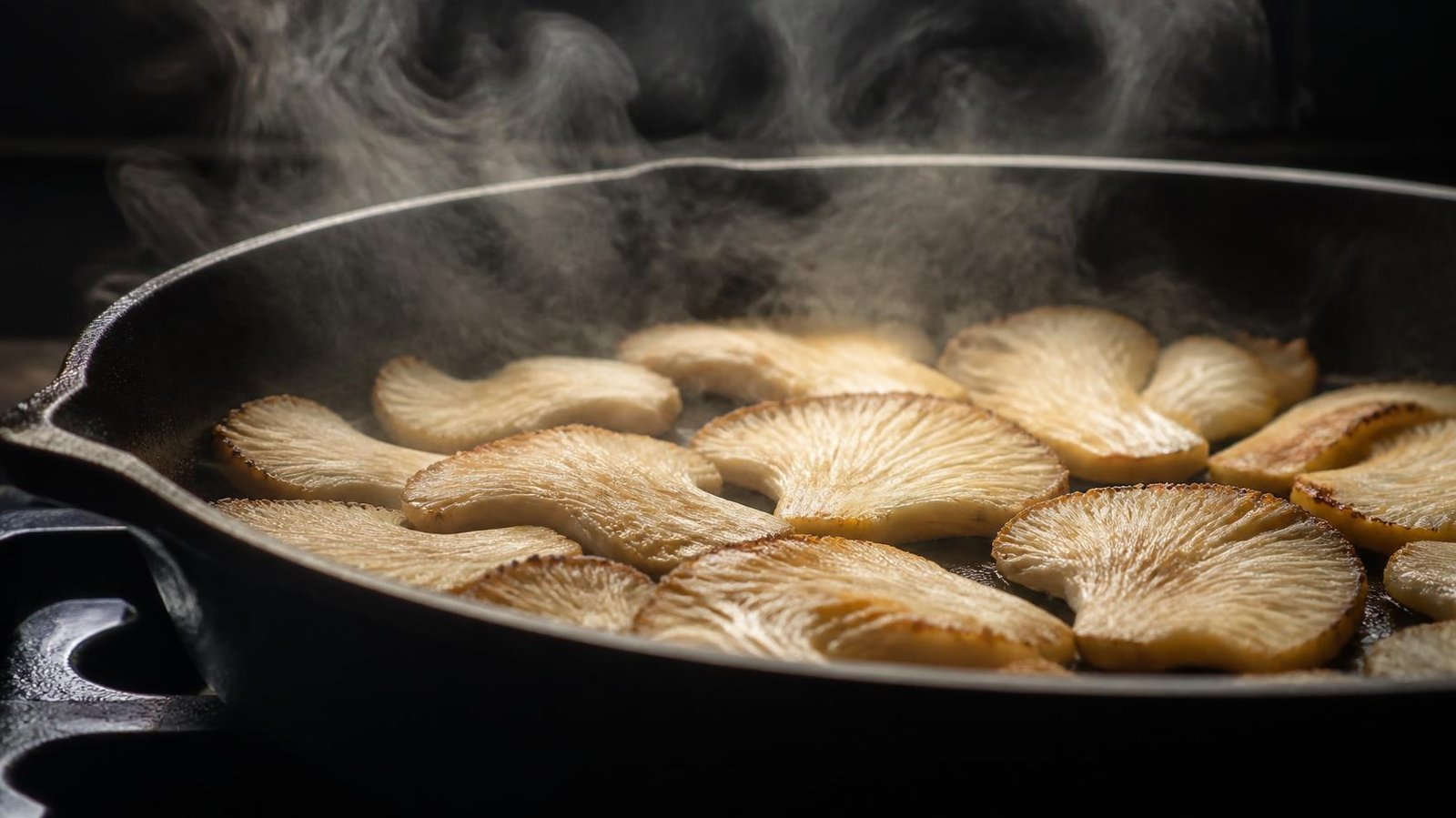
The pieces will shrink by about a third and the surface will go from wet to matte. When the steam stops, the water is gone.
⚠️ Do not crowd the pan. This is the mistake I made with my whole first harvest. Two heads at once turns your sear into a steam bath. Cook in batches.
Step 2 — Add Fat and Brown (3–4 minutes per side)
Add crushed garlic and thyme in the last 60 seconds only — garlic burns fast and turns bitter.
Step 3 — Season at the End
Salt last. Salt early and it pulls out moisture during the sear, which fights everything you just did.
Finish with flaky salt, cracked black pepper, and a small squeeze of lemon. The acid sharpens the seafood note.
Why Is My Lion's Mane Mushroom Rubbery or Soggy?
Four causes, four fixes. This is where most first attempts go wrong.
|
Problem
|
Why it happened
|
Fix
|
|---|---|---|
|
Soggy, pale, no crust
|
Washed with water, or skipped the dry sear
|
Brush clean only. Dry sear before adding fat
|
|
Rubbery, squeaky
|
Undercooked — chitin still intact
|
Keep going 2–3 more minutes per side
|
|
Tough and dry
|
Overcooked, or sliced too thin
|
½ inch minimum. Pull off heat when golden
|
|
Steamed, gray, limp
|
Pan overcrowded
|
Cook in batches with space between pieces
|
The single biggest mistake: treating lion’s mane mushroom like a button mushroom. Button mushrooms tolerate a quick rinse. Lion’s mane does not.
Why Does My Lion's Mane Mushroom Taste Bitter?
If a whole head tastes bitter, parboil it for 2 minutes, drain it well, press out the water, then dry sear as usual. That pulls most of the bitterness out.
Other Ways to Cook Lion's Mane Mushroom
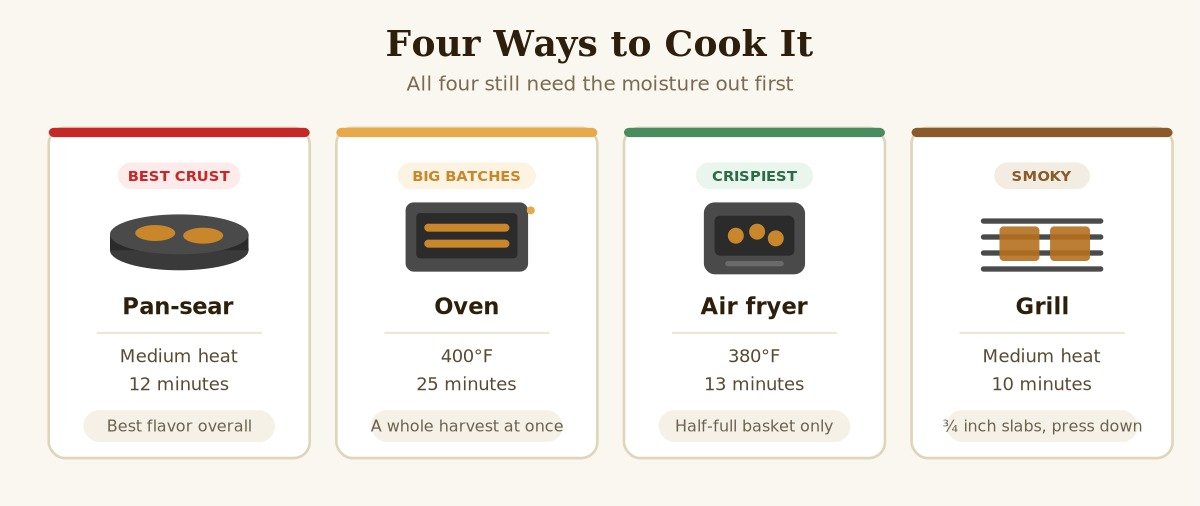
Pan-searing gives the best crust, but three other methods work well depending on what you are making. All of them still need the moisture handled first.
Oven-Roasted (Best for Big Batches)
Heat the oven to 400°F. Tear the mushroom into bite-size pieces, spread them on a parchment-lined sheet in a single layer, and roast dry for 10 minutes. Pull the tray out, toss with oil, salt, and garlic powder, then roast another 12–15 minutes until the edges brown.
That first dry roast does the same job as the dry sear. Roasting handles a whole harvest at once, which is what I should have done instead of forcing everything into one skillet.
Air Fryer (Fastest, Crispiest Edges)
The circulating air pulls moisture out fast, so the pieces crisp harder than they do in a pan. Do not fill the basket more than halfway — crowding causes the same steaming problem here.
Grilled (Smoky, Steak-Style)
Cut ¾-inch slabs, brush lightly with oil, and grill over medium heat for 4–5 minutes per side. Press each slab down with a spatula for the first minute so the surface makes full contact with the grates. A grill basket keeps smaller pieces from dropping through.
|
Method
|
Temp
|
Time
|
Best for
|
|---|---|---|---|
|
Pan-sear
|
Medium
|
12 min
|
Best crust and flavor
|
|
Oven
|
400°F
|
25 min
|
A whole harvest at once
|
|
Air fryer
|
380°F
|
13 min
|
Crispiest edges
|
|
Grill
|
Medium
|
10 min
|
Smoky steaks
|
Lion's Mane Mushroom Recipe: "Crab" Cakes
This is the lion’s mane mushroom recipe worth making once you have the basic sear down. The shredded fibers hold together like crab meat, and most people cannot tell the difference under a squeeze of lemon.
Makes 6 cakes. About 35 minutes.
Ingredients
- 12 oz lion’s mane mushroom, hand-torn into shreds
- 1 egg, beaten
- ⅓ cup mayonnaise
- ¾ cup panko breadcrumbs
- 2 tsp Old Bay seasoning
- 1 tsp Dijon mustard
- 2 tbsp chopped parsley
- 1 tbsp lemon juice
- Oil for frying
Method
- Dry sear the shreds. Cook them in a dry pan over medium heat for 6–7 minutes until the steam stops and they shrink down. Skipping this step is what makes crab cakes fall apart.
- Cool and squeeze. Let the shreds cool, then press them in a clean kitchen towel to wring out any water left behind.
- Mix. Combine the shreds with egg, mayo, ½ cup of the panko, Old Bay, Dijon, parsley, and lemon juice.
- Chill. Form 6 patties, coat them in the remaining panko, and refrigerate 15 minutes. Cold patties hold their shape in the pan.
- Fry. Heat a thin layer of oil over medium and cook 3–4 minutes per side until deep golden.
💡 Why they fall apart: Wet mushroom. Every failed batch traces back to skipping the dry sear or the towel squeeze. The mix should feel tacky, not damp.
How to Serve It
- On toast with a fried egg — the simplest version, and the best
- Tacos — tear it, season with smoked paprika and cumin
- Pasta — shredded into garlic butter with lemon and parsley
- “Crab” cakes — shred, mix with breadcrumbs, egg, Old Bay, then pan fry
- Sandwich — thick steaks with mayo, lettuce, and hot sauce
- Alongside steak or fish — as a side, plain with butter and salt

How to Store Lion's Mane Mushroom
Fresh: Paper bag in the fridge, up to 7 days. Never a plastic bag or sealed container — trapped moisture turns it slimy within two days. Keep your fridge at 40°F or below, which the FDA lists as the safe zone for fresh produce.
Cooked: Airtight container in the fridge for 3–4 days. Reheat in a dry pan, not a microwave.
Freezing: Cook it first, then freeze. Raw lion’s mane mushroom turns to mush after thawing. Cooked pieces keep for about 3 months.
Drying: Slice ¼ inch thick, dehydrate at 135°F for 4–6 hours, store in a sealed jar. Dried lion’s mane mushroom rehydrates well for soups and works for tea.
Where to Buy Fresh Lion's Mane Mushroom
Fresh heads show up at farmers markets, Asian grocery stores, Whole Foods, and specialty produce shops — usually $16–25 per pound in the US, and not every week.
Pick heads that are white to cream, dry to the touch, and firm. Skip anything yellowing, damp, or shrinking.
Since fresh supply is hit or miss, a lot of home cooks end up growing it. A lion’s mane block sits on a shelf and produces two flushes over a few weeks. If that sounds easier than hunting for it, here is how to pick a mushroom growing kit that actually fruits. Already comfortable with grow bags? The same setup works for oyster mushrooms on coffee grounds.
Frequently Asked Questions
Q: Is it better to eat lion's mane raw or cooked?
A: Cooked. Raw lion’s mane mushroom contains chitin, and humans lack the enzyme to break it down, so eating it raw often causes bloating or stomach upset. Cooking opens the cell walls, makes it digestible, and releases the hericenones and erinacines behind its studied benefits.
Q: Should you wash lion's mane before cooking?
A: No. Lion’s mane absorbs water almost instantly and will steam instead of brown. Brush off dirt with a dry pastry brush or a soft cloth. If it needs a rinse, do it fast and air-dry the pieces for 20–30 minutes first.
Q: Why is my lion's mane mushroom rubbery?
Q: How do you know when lion's mane is fully cooked?
Q: What does lion's mane mushroom taste like?
Q: How long does fresh lion's mane mushroom last in the fridge?
Q: Can you eat the whole lion's mane mushroom?
Q: Is lion's mane safe to eat every day?
A: For most healthy adults, yes. Clinical trials using 3 grams daily for 16 weeks reported no serious adverse events, with mild digestive discomfort in under 10% of participants, according to the NIH LiverTox database. Anyone on blood thinners, on diabetes medication, or with a mushroom allergy should ask a doctor first. Full details are in our guide to lion’s mane benefits and safety.
Key Takeaways
- Never wash it — brush clean, or the water ruins your texture
- Dry sear first for 4–5 minutes before any fat touches the pan
- ½ inch minimum thickness, cut top to bottom for steaks
- Salt at the end, never at the start
- Cook in batches — a crowded pan steams instead of browns
- Rubbery means undercooked, not overcooked — give it more time
- Cooking is required, not optional: raw chitin blocks both digestion and the active compounds
Fresh lion’s mane is worth the hunt, but it is not something most stores carry every week. On the days you cannot find it, a lion’s mane coffee gives you the same mushroom in a form that keeps in the cupboard.
Exclusive Reader Discount — Save $10
Affiliate link — LearnMushroom earns a commission on purchases.
Sources
- Digestive Characteristics of Hericium erinaceus Polysaccharides — Frontiers in Nutrition, 2022
- Lion’s Mane — LiverTox — NIH National Library of Medicine, 2024
- Bioactive Polysaccharides from Hericium erinaceus — 2025 review
- Refrigerator Thermometers: Cold Facts About Food Safety — U.S. FDA