
Table of Contents
ToggleChaga Mushroom Introduction
Chaga mushroom (Inonotus obliquus) is a parasitic fungus that grows on birch trees in cold climates, and research links it to antioxidant, immune-modulating, anti-inflammatory, and antitumor effects. Most evidence comes from cell and animal studies, not large human trials. A 2023 review counted roughly 130 distinct pharmacological properties tied to chaga compounds, spanning anticancer, gene-protecting, and antimicrobial activity. This guide covers what chaga is, the proven and proposed benefits, dosage, safety risks like oxalate nephropathy, and how to use it correctly.
Quick facts:
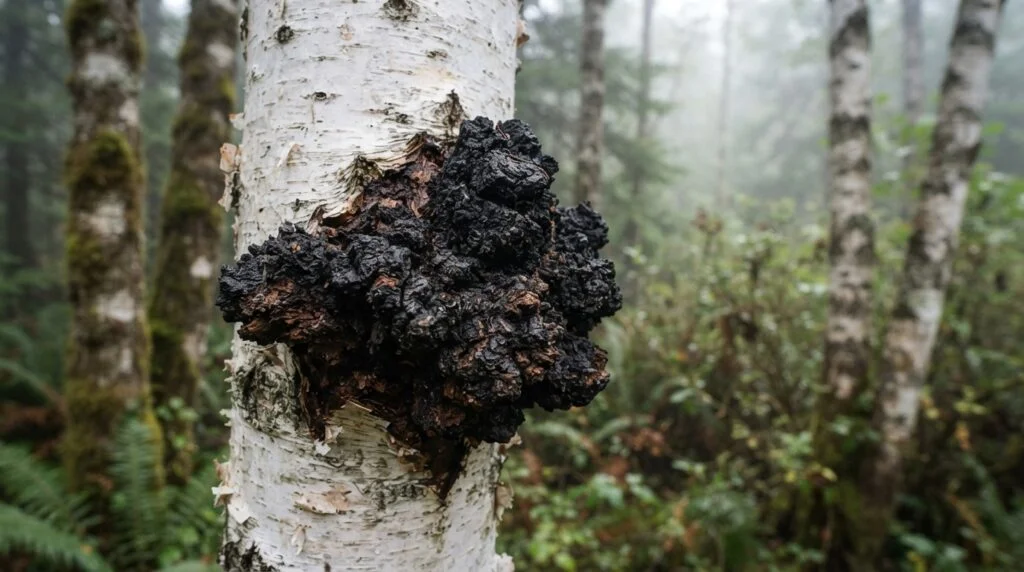
- Chaga grows almost exclusively on birch trees in Russia, Canada, Northern Europe, and parts of the northern United States.
- No large randomized controlled human trials on chaga exist as of 2026.
- Chaga has one of the highest oxalate contents of any commonly consumed fungus.
- The British Columbia Centre for Disease Control caps daily dried chaga intake at 3.6 grams.
What Is Chaga Mushroom?
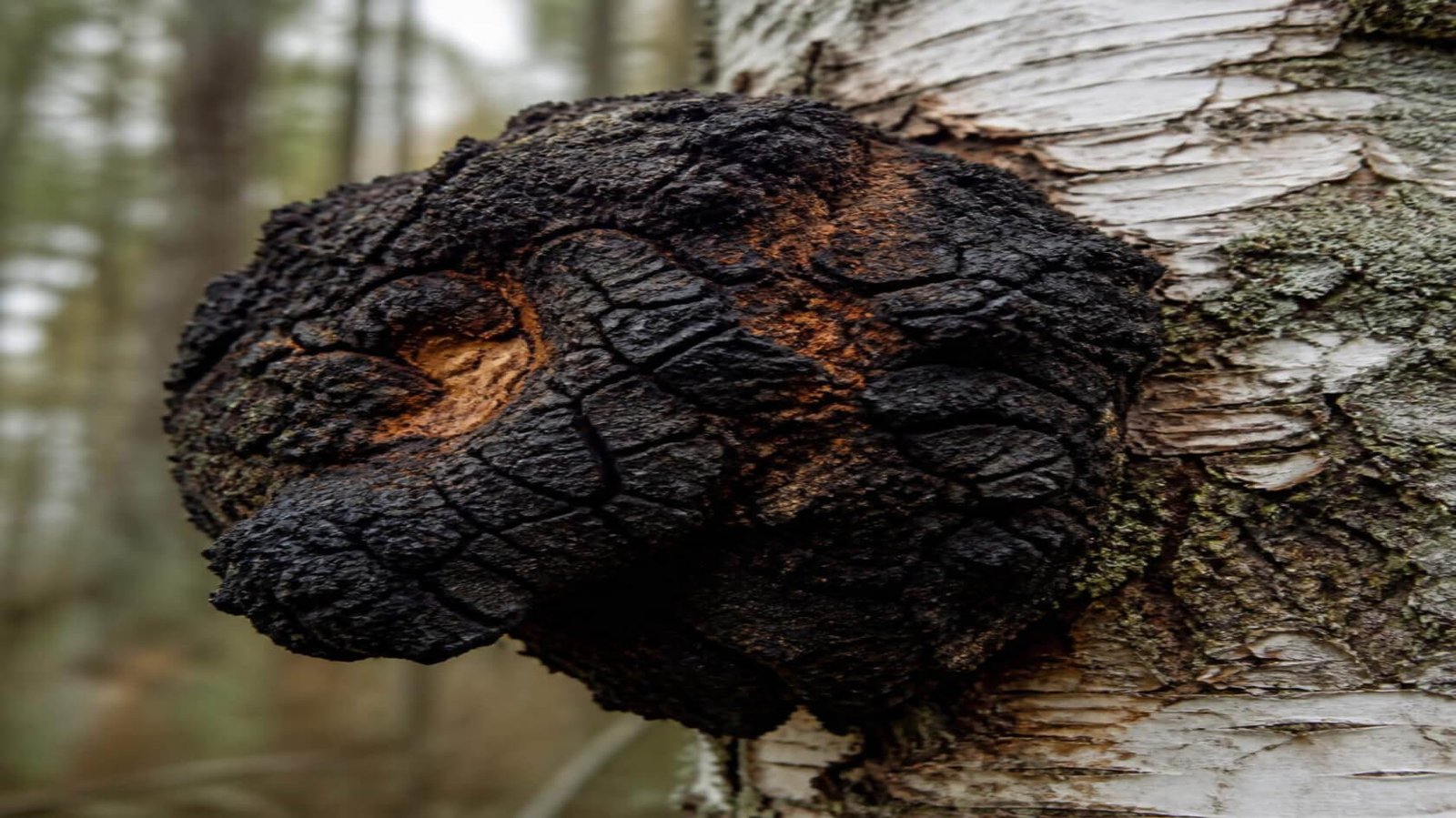
Chaga is a black, charcoal-like fungal growth, not a mushroom in the conventional cap-and-stem sense. It forms on the bark of birch trees and has been used in folk medicine across Russia, Northern Europe, and parts of Asia for centuries. Traditional uses included immune support, digestive complaints, and even pipe-smoking rituals in some cultures.Inonotus obliquus is described as an inexpensive fungus with a broad range of traditional and medicinal applications, including therapy for breast, cervix, and skin cancers as well as diabetes treatment. Modern interest in chaga has grown alongside the broader functional mushroom and adaptogen market in the United States.

Top Chaga Mushroom Benefits (Backed by Research)

1. Antioxidant Activity
Chaga’s most consistently documented benefit is its antioxidant capacity, and researchers have now mapped the mechanism at a molecular level. A 2026 study isolated three polyphenols from chaga and found that all three compounds, along with the crude extract, significantly reduced reactive oxygen species, increased superoxide dismutase activity, and downregulated the TLR4/MyD88/NF-κB inflammatory signaling pathway. This places chaga among the higher-antioxidant fungi studied to date, though the findings come from macrophage cell models rather than human trials.
2. Immune System Support
Chaga has long been promoted as an immune booster, and lab research backs this up to a degree. Animal and test-tube studies suggest chaga extract may boost immune function, reduce long-term inflammation, and potentially slow cancer growth, though human studies are still needed to confirm these effects. The proposed mechanism involves stimulating cytokine production, which in turn activates white blood cells responsible for fighting infection.
3. Anti-Inflammatory Effects
Chronic inflammation is linked to heart disease, arthritis, and several autoimmune conditions. Chaga extract has shown anti-inflammatory activity in multiple lab studies, primarily by interrupting inflammatory signaling pathways and reducing oxidative stress markers in treated cells.
4. Potential Anticancer Properties (Preliminary)
Cancer-related research on chaga is the most cited but also the least conclusive for humans. Several studies have shown antitumor effects of chaga mushroom extract against lung adenocarcinoma, breast cancer, liver carcinoma, and other cancer cell lines, with one 2024 study finding that chaga extract suppressed oral cancer cell growth by inhibiting energy metabolism. Separately, researchers tested chaga’s anti-cancer activity against dog bladder cancer organoids, extending findings beyond rodent models into more complex tissue cultures. None of this constitutes evidence chaga treats or cures cancer in humans — it should never replace medical treatment.
5. Skin Health Support
Newer research has examined chaga for inflammatory skin conditions. A January 2026 study found that chaga mushroom extract attenuated DNCB-induced atopic dermatitis by modulating oxidative stress and inflammatory cytokine expression in animal models. This adds to chaga’s traditional use as a topical and ingested remedy for skin irritation.
Callout: Most chaga benefits are demonstrated in cell cultures and animal models, not large human clinical trials. Treat chaga as a supportive supplement, not a proven treatment for any disease.
If you’re exploring functional mushrooms beyond chaga, you might also like our guides on Lion’s Mane mushroom benefits and Reishi mushroom benefits.
6. May Support Healthy Blood Sugar
One of chaga’s most-studied traditional uses is blood sugar support. In several animal studies, chaga extract helped lower fasting blood glucose and improved insulin sensitivity, likely thanks to its polysaccharides slowing carbohydrate breakdown. Human data is still missing, so chaga shouldn’t replace diabetes medication — but this remains one of its most promising research directions.
7. May Help Lower Cholesterol
Chaga’s antioxidant compounds may also benefit heart health. Animal research has shown chaga extract reducing total and LDL (“bad”) cholesterol while nudging HDL (“good”) cholesterol upward. Since high cholesterol is a major driver of heart disease, this is a benefit worth watching — though, again, the evidence so far comes from lab and animal models rather than human trials.
8. Antiviral and Antimicrobial Potential
Beyond immunity, chaga has shown direct activity against certain microbes in the lab. Test-tube studies report that chaga extracts can inhibit specific viruses and bacteria, with betulinic acid and triterpenes appearing to play a role. This lines up with chaga’s long folk-medicine history as a remedy for infections, even if clinical confirmation in humans is still pending.
9. Supports Skin and Healthy Aging
Chaga Mushroom Nutrition and Active Compounds
Chaga Mushroom
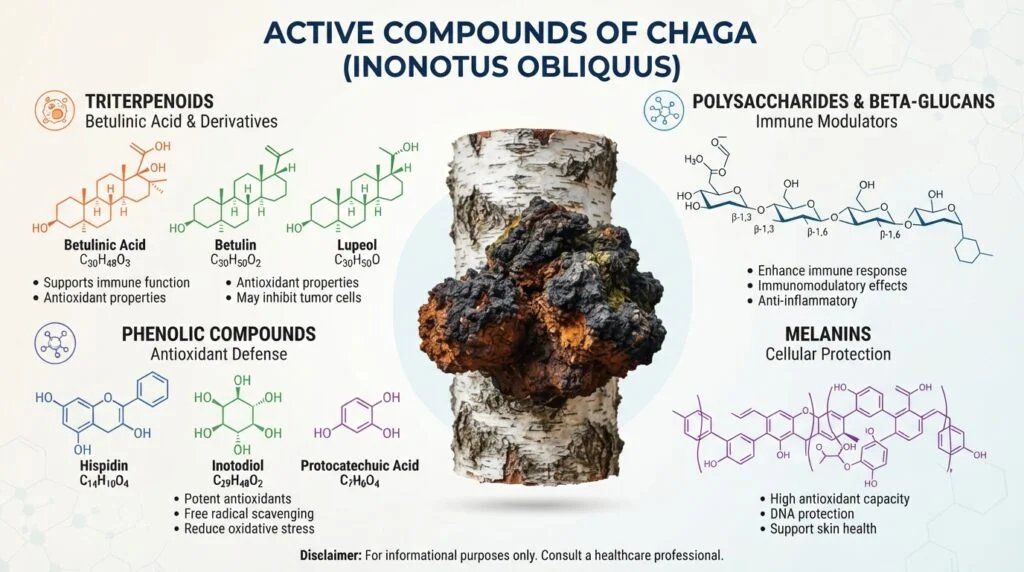
- Betulinic acid – derived from birch bark compounds absorbed by the fungus
- Polyphenols – including protocatechuic acid and osmundacetone, tied to antioxidant activity
- Triterpenoids – linked to anti-inflammatory and antitumor lab findings
- Melanin complexes – give chaga its dark, charcoal-like color and contribute antioxidant properties
- Beta-glucans – polysaccharides associated with immune modulation in fungi generally
How to Take Chaga Mushroom
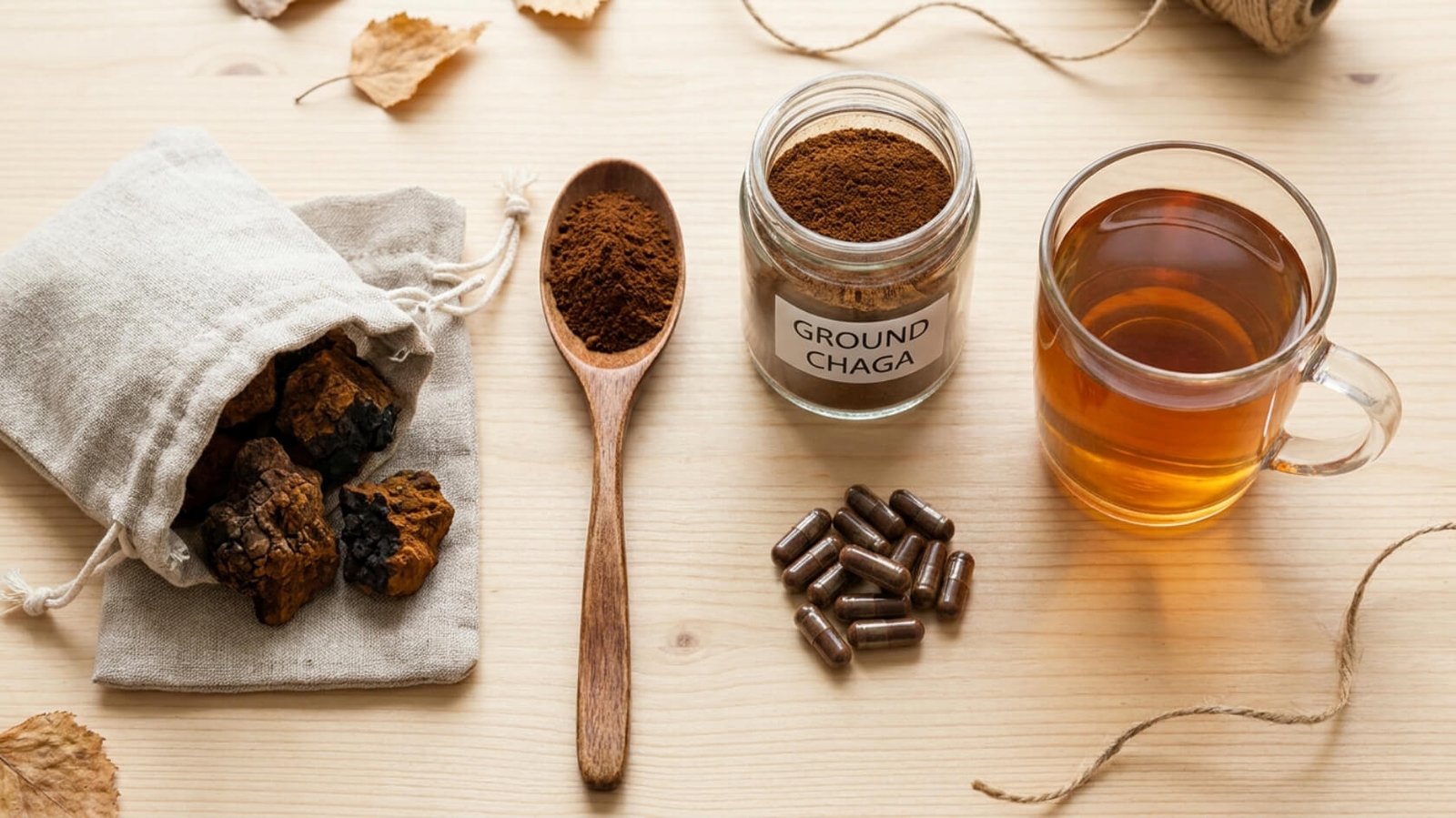
Chaga is most commonly consumed as:
- Tea – dried chaga chunks steeped in hot water for 10–20 minutes, sometimes simmered for hours
- Powder – ground chaga added to coffee, smoothies, or lattes
- Tincture/extract – concentrated liquid drops taken sublingually or mixed into water
- Capsules – standardized extract doses for convenience
|
Form
|
Typical Dose
|
Notes
|
|---|---|---|
|
Dried chunks (tea)
|
1–2 tsp per cup
|
Steep or simmer
|
|
Powder
|
1/2–1 tsp daily
|
Mix into drinks
|
|
Capsule extract
|
Per label, often 500–1000 mg
|
Standardized extracts preferred
|
|
Tincture
|
1–2 mL, 1–2x daily
|
Follow product instructions
|
Chaga and Kidney Health: What the Science Actually Says
Chaga’s safety record often gets summed up in a single alarming headline — “chaga damages your kidneys.” But that shorthand skips over what the research really shows. When you look at the actual cases and the chemistry behind them, a much more reassuring and practical picture emerges. Here’s the honest, evidence-based version.
The oxalate question, explained simply
The kidney concern around chaga comes down to one compound: oxalate. Chaga naturally contains it — but so does a huge share of the everyday “healthy” foods most people already eat without a second thought:
|
Food
|
Approx. oxalate
|
|---|---|
|
Cooked spinach (1 cup)
|
~750 mg
|
|
Rhubarb (½ cup)
|
~540 mg
|
|
Almonds (small handful)
|
~120 mg
|
|
Baked potato with skin
|
~95 mg
|
|
Raspberries (1 cup)
|
~48 mg
|
Oxalate, in other words, isn’t some exotic toxin unique to chaga — it’s a normal part of a plant-rich diet. For the vast majority of healthy people, dietary oxalate simply isn’t a problem.
What the "kidney damage" cases really involved
Only a small number of case reports have ever linked chaga to kidney trouble, and when you read them closely, they share the same red flags — none of which describe normal, sensible use:
- Extreme, sustained overdosing. In the most cited case, the person consumed a modest amount for years with completely normal kidney tests — problems only appeared after intake climbed to roughly three times the commonly recommended daily amount.
- Raw, unbrewed powder. The affected users swallowed raw chaga powder directly rather than brewing it — which matters enormously (see below).
- Unusually high-oxalate product. In one case the specific powder tested several times higher in oxalate than typical chaga products, pointing to a quality/sourcing issue rather than chaga itself.
In short, these are outlier scenarios of heavy, long-term misuse — not a verdict on responsible chaga use.
Why brewing changes everything
Here’s the detail that rarely makes the headlines: boiling and brewing dramatically lower the soluble oxalate content of foods and botanicals. Soluble oxalate is also the form the body absorbs most readily, so a proper hot brew removes much of the very compound people worry about. Traditional chaga tea — simmered or steeped hot — is therefore far gentler on the kidneys than raw powder stirred into a cold drink. Preparation method isn’t a minor footnote here; it’s central to using chaga safely.
How to enjoy chaga the smart way
For a healthy adult, chaga fits comfortably into a wellness routine when you follow a few sensible habits:
 Stick to sensible amounts — treat roughly 3.6 g of dried chaga per day as a practical ceiling rather than a target.
Brew it, don’t just spoon it — prepare chaga as a hot tea or decoction to naturally cut its oxalate load.
Choose quality, properly processed chaga — oxalate levels vary widely between products, so source from a brand that tests for purity and safety. click here
✅ Go easy on high-dose vitamin C at the same time — very large vitamin C doses can raise oxalate levels.
When to check with a doctor first
Chaga isn’t for everyone. Please talk to a healthcare provider before using it if you:
- Have kidney disease or a history of kidney stones
- Take blood-thinning or diabetes medication
- Are pregnant or breastfeeding
- Are scheduled for surgery within the next two weeks
This article is for general information only and isn’t medical advice. Everyone’s health is different — when in doubt, ask your doctor.
Bottom line: The science doesn’t say “chaga is dangerous.” It says raw, excessive, long-term overuse of poor-quality chaga carries risk — while sensible, well-brewed, quality chaga is well tolerated by most healthy people. Used the right way, chaga can be a genuinely rewarding part of a wellness lifestyle.
Chaga Mushroom FAQ
Q1: What are the benefits of chaga?
Q2: What happens when you drink chaga tea every day?
Q3: Is chaga good for belly fat ?
Q4: How does chaga make you feel?
Chaga doesn’t produce a noticeable, immediate effect the way caffeine or stimulants do. Most people who use it regularly describe a subtle sense of steadier energy and general well-being over time, rather than any sudden feeling after a single dose. This is based mostly on anecdotal reports rather than controlled human studies, so individual experience varies quite a bit. If you’re expecting a strong, immediate effect, chaga likely isn’t it — its potential benefits are more about gradual, long-term support than short-term feeling.
Q5: Is reishi safe during pregnancy?
The honest answer is that it’s best to avoid reishi during pregnancy and while breastfeeding. This isn’t because reishi is known to be harmful — it’s because there simply isn’t enough reliable human safety research in pregnant or nursing women to confirm it’s safe. Reishi can also mildly affect blood clotting and blood pressure, two things your body is already balancing carefully during pregnancy.
Until stronger evidence exists, most herbalists and healthcare providers take the cautious route and suggest skipping reishi during this time. If you’re pregnant, breastfeeding, or trying to conceive and still want to include reishi, talk to your doctor or midwife first and follow their advice.
Key Takeaways
- Chaga shows promising antioxidant, anti-inflammatory, and immune-modulating activity in lab and animal research.
- Human clinical trials are essentially absent, so benefits remain preliminary, not proven.
- The biggest documented safety risk is oxalate-related kidney damage from high-dose, long-term use.
- Stick to moderate doses, avoid pairing with high-dose vitamin C, and consult a doctor if you have kidney issues or take prescription medication.
This article is for informational purposes only and does not constitute medical advice. Consult a healthcare provider before starting any new supplement, especially if you have kidney disease, take medication, or are pregnant or breastfeeding.