
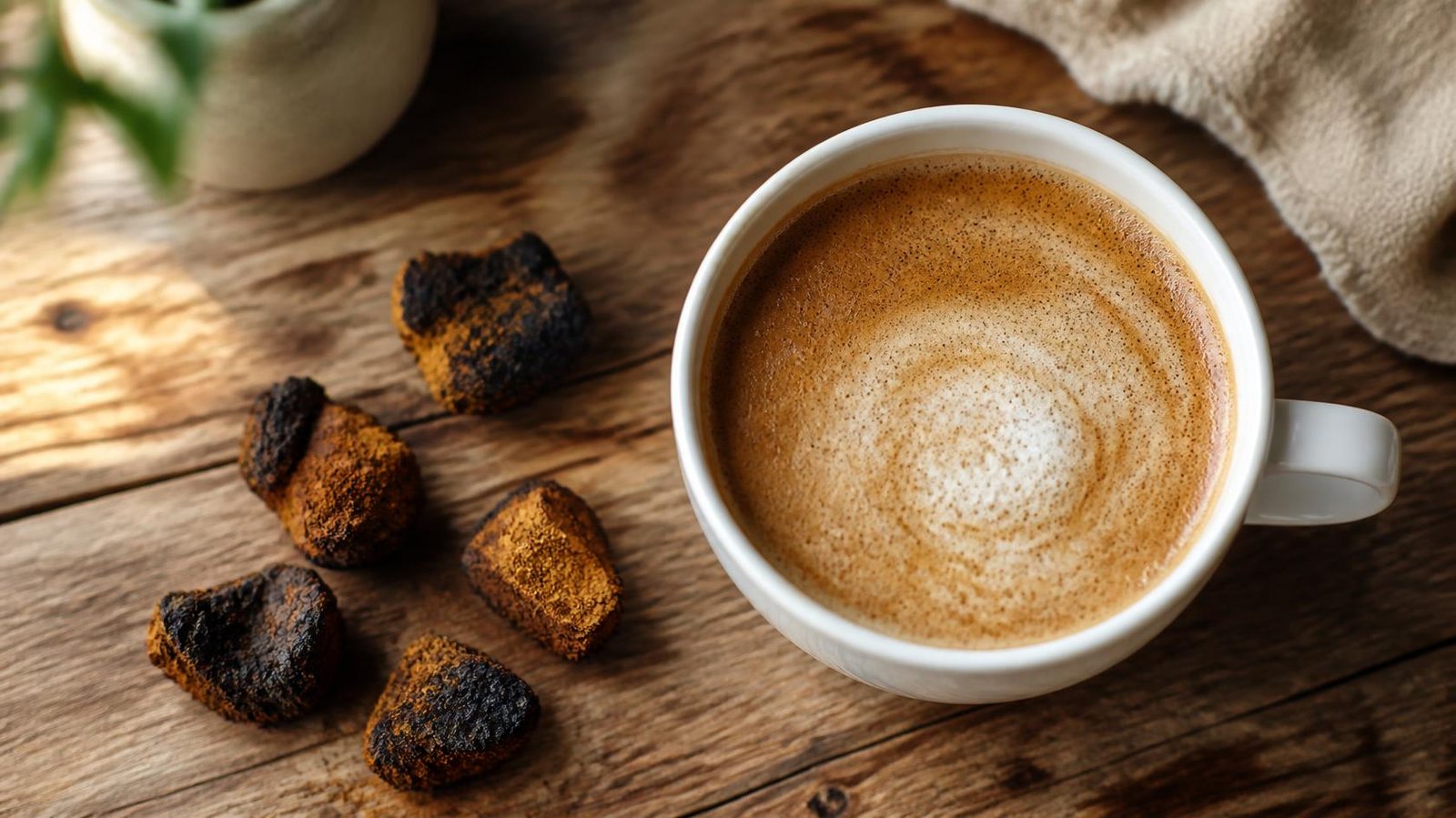
We may earn a commission from links in this chagaccino guide, at no extra cost to you. Learn more
A chagaccino is coffee mixed with chaga mushroom extract — usually a spoonful of powder stirred into hot coffee or blended in like a latte. It has no caffeine of its own, doesn’t taste mushroomy, and mostly adds a mild, earthy note plus antioxidant compounds on top of your regular cup.
Quick Facts
What it is: Coffee blended with chaga mushroom (Inonotus obliquus) extract
Caffeine: None from the chaga itself — same caffeine as your coffee
Taste: Mild, slightly earthy, not “mushroomy”
Is it low acid? Not confirmed by real pH testing — see below
Typical serving: ½–1 tsp chaga extract powder per cup
Best for: People who want their regular coffee plus antioxidant compounds, without changing their routine
Table of Contents
ToggleWhat Is a Chagaccino?
Is Chaga Mushroom Coffee Good for You?
Chaga is best known for its antioxidant content, not for any dramatic energy or health transformation. It’s rich in melanin-related compounds and polyphenols, which lab studies show help neutralize free radicals — the same basic mechanism antioxidants in berries or green tea rely on. Research comparing several mushroom species found this one has notably higher polyphenol content and antioxidant activity than reishi, shiitake, or turkey tail, which is part of why it gets singled out for its broader health benefits so often.
What this drink won’t do is give you extra energy from the fungus itself. Any energy boost you feel still comes from the coffee’s caffeine, not the mushroom.
Does Chagaccino Have Caffeine?
Chaga itself has zero caffeine. This drink’s caffeine content depends entirely on how much regular coffee you use — the extract adds no stimulant of its own.
This is why some people make a “half-caff” version: half regular coffee, half chaga extract dissolved in hot water, to cut caffeine intake while keeping the ritual of a warm cup in hand. If you want a fully caffeine-free version, you can skip the coffee altogether and drink chaga tea instead.
How to Choose a Good Chaga Coffee Product
- Dual extraction. The fungus’s beneficial compounds split between water-soluble and alcohol-soluble groups — a dual-extracted product pulls out more of both than a simple hot-water extract alone.
- Wild-harvested, not lab-grown mycelium. The wild, hardened form growing on birch bark carries a different (generally richer) compound profile than mycelium grown on grain.
- Third-party testing. A certificate of analysis confirms what’s actually in the jar — heavy metals, purity, and potency — rather than relying on the label alone.
- Clear serving size. Look for a specific measurement (like ½ tsp or 1,000 mg) rather than a vague “sprinkle to taste” instruction.
A pre-blended instant coffee option (extract already mixed with ground beans) skips the guesswork entirely — you get a consistent dose every time without measuring powder yourself.
Who Should (and Shouldn't) Try It
It’s a less obvious fit for anyone chasing dramatic energy or immediate effects — since there’s no extra caffeine involved, it won’t feel any different in the moment than your usual cup. And as mentioned above, anyone on blood thinners, with kidney concerns, or who is pregnant or nursing should check with a doctor before making it a daily habit.
A Short History of Mushroom Coffee
Today, dozens of brands sell instant blends, extract powders, and ready-to-drink cans built around this pairing. The trend has grown fast enough that “chagaccino” now shows up as its own search term, separate from the more generic “mushroom coffee” category that includes lion’s mane, cordyceps, and reishi blends too.
Nutrition Snapshot: What's Actually in a Cup
A typical serving adds very few calories — usually under 10 — since the extract itself is mostly fiber and bioactive compounds rather than sugar or fat. Here’s a rough breakdown of what a half-teaspoon serving contributes on top of your regular coffee:
|
Component
|
Approximate Amount
|
Why It Matters
|
|---|---|---|
|
Calories
|
5–10 kcal
|
Negligible impact on daily intake
|
|
Beta-glucans
|
Varies by extract ratio
|
Linked to mild immune support in lab studies
|
|
Polyphenols
|
Present, exact mg rarely labeled
|
Contribute antioxidant activity
|
|
Caffeine
|
0 mg from the extract itself
|
All caffeine comes from the coffee portion
|
Because extract concentration varies so much between brands, exact numbers are hard to pin down — a product’s label and certificate of analysis will always be more accurate than a general estimate like this one.
Common Mistakes to Avoid
A few small missteps account for most disappointing first cups:
- Adding powder straight into a cold drink. It clumps instead of dissolving. Mix it with a small splash of warm water first, then combine.
- Using too much at once. More isn’t better here — an overloaded cup turns bitter fast. Start with a half teaspoon and adjust from there.
- Forgetting to stir partway through. Fine particles settle at the bottom of the cup, so the last few sips can taste stronger than the first.
- Expecting an instant energy jump. Since there’s no added caffeine, judging the drink by how “buzzed” it makes you feel will always be disappointing — the value is elsewhere.
None of these mistakes ruin a cup permanently — they’re easy fixes once you know to watch for them, and most people get the ratio right by their second or third attempt.
Café-Bought vs. Homemade: Which Is Better?
Making it yourself takes control back — you pick the extract quality, decide the exact ratio, and can adjust sweetness or milk to your own taste. The only real downside is the upfront cost of buying a jar of extract or instant blend, which then lasts weeks to months depending on how often you drink it. For most people who’d order this more than once or twice, homemade works out both cheaper and more consistent over time.
Is It Worth Trying?
If you’re hoping for a dramatic energy boost, weight-loss shortcut, or a cure for a specific health condition, temper those expectations — the honest research supports a mild, supportive role, not a miracle transformation. Treated as what it actually is, a pleasant daily habit backed by reasonable science, it’s an easy addition worth trying for a couple of weeks to see how you like it.
3 Easy Variations to Try
Once you’ve made the basic version, these three twists are worth trying:
- Mocha version: Stir in 1 tsp cocoa powder along with the mushroom extract — the earthy note pairs well with chocolate.
- Golden version: Add a pinch of cinnamon and a small amount of maple syrup for a warmer, spiced cup.
- Vanilla oat version: Swap regular milk for oat milk and add a few drops of vanilla extract for a creamier, dessert-like drink.

Is Chaga Mushroom Coffee Actually Low Acid?
One coffee roaster that actually tested brewed pH found mushroom coffee blends measuring around 4.8–5.0 — nearly identical to regular brewed coffee, which typically sits in the same 4.5–5.0 range. In other words, adding chaga to your coffee doesn’t meaningfully change its acidity on its own.
💡 The honest takeaway: If a lower-acid cup matters to you, the acidity comes mostly from the coffee bean itself (roast level, brew method) — not from adding chaga. A darker roast or cold brew will do more for stomach comfort than a chaga extract will.
That doesn’t mean chagaccino isn’t worth drinking — it just means “low acid” shouldn’t be the main reason you try it. The antioxidant content and mild flavor addition are the more realistic selling points.
Chagaccino vs. Other Mushroom Coffee
People often ask how this pairing stacks up against the other mushrooms showing up in coffee shops and supplement aisles lately. The short answer: they’re not competing for the same job, so picking one doesn’t rule out trying the others too. Here’s how the three most common options differ:
|
Mushroom
|
Main Draw
|
Flavor Impact
|
Caffeine Added
|
|---|---|---|---|
|
Chaga
|
Antioxidants
|
Mild, earthy
|
None
|
|
Lion's Mane
|
Focus, cognitive support
|
Neutral
|
None
|
|
Calm, evening use
|
Slightly bitter
|
None
|
Chaga tends to be the mildest-tasting of the three, which is part of why it blends into coffee so easily without changing the flavor much. If you want a daytime pick-me-up plus antioxidants, chaga is the more natural coffee pairing; reishi’s calming reputation fits better with an evening drink, caffeine-free.
How to Make Chagaccino at Home
Total time: 5 minutes. Makes 1 cup.
Hot Chagaccino
- 1 cup brewed coffee (hot)
- ½–1 tsp chaga extract powder
- Splash of milk or a milk alternative (optional)
- Honey or maple syrup to taste (optional)
Stir the chaga powder into a small splash of hot water first to dissolve it fully, then mix it into your brewed coffee. Add milk and sweetener if you like, and stir well — chaga powder can settle at the bottom, so a quick stir partway through drinking helps too.
Iced Chagaccino
- 1 cup cold brew or chilled coffee
- ½–1 tsp chaga extract powder
- 2–3 tbsp milk of choice
- Ice
Exclusive Reader Discount - Save $10!
Want a ready-made chagaccino without measuring powder every morning? A pre-blended chaga coffee skips the extra step
Apply Code: LEARNMUSHROOM

Frequently Asked Questions
Q1: What does chagaccino taste like?
Q2: Is it okay to drink chaga coffee every day?
For most healthy adults, yes — chaga has been part of daily routines in Northern Europe for generations. As with anything new, start with one cup and see how you feel, and check with your doctor first if you have a kidney condition or take regular medication.
Q3: Which is better, Lion's Mane or chaga coffee?
Q4: Does chaga mushroom coffee actually give you energy?
Q5: What shouldn't you mix with chaga?
It’s generally easy to combine with a normal diet. If you’re on blood-thinning medication or have a kidney condition, it’s worth a quick check with your doctor first, since it can interact with both.
Q6: How long does chaga extract powder last once opened?
Kept in an airtight container away from heat and moisture, extract powder typically stays good for 1–2 years. If it smells musty or clumps oddly, it’s past its best and worth replacing.
Q7: Can you make a chagaccino without a blender or frother?
Q8: Is it better to drink it in the morning or at night?
Q9: Does it work with decaf coffee too?
Q10: Can kids or teenagers drink it?
A Quick Note on Sustainable Sourcing
Because this fungus grows slowly on living birch trees over many years, how it’s harvested actually matters. Responsible foragers take only part of each growth and leave enough behind for the tree and the organism to keep growing, rather than stripping a tree bare in one visit.
When shopping for a product, look for brands that mention sustainable or wild-harvest practices specifically, rather than staying vague about sourcing. It’s a small detail, but it’s a reasonable proxy for a company that’s paying attention to quality elsewhere too — sourcing carelessness and quality carelessness tend to go together.
Key Takeaways
- A chagaccino is just coffee + chaga extract — no special brewing equipment needed
- Zero added caffeine from the chaga itself; energy still comes from your coffee
- “Low acid” claims aren’t well supported — real pH data shows it’s close to regular coffee
- Antioxidants are the realistic benefit, not a dramatic health transformation
- Dissolve the powder in warm water first before adding to iced drinks, for smoother mixing
Rather than eyeballing a spoonful every morning a pre-mixed chaga coffee blend gives you the same cup without the extra step.
Exclusive Reader Discount — Save $10
Affiliate link — LearnMushroom earns a commission on purchases.
Sources
- Medicinal Mushrooms: Bioactive Components, Nutritional Value and Application — peer-reviewed review, PMC/NCBI (chaga’s antioxidant/polyphenol content compared across mushroom species)
- Is Mushroom Coffee Low Acid? What the Science Shows — Puroast Coffee, citing Moon, Yoo & Shibamoto (JAFC 2009)
- Traditional chaga tea use in Northern Europe and Russia — folk and ethnobotanical sources
