
We may earn a commission from links in this mushroom spawn guide, at no extra cost to you. Learn more
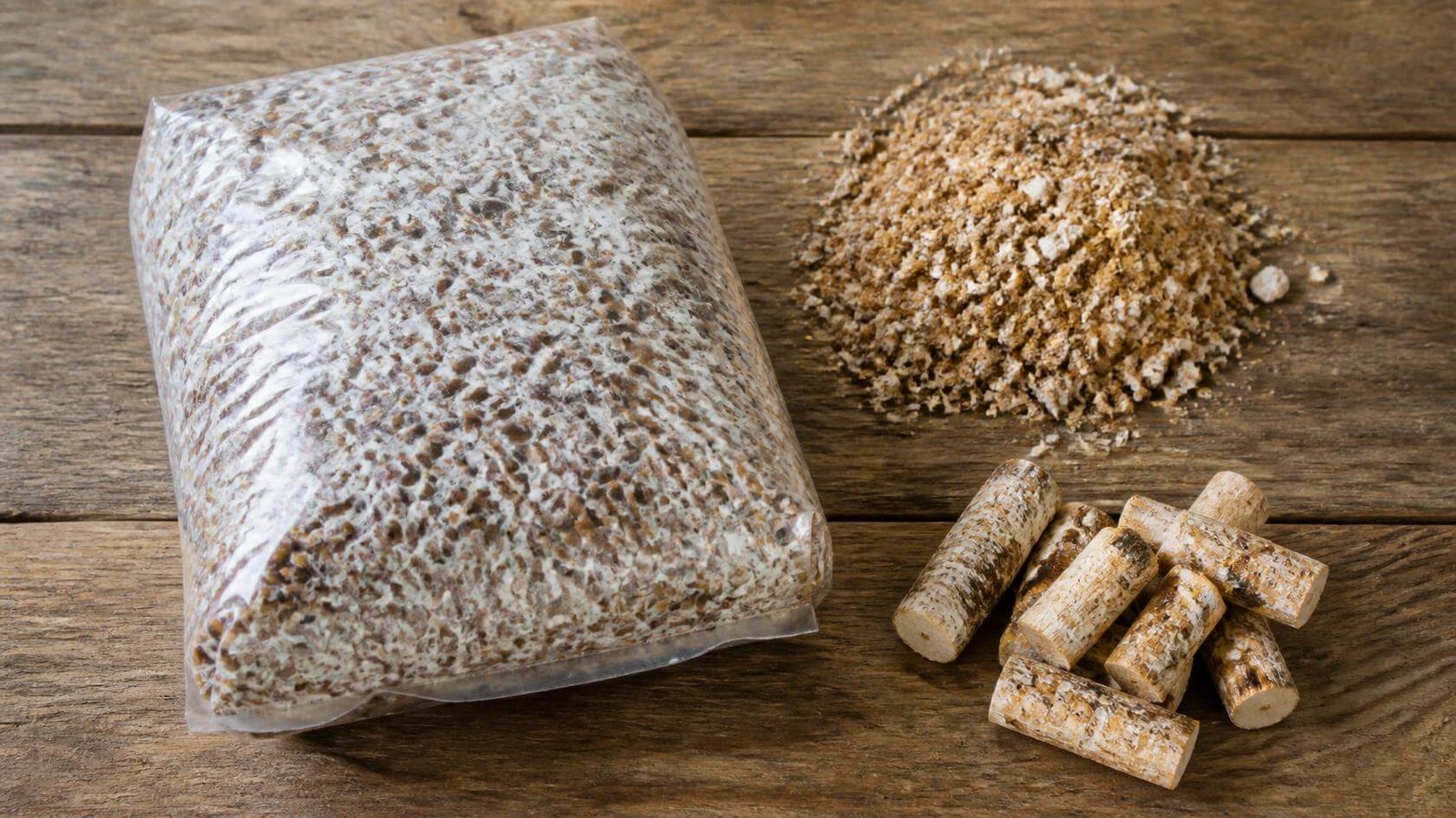
Mushroom spawn is living mushroom mycelium growing on a carrier like grain, sawdust, or small wooden dowels. You add it to a fresh growing material, called the substrate, so the mycelium can spread and grow edible mushrooms. Think of it as the starter for your mushroom patch, much like sourdough starter is for bread.
Quick Facts
What it is: Mushroom mycelium growing on a carrier like grain, sawdust, or wooden dowels
Main types: Grain, sawdust, plug, and liquid culture
Not the same as: Seeds or spores. Spawn is already-growing mycelium
Best for beginners: Plug spawn for logs, grain or sawdust spawn for straw
Scope: This guide covers edible and gourmet mushrooms only: oyster, shiitake, lion’s mane
Rule of thumb: One spawn, one species. Never mix them up
Table of Contents
ToggleWhat Is Mushroom Spawn?
A quick note on names. Oyster mushrooms have nothing to do with shellfish. The name comes from the shape of the cap. Also, the phrase “mushroom plugs” can mean tire repair plugs, so in this guide we say mushroom plug spawn: wooden dowels filled with mycelium.
Spawn vs. Substrate vs. Mycelium
These three words confuse almost every beginner. Here is the simple version:
|
Term
|
What it is
|
Easy way to remember
|
|---|---|---|
|
Mycelium
|
The living, thread-like body of the fungus
|
The plant
|
|
Mushroom
|
The part you eat
|
The apple on the tree
|
|
Spawn
|
Mycelium on a carrier, ready to transfer
|
The starter
|
|
Substrate
|
The food the mycelium eats, like logs, straw, or sawdust blocks
|
The new home
|
In short, you use spawn to colonize substrate. The mycelium then grows and produces mushrooms.
Spores vs. Spawn
Spawn skips all of that. It is already-established mycelium, so it gets a head start against mold and bacteria. That is why most home growers buy spawn and leave spores to experienced growers.
Types of Mushroom Spawn
|
Spawn type
|
What it is
|
Best for
|
Watch out for
|
|---|---|---|---|
|
Grain spawn
|
Mycelium on sterilized grain like rye or millet
|
Straw, indoor bags, sawdust blocks
|
Spoils faster; can attract pests outdoors
|
|
Sawdust spawn
|
Mycelium on hardwood sawdust
|
Logs, stumps, wood chip beds
|
Needs an inoculation tool for logs
|
|
Plug spawn
|
Mycelium on small wooden dowels
|
Hardwood logs and stumps
|
Slower to spread than sawdust spawn
|
|
Liquid culture
|
Mycelium in a sterile nutrient liquid
|
Making your own grain spawn
|
Needs sterile technique
|
Grain Spawn
Grain spawn is the fast option. Grain gives mycelium plenty of food, so it spreads quickly through loose substrates like straw. Growers also use it indoors to make fruiting blocks and more spawn. Suppliers do not recommend it for logs, and outdoors it can attract rodents and other pests.
Sawdust Spawn
Sawdust spawn works much like plug spawn on logs, but you inject it with a tool. Suppliers describe it as cheaper than plug spawn and quicker to colonize. It also works well for wood chip beds and stumps.
Mushroom Plug Spawn
Mushroom plug spawn is the easiest way to start outdoor log growing. The dowels are about the size of a pencil: you drill holes, tap in the plugs, and seal them. You need freshly cut hardwood logs. One US supplier notes that plugs can take roughly 30 percent longer to colonize a log than sawdust spawn, unless you use more plugs. They are still a great pick for small projects and for beginners. Extension guides suggest freshly cut hardwood logs about 4 to 8 inches across and 18 to 36 inches long, with holes about 5/16 inch wide and 1 to 1.5 inches deep, as Mississippi State Extension explains. Inoculate within a few weeks of cutting.

Liquid Culture
Liquid culture is mycelium growing in a sterile sugar-water solution. Most home growers use it to make their own grain spawn. It is a useful tool, but it needs clean technique. If you are just starting, buy ready-made spawn first.
Match Spawn to Your Growing Method
Pick the spawn that fits your substrate, not the one with the lowest price.
|
Your method
|
Best spawn type
|
Example mushrooms
|
|---|---|---|
|
Hardwood logs
|
Plug or sawdust spawn
|
Shiitake
|
|
Stumps and totems
|
Sawdust spawn
|
Lion's mane
|
|
Straw or wood chip beds outdoors
|
Sawdust spawn
|
Wine cap
|
|
Straw in containers
|
Grain or sawdust spawn
|
Oyster varieties
|
|
Indoor sawdust blocks
|
Grain spawn
|
Many gourmet species
|
Want an easy first project? Try our guide to growing oyster mushrooms with coffee grounds and cardboard. If you would rather skip the setup, see our best mushroom growing kits for beginners.
Do You Always Need Spawn?
Yes, you need some. Straw, coffee grounds, and cardboard are only the food. Without mycelium to eat them, nothing grows. The good news: you only need a small amount of spawn to start a large batch of substrate. The University of Florida’s oyster mushroom FunGuide walks through the full process, and our complete guide to growing mushrooms for beginners covers the basics.
Choosing the Right Wood for Log Growing
Wood choice makes or breaks a log grow, because different mushrooms like different wood.
- Shiitake grows slowly. It does best on dense hardwoods like oak, maple, and beech.
- Oyster mushrooms grow fast and handle softer hardwoods and many other materials.
- Avoid pine and other conifers for most culinary species.
- Use freshly cut logs from healthy trees.
- Do not inoculate a living tree. A healthy tree can fight off the fungus. Use cut or dead wood.
Shiitake also comes in warm-weather and cool-weather strains. Check your USDA hardiness zone and ask your supplier which strain fits your climate. A slow species on soft, fast-rotting wood can lose the race to other fungi. If that is all the wood you have, pick a faster species like oyster. For a full walkthrough, read the Washington State University Extension guide to growing shiitake on logs. Not sure which species fits? Browse our mushroom species guide.
How Mushroom Spawn Is Made
Commercial spawn is made in a clean lab. The usual path looks like this:
- Culture: a healthy sample of mycelium grows on a nutrient gel called agar.
- Grain or liquid: the culture moves onto sterilized grain or into a liquid.
- Final carrier: grain spawn then seeds sawdust or wooden dowels to make sawdust and plug spawn.
Want to see how the pros do it? Penn State explains its spawn lab steps on its spawn preparation page.
Making Mushroom Spawn at Home
You can make spawn at home, but it takes patience and a clean workspace. Most beginners get better results by buying spawn first and making their own later.
What you need: grain like rye or millet, jars or bags with a filter, a pressure cooker, and a clean culture to start from. The pressure cooker is not optional for grain. Grain is a perfect food for bacteria and mold, so it must be fully sterilized.
- Soak and cook the grain until tender but not mushy.
- Drain it well and load it into jars or filter bags.
- Sterilize it in a pressure cooker, following your cooker’s directions.
- Let it cool all the way.
- Add your culture in a very clean space.
- Keep it warm and dark, and shake it when growth appears.
- Use it once the grain is fully covered in white mycelium.
You do not need a sterilizer for log growing. Logs rely on fresh wood and the head start your spawn gives.
How Much Spawn Do You Need?
It depends on your method and your mushroom. Treat these as rules of thumb, and always follow your supplier’s directions.
- Logs: suppliers sell spawn by plug count or by the pound. One example: a 5.5 pound bag of sawdust spawn covers about 25 logs.
- Straw and bulk substrates: many growers mix in roughly 10 to 20 percent spawn by weight. More spawn usually means faster colonizing and less contamination risk.
If you are unsure, buy a little extra. Too much spawn is a smaller problem than too little.
How to Tell If Spawn Is Healthy
- Healthy: white, fluffy, or thread-like growth, even coverage, and a fresh, mushroomy smell.
- Warning signs: green, black, orange, or pink patches; a sour, rotten, or sticky-wet smell; slimy grain or discolored spots.

Where to Buy Mushroom Spawn in the US
Buy from a US supplier that ships fresh spawn and names the species and strain on the label. Before you order, check:
- Species and strain: does it match your wood or substrate and your climate?
- Spawn type: plug, sawdust, or grain, based on your method.
- Shipping time: spawn is alive, so faster is better.
- Edible varieties: make sure the listing is for culinary mushrooms.
- Instructions: good suppliers include clear steps.
Frequently Asked Questions
Q1: What is mushroom spawn made of?
Q2: Can I reuse mushroom spawn?
Q3: How long does mushroom spawn last?
Q4: How much spawn do I need?
Q5: Is plug spawn different from sawdust spawn?
Q6: Do I need to sterilize logs?
Q7: How long will a mushroom log keep producing?
Q8: Why do plugs only last for a limited time?
Key Takeaways
- Spawn is mycelium on a carrier, not seeds
- Four types: grain, sawdust, plug, and liquid culture
- Match the spawn to your method: plugs for logs, grain for straw
- Pick the right wood: fresh hardwood, never a living tree
- Buy fresh spawn from a US supplier and check it for mold on arrival
Ready to start? Read our complete guide to growing mushrooms for beginners next, or browse all our mushroom guides.
Sources
- Spawn Preparation — Penn State Department of Plant Pathology, mushroom spawn lab procedures
- A Hobbyist Guide to Growing Shiitake Mushrooms on Logs for Woodland Owners — Washington State University Extension
- Shiitake Production on Hardwood Logs — Mississippi State University Extension
- FunGuide: Grow Your Own Oyster Mushrooms at Home — University of Florida IFAS Extension
- USDA Plant Hardiness Zone Map — USDA Agricultural Research Service
