
We may earn a commission from links in this turkey tail mushroom guide, at no extra cost to you.. Learn more
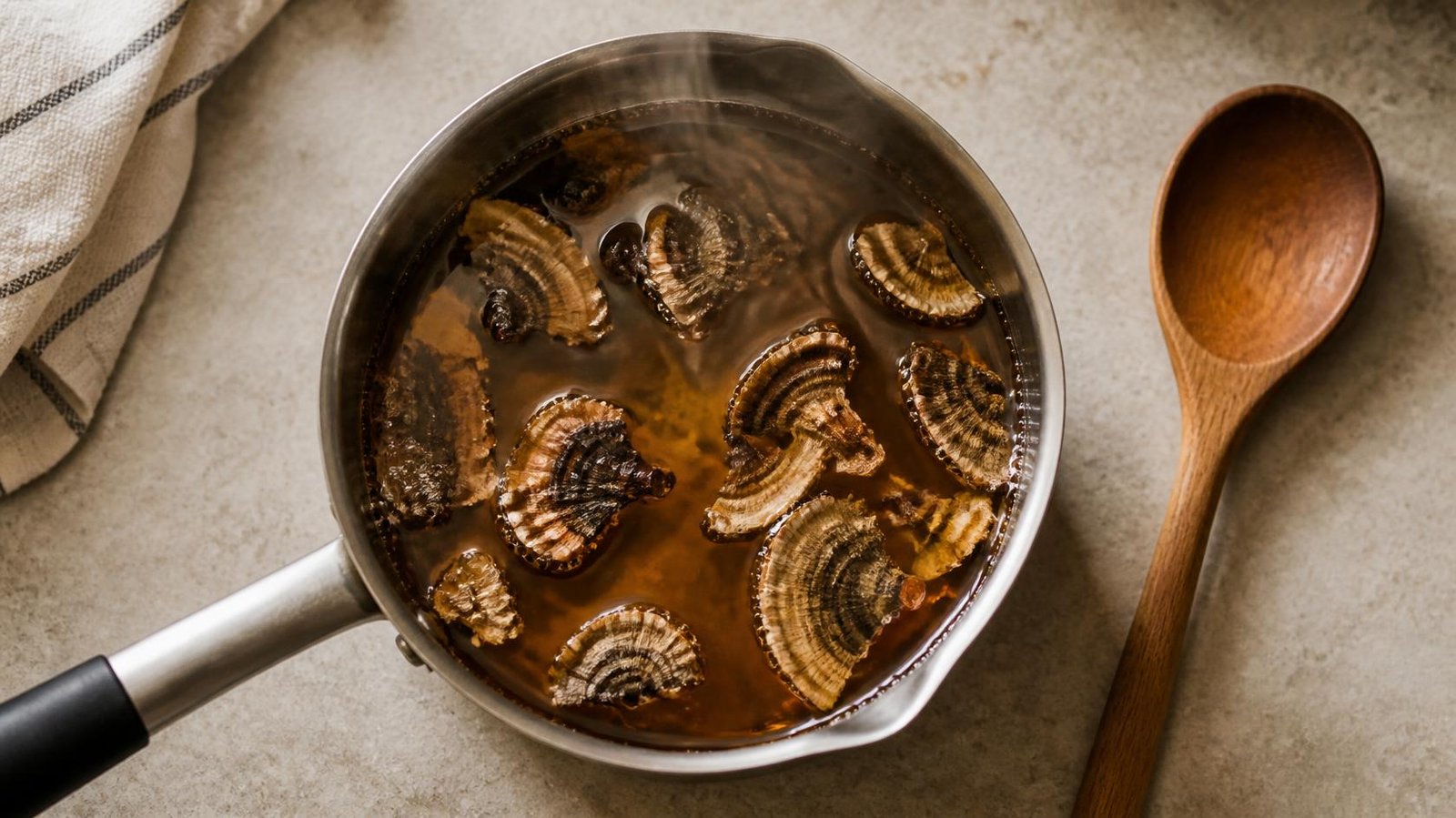
To cook turkey tail mushrooms, clean and cut them into small pieces. Simmer roughly 1 ounce of dried mushroom in 4 cups of water for 45 minutes to make tea.
For broth, simmer with vegetable scraps for 2–3 hours instead. Turkey tail stays tough no matter how long you cook it, so tea, broth, and powder work far better than sautéing it whole.
Quick Facts
- Scientific Name: Trametes versicolor (also Coriolus versicolor)
- Best Cooking Method: Long simmer — tea (45–60 min) or broth (2–3 hrs)
- Ideal Ratio for Tea: 1 oz dried mushroom : 4 cups water
- Studied Daily Dose: 1,000–3,000 mg (up to 6,000 mg short-term)
- Difficulty: Beginner-friendly, but easy to underbrew
- Shelf Life (dried/powder): 1+ year, airtight container
I brewed the same batch of foraged turkey tail two ways. First attempt: a 5-minute steep, treated like a tea bag. Thin, slightly raw, faintly woody — nothing worth drinking twice.
Second attempt: the same mushroom, more water, and a full 50-minute simmer. Amber-colored, earthy, mildly sweet — the tea people actually describe online. Same mushroom, same pot. The only variable was time and water. That’s the whole lesson of this guide.
I made that exact mistake.
Table of Contents
ToggleAre Turkey Tail Mushrooms Edible?
Yes. Turkey tail mushrooms (Trametes versicolor) are edible and not toxic, though almost nobody eats them whole the way you’d eat a portobello.
The real risk isn’t the mushroom itself — it’s misidentification. A few lookalikes exist, and eating anything foraged that you can’t confidently identify is never worth it. Buying dried turkey tail or turkey tail powder from a supplier removes this concern entirely.
How to Identify Turkey Tail Before You Cook It
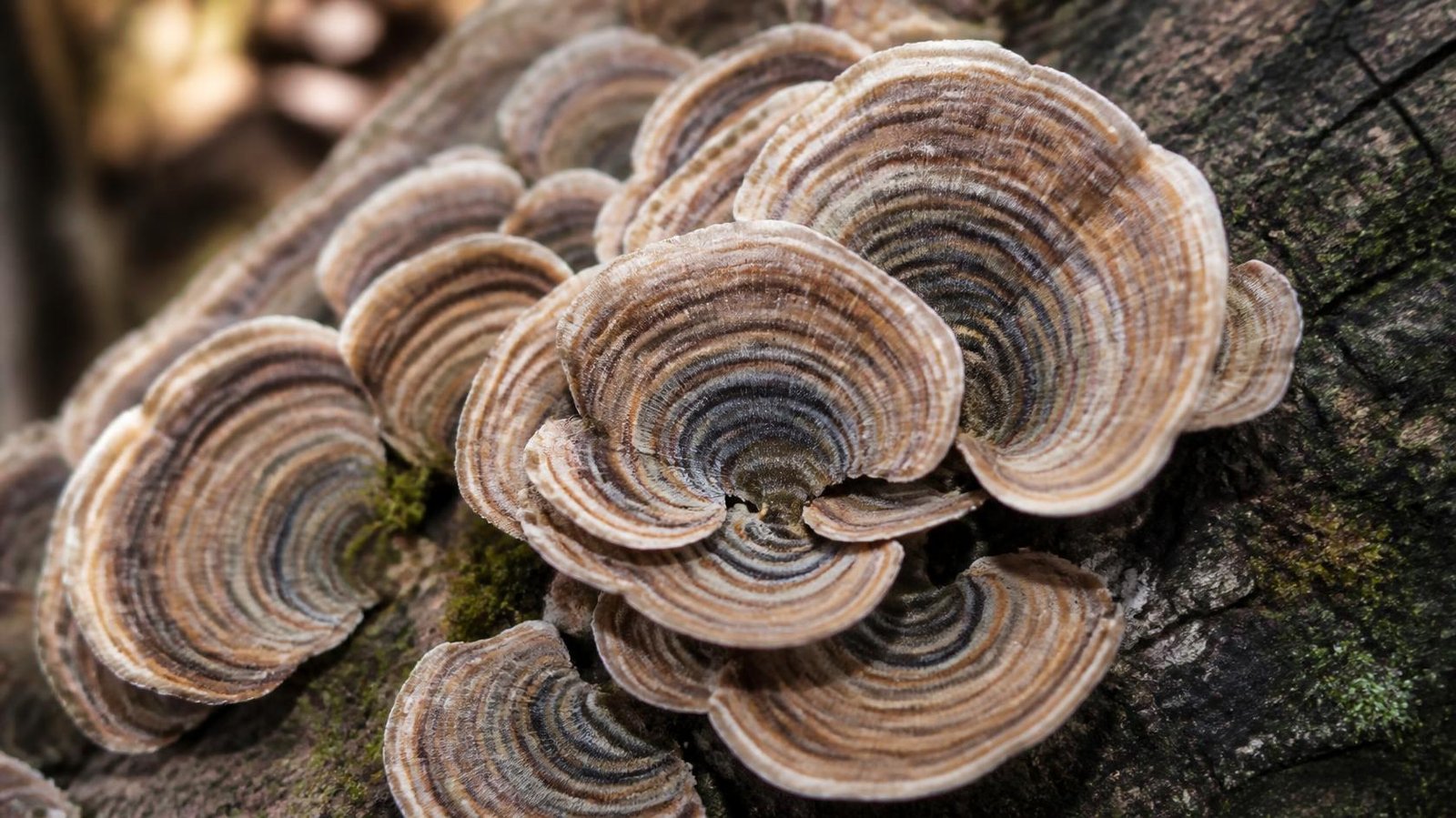
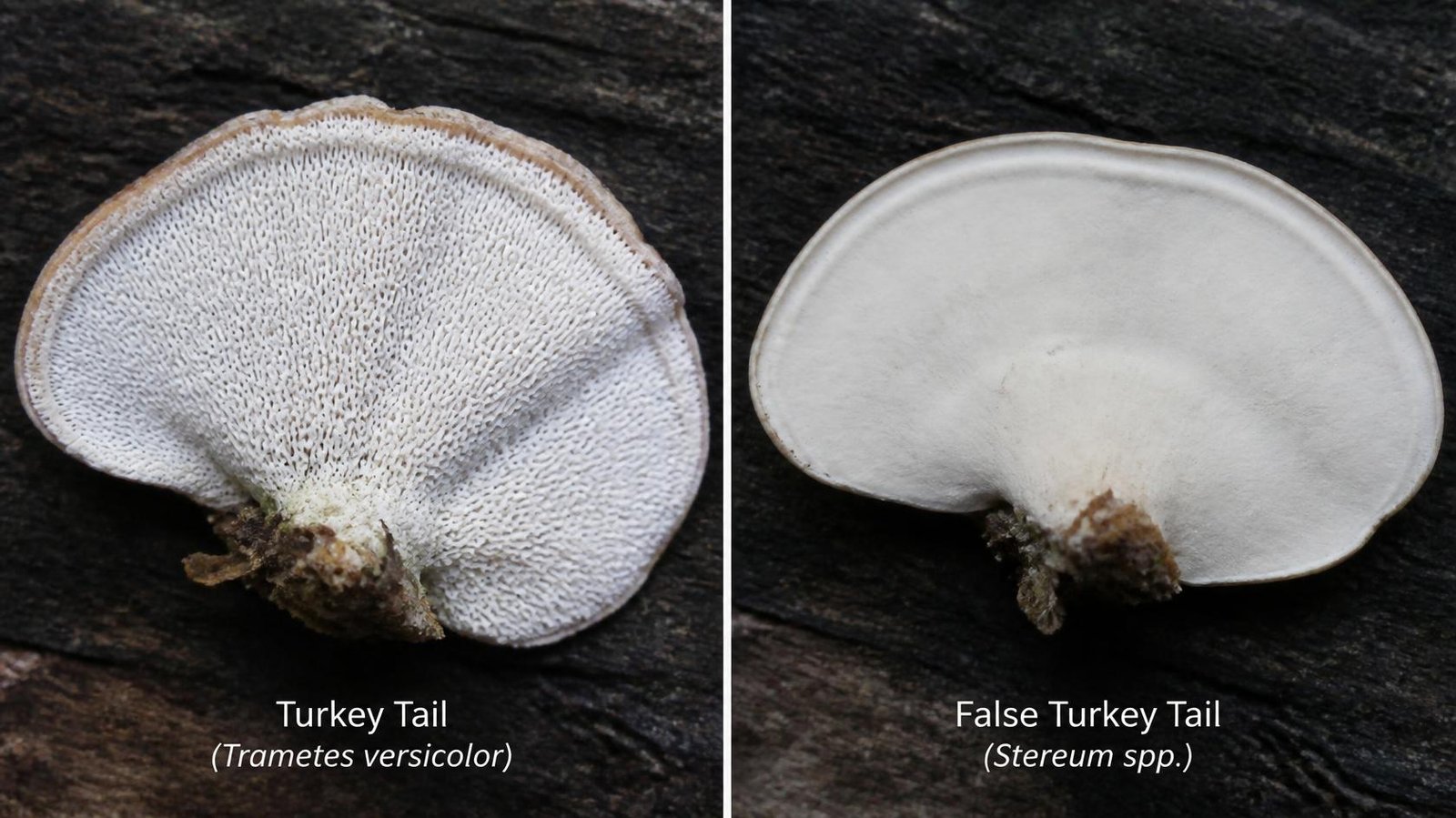
Turkey tail grows in thin, fan-shaped, overlapping clusters on dead or dying hardwood, and the top surface shows concentric rings of brown, tan, gray, and blue. Four markers confirm the ID:
- Underside: small white or cream-colored pores, never gills
- Texture: thin and leathery, almost like suede
- Growth pattern: dense, overlapping shelves stacked on the wood
- Zoning: distinct color bands running in rings, slightly fuzzy on top
New to foraging? Cross-reference with a local field guide or a mycology group before cooking anything you picked yourself. We cover the full process, including more lookalikes, in our turkey tail mushroom identification and benefits guide.
How to Clean and Prepare Turkey Tail Mushrooms
Cleaning takes minutes, but skipping it affects everything you cook afterward. Five steps:
- Brush off debris. A soft brush or dry paper towel removes dirt, bark, and insects from both sides.
- Wipe, don’t soak. A damp cloth handles what the brush missed. Turkey tail is thin enough that soaking waterlogs it fast.
- Trim the base. Cut away the woody point where it attached to the log.
- Cut into small pieces. Smaller pieces expose more surface area, so they extract faster whether you’re steeping or drying.
- Dry it if you’re not cooking today. Spread pieces on a screen or dehydrator tray until snap-brittle. Dried turkey tail keeps a year or more in an airtight container — and it’s what most recipes, including the one below, actually call for.
How to Make Turkey Tail Mushroom Tea: Step by Step
Total time: about 1 hour. Makes roughly 3–4 cups. This is the recipe where most people, myself included, get it wrong the first time.
The compounds turkey tail is known for — polysaccharide-K and polysaccharide-peptide — are water-soluble, but they only release with real heat over real time. A quick steep barely touches them.
Ingredients
- 1 oz dried turkey tail pieces (about 1 cup)
- 4 cups water
- Optional: a slice of fresh ginger
- Optional: lemon or honey to taste
Instructions
- Add the turkey tail pieces and water to a saucepan.
- Bring to a gentle boil, then reduce to a low simmer.
- Simmer uncovered for 45 minutes to an hour, topping up water if it drops too low.
- Strain through a fine mesh strainer or cheesecloth into a mug or jar.
- Stir in ginger, lemon, or honey if using, and drink warm.
💡 The thin-tea fix: If your tea tastes weak or slightly raw, the simmer was too short or the water ratio too low — that was exactly my mistake the first time. A full 45-to-60-minute simmer, not a steep, is what pulls the flavor out.
Leftover tea keeps in the fridge for about a week. Turkey tail also holds up to a second simmer better than most mushrooms, so the same batch of pieces can give you a lighter second cup.
Not in the mood to simmer a pot every time? A pre-made turkey tail extract skips the wait entirely.
Exclusive Reader Discount – Save $10! Apply Code: LEARNMUSHROOM · Shop Turkey Tail Powder →
Common Turkey Tail Cooking Mistakes and Fixes
Learning how to cook turkey tail mushrooms usually means running into one of these five problems first. Here’s the fast fix for each:
|
Problem
|
Cause
|
Fix
|
|---|---|---|
|
Thin, weak-tasting tea
|
Steeped instead of simmered, or too little water
|
Simmer 45–60 min at a 1:4 mushroom-to-water ratio
|
|
Bitter or musty taste
|
Old or improperly dried mushroom
|
Discard musty-smelling pieces; dry fresh ones fully before storing
|
|
Gritty tea
|
Skipped straining, or used a coarse strainer
|
Strain through cheesecloth or a fine mesh strainer
|
|
Broth tastes flat
|
Not simmered long enough, or no aromatics added
|
Simmer 2–3 hrs with garlic, onion, and vegetable scraps
|
|
Powder clumps or won't dissolve
|
Not ground fine enough, or added to cold liquid
|
Re-grind finer; stir into warm liquid first
|
3 More Ways to Cook Turkey Tail Mushrooms
Turkey Tail Mushroom Broth
Sautéed Turkey Tail (Flavor Add-In, Not a Main)
Thin strips of fresh turkey tail can sauté in butter or oil with garlic for five to seven minutes, but don’t expect them to soften into something chewable. Most cooks use it to flavor a dish, then pull the pieces out before serving — the same way you’d treat a bay leaf.
Turkey Tail Mushroom Powder
|
Form
|
Best For
|
Prep Needed
|
Shelf Life
|
|---|---|---|---|
|
Fresh
|
Broth, flavoring sautés
|
Clean, trim, cut same-day
|
3–5 days refrigerated
|
|
Dried
|
Tea, long-simmered broth
|
Simmer directly
|
1+ year, airtight
|
|
Powder
|
Coffee, smoothies, daily use
|
None — measure and mix
|
1–2 years, airtight
|
If you forage your own turkey tail, drying it right after cleaning is the most practical route — shelf-stable and ready whenever you want tea. Buying instead of foraging? A powder extract skips the simmering step completely and is the easiest way to build turkey tail into a daily routine.
How Much Turkey Tail Should You Use?
Most turkey tail supplement labels recommend somewhere between 1,000 mg and 3,000 mg per day, usually split into one or two servings, though the exact amount depends on the concentration of the specific product.
Clinical trials have gone higher for shorter periods — one 8-week study in healthy adults used 6,000 mg a day with no adverse effects, and long-term Japanese clinical use has run at 3,000 mg a day for up to 36 months.
Homemade tea doesn’t come with a precise milligram count, which is why a lot of people move to a standardized powder or capsule once they decide turkey tail is something they want to use regularly. Always check with a doctor before starting it as a daily habit, especially if you’re pregnant, nursing, or taking other medications — more on that in the safety section below.
What to Check Before Buying Turkey Tail
Not every jar labeled “turkey tail” delivers the same thing. Four details on the label separate a real extract from filler:
- Fruiting body vs. mycelium. Fruiting-body extracts generally carry more active beta-glucans than mycelium grown on grain, which can be diluted with starch.
- Beta-glucan percentage. Look for a specific number — 20–30% or higher — not just a vague “polysaccharide-rich” claim.
- Third-party testing. A certificate of analysis (COA) confirms what’s actually in the jar.
- A clear serving size. Without a specific milligram dose, it’s impossible to know how much you’re actually taking.
How to Store Turkey Tail Tea, Broth, and Powder
Tea: Sealed jar in the fridge, about 1 week. Reheats fine on the stove or in the microwave.
Broth: Freezes well for up to 3 months. Portion it into freezer bags flat — they thaw faster than a solid block.
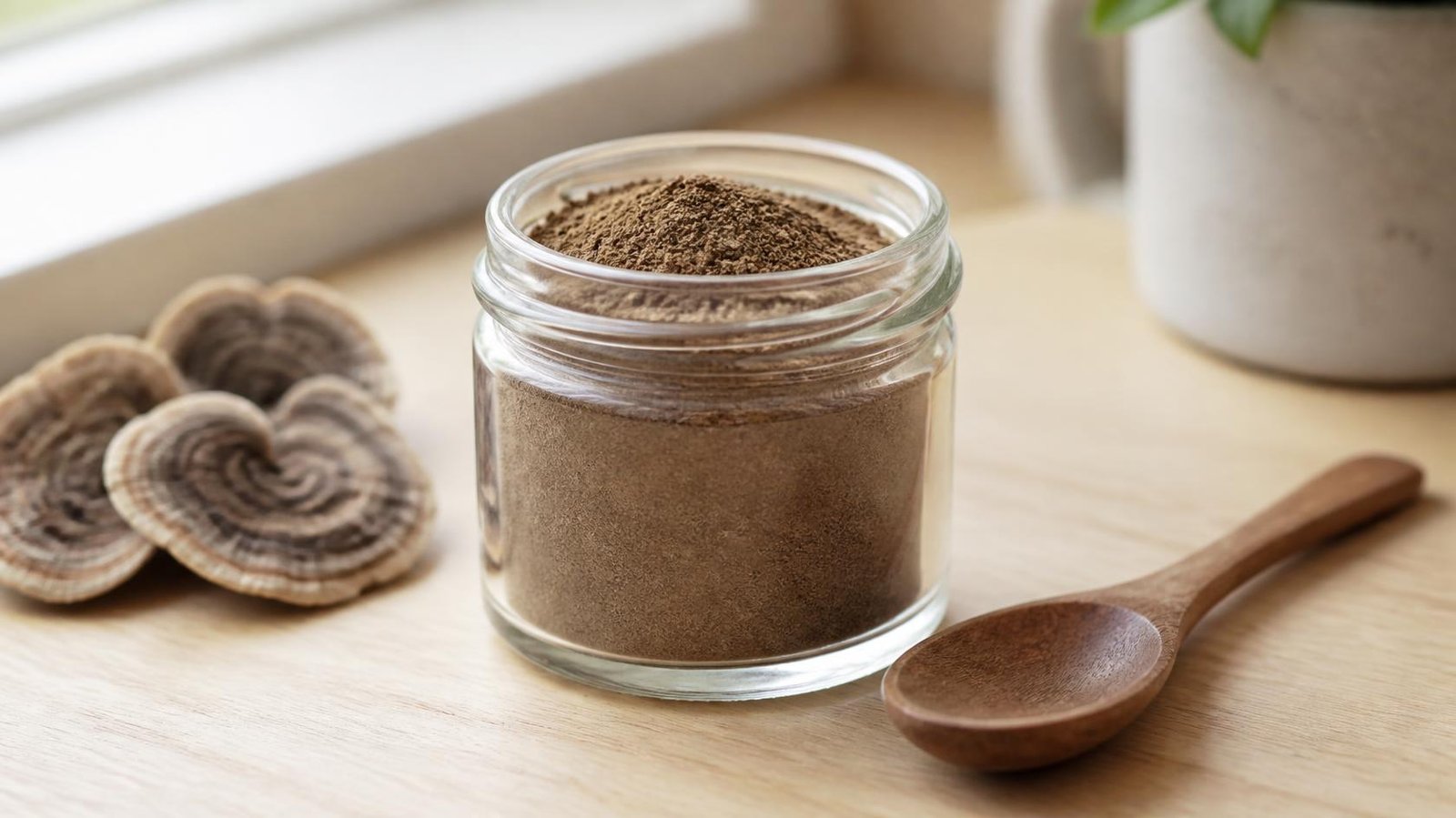
Dried mushroom and powder: Airtight container, away from light and moisture, keeps well over a year. If either one smells musty or shows any sign of mold, throw it out — turkey tail is cheap enough that it’s never worth the risk.
Quick 8-Step Summary
Use these concise steps for your WordPress HowTo Schema markup:
- Brush and wipe turkey tail clean — never soak it.
- Trim the woody base and cut into small pieces.
- Dry fully if not cooking the same day.
- Add 1 oz dried pieces to 4 cups water for tea.
- Bring to a boil, then reduce to a low simmer.
- Simmer uncovered 45–60 minutes.
- Strain through a fine mesh strainer or cheesecloth.
- Drink warm, or freeze/refrigerate for later.
Final Thoughts
Learning how to cook turkey tail mushrooms really comes down to one habit: give it time. Whether you’re brewing tea, building a broth, or grinding it into powder, turkey tail rewards patience and punishes rushing. Get the water ratio and simmer time right once, and every batch after that is easy.
DISCLAIMER: This article is for general informational and educational purposes only and does not constitute medical advice. Always properly identify foraged mushrooms before cooking, and consult a physician before starting turkey tail regularly, especially if pregnant, nursing, or on medication.
Frequently Asked Questions
Q: What does turkey tail mushroom taste like?
A: Mild, earthy, and slightly woody on its own. Most people add ginger, honey, or lemon to tea, or blend the powder into coffee, since the raw taste is fairly plain.
Q: Can you eat turkey tail mushroom raw?
A: No. Raw turkey tail is too tough to chew and hasn’t been cooked long enough to release its compounds. It needs a long simmer, or drying and grinding, before use.
Q: What's the best way to consume turkey tail?
Q: What shouldn't you take turkey tail with?
Q: How do you prepare turkey tail mushroom for tea?
Q: Is turkey tail mushroom safe to take every day?
A: For most healthy adults, yes. Clinical trials using 3–6 grams daily for up to 12 weeks reported no serious adverse events, with mild stomach upset in a small minority of participants. Anyone pregnant, nursing, or on chemotherapy or immune medication should ask a doctor first. Full details are in our guide to turkey tail mushroom benefits and safety.
Key Takeaways
- Simmer, don’t steep — 45 to 60 minutes is what actually pulls the flavor and compounds out
- Flip it over before foraging — real turkey tail has pores, false turkey tail is smooth
- Texture never fully softens — that’s why tea, broth, and powder beat sautéing whole pieces
- Well tolerated at studied doses — 1,000–3,000 mg daily is the standard range most people use comfortably long-term
- On chemo or immune medication? Quick doctor check first, just to be safe
- Check the label — fruiting body source, beta-glucan %, and third-party testing separate quality products from filler
Foraging your own turkey tail is rewarding, but it’s not something you can do year-round or on a schedule. A standardized, lab-tested extract gives you the same mushroom in a form that’s ready in seconds — and keeps you inside the studied safety range every day.
Sources
- Turkey Tail Mushroom: Uses and Research — Medical News Today, updated 2024
- Mushrooms (PDQ) — PSK Research Overview — National Cancer Institute
- Turkey Tail: Research Overview — ConsumerLab.com
- Turkey Tail Mushroom for Cancer: Clinical Data — CancerChoices.org
- Turkey Tail — Uses & Dosage — Drugs.com, medically reviewed
- Turkey Tail Mushroom — Overview — WebMD