
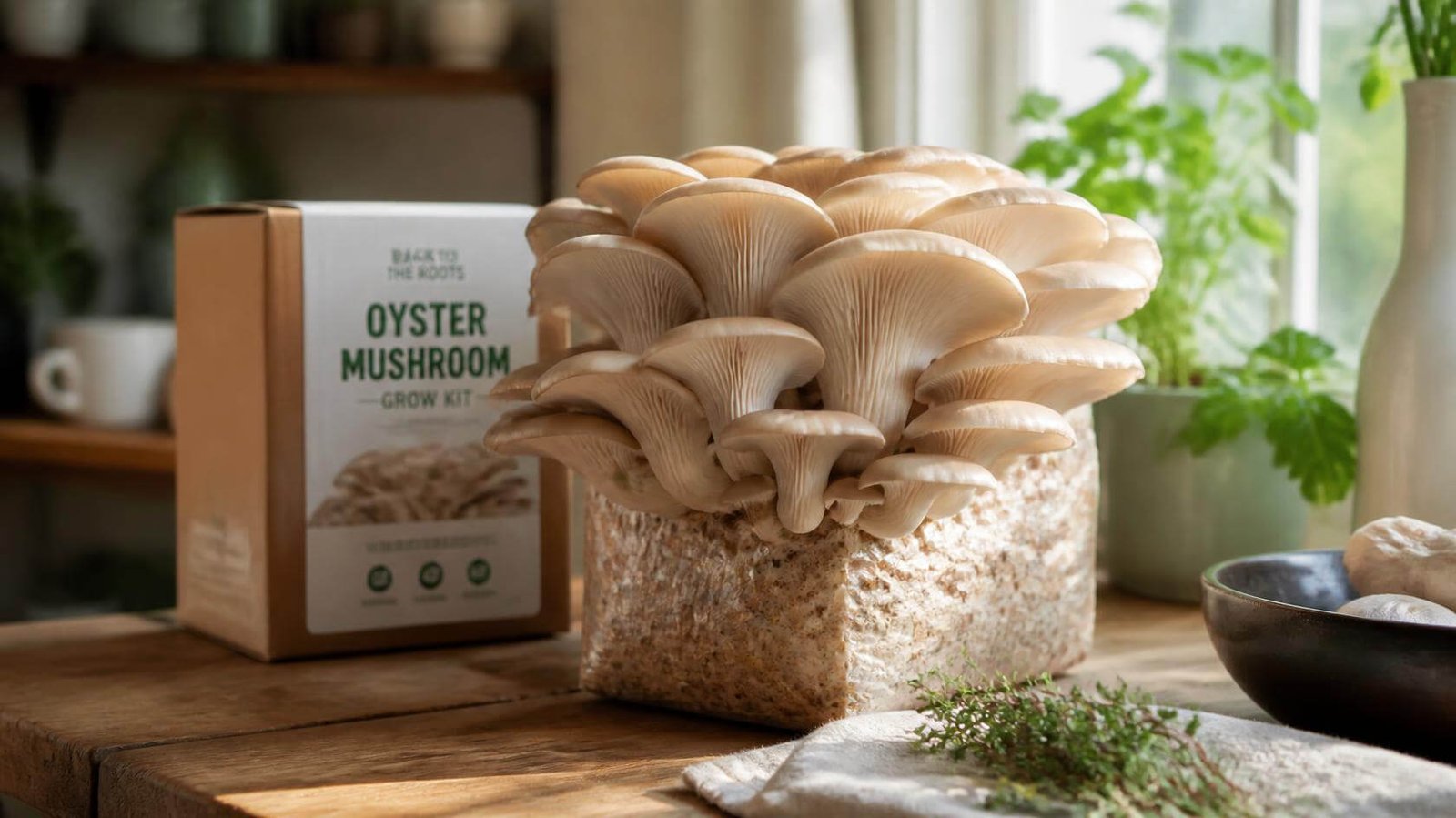
A mushroom growing kit is a ready-to-use setup that helps beginners grow mushrooms at home without starting from spores or building a full growing system. Most kits come with a colonized block, bag, or box that already contains mushroom mycelium. Your job is usually simple: open the kit, mist it, give it fresh air, keep it out of direct sunlight, and wait for mushrooms to appear.
Table of Contents
ToggleWhat Is a Mushroom Growing Kit?
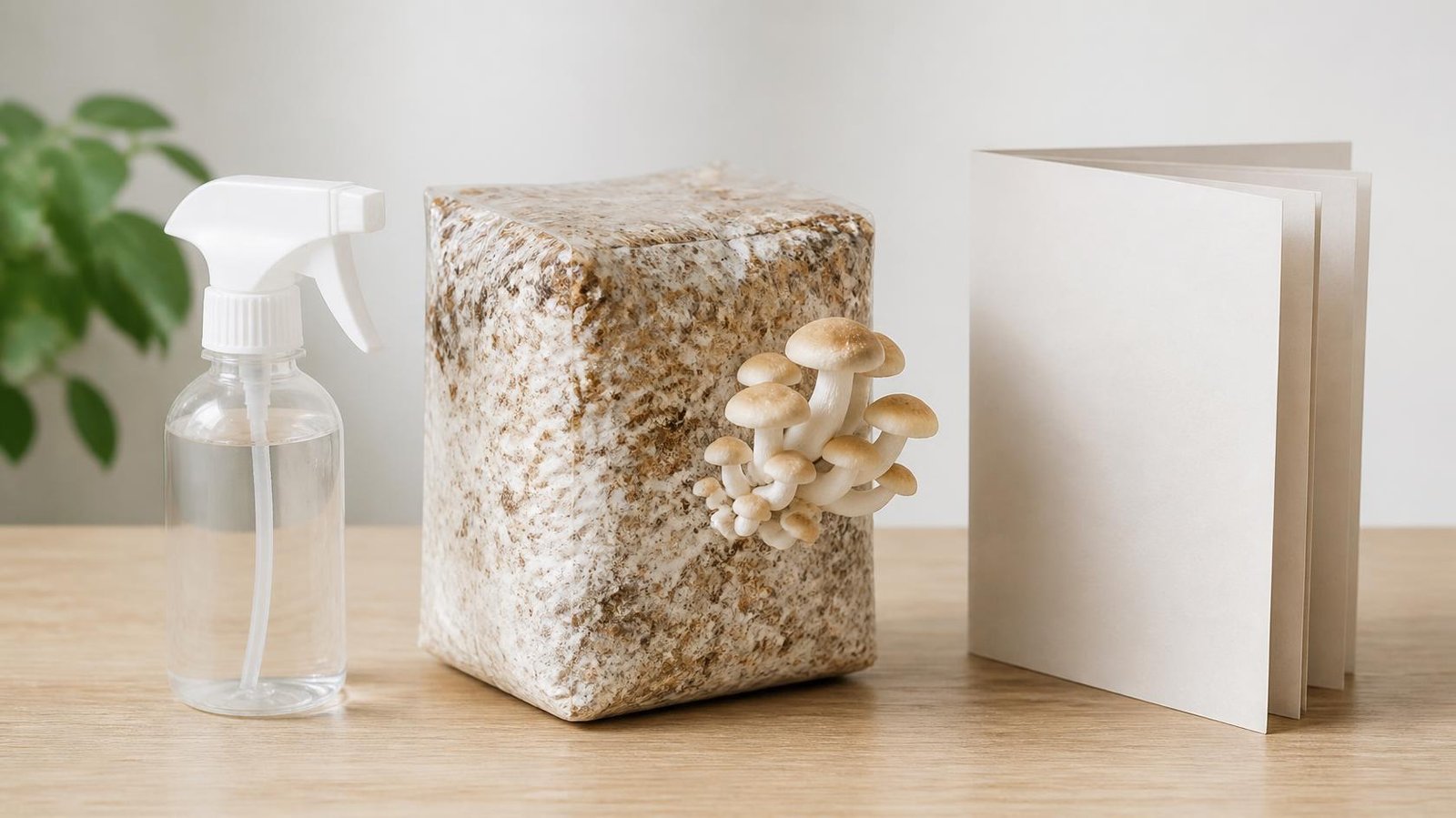
A mushroom growing kit is a beginner-friendly product designed to help you grow edible mushrooms at home. Instead of starting with spores, agar, grain spawn, or homemade substrate, you get a prepared mushroom block that is already alive with mycelium.
Mycelium is the white root-like network of the fungus. If conditions are right, that mycelium produces mushrooms.
Most home kits are made for easy indoor growing. Some grow from a box. Some grow from a plastic bag. Others come as outdoor log kits, garden bed kits, or larger monotub-style systems.
A basic kit may include:
- A colonized mushroom block
- A box or bag
- A spray bottle or mister
- Growing instructions
- A humidity tent or plastic cover
- Harvesting tips
- Sometimes recipes or educational material
The goal is simple: make mushroom growing less intimidating.
Are Mushroom Growing Kits Worth It?
For beginners, yes — a mushroom growing kit is usually worth it if you want a simple first experience.
It is not the cheapest way to grow mushrooms forever. But it is one of the easiest ways to learn how mushrooms behave without buying lab tools, pressure cookers, sterile bags, grain spawn, and substrate.
A kit is worth it if you want:
- A simple indoor project
- A first mushroom harvest
- A gift for a food lover or gardener
- A kid-friendly science activity
- A low-risk way to try mushroom growing
- Fresh mushrooms without building a full setup
A kit may not be worth it if you want:
Large commercial harvests
Full control over strain and substrate
The lowest cost per pound
Advanced cultivation practice
Rare mushrooms that are hard to cultivate
If this is your first grow, a kit makes sense. If you already know how to pasteurize straw, inoculate substrate, and control humidity, you may prefer a DIY method.
What Comes Inside a Mushroom Growing Kit?
Every brand is different, but most beginner kits include a colonized block. This block is usually made from sawdust, straw, compost, or another mushroom-friendly substrate. The block already contains mushroom mycelium. That means the kit has passed the hardest stage before it reaches you.
A typical indoor kit may include:
|
Item
|
What It Does
|
|---|---|
|
Colonized block
|
The main growing material
|
|
Plastic bag or box
|
Holds moisture and protects the block
|
|
Spray bottle
|
Helps you mist the kit
|
|
Instructions
|
Shows when to open, mist, and harvest
|
|
Humidity cover
|
Helps keep moisture around the block
|
|
Recipe booklet
|
Gives ideas for cooking the harvest
|
Some kits are very simple. Others include more tools. For beginners, simple is usually better.
How Mushroom Growing Kits Work
A mushroom kit works by giving mycelium the right conditions to fruit. The mycelium inside the kit has already grown through the substrate. When you open the kit and expose it to fresh air, moisture, and indirect light, the mycelium gets the signal to produce mushrooms.
The basic process looks like this:
- Open the kit — Follow the instructions and cut or open the marked area.
- Mist daily — Most kits need regular misting to stay humid.
- Give fresh air — Mushrooms need oxygen. Too much trapped carbon dioxide can cause long stems or fuzzy growth.
- Keep it in indirect light — Mushrooms do not need strong sunlight, but they do need a light cue.
- Wait for pins — Tiny mushroom pins appear first.
- Harvest at the right time — Pick mushrooms before they dry out or overmature.
A good kit does not need soil like a normal plant. Mushrooms are fungi, not vegetables, so their growing needs are different.
Best Types of Mushroom Growing Kits for Beginners
Before buying, exploring detailed mushroom guides can help you understand which species best suits your climate and home setup.
Oyster Mushroom Kit
Oyster mushrooms are one of the best choices for beginners. They grow fast, look beautiful, and usually respond well to basic indoor care. Many beginner kits use pearl oyster, blue oyster, pink oyster, or golden oyster mushrooms.
Best for: First-time growers, fast results, kitchen counter growing, kids or family projects.
Watch out for: Dry air, not enough fresh air, harvesting too late.
Lion’s Mane Mushroom Kit
Lion’s Mane is another popular option. It has a unique shaggy look and a mild seafood-like texture when cooked.
Best for: People interested in gourmet mushrooms, food lovers, beginners who want something different from oyster mushrooms.
Watch out for: Steady humidity, unusual appearance while growing, and browning if too dry.
Shiitake Mushroom Kit
Shiitake kits can be rewarding, but they may need more patience than oyster kits.
Best for: People who like rich, savory mushrooms, growers willing to wait longer, indoor or log-style growing.
Watch out for: Longer timeline, more specific care, slower flushes.
Button Mushroom Kit
Button mushrooms are familiar because they are common in grocery stores. But they are not always the easiest home kit. They usually prefer compost-based substrate and a casing layer. For total beginners, oyster mushrooms may be easier.
Reishi Mushroom Kit
Reishi is usually grown for tea or wellness use rather than normal cooking. It is better for patient growers than for someone who wants a quick dinner mushroom.
Mushroom Growing Kit Comparison Table
|
Kit Type
|
Best For
|
Difficulty
|
Time to Harvest
|
Beginner Rating
|
|---|---|---|---|---|
|
Oyster mushroom kit
|
First-time growers
|
Easy
|
7–21 days
|
Excellent
|
|
Lion’s Mane kit
|
Gourmet mushroom fans
|
Easy-medium
|
10–21 days
|
Good
|
|
Shiitake kit
|
Patient growers
|
Medium
|
2–8 weeks
|
Good
|
|
Button mushroom kit
|
Familiar grocery-style mushrooms
|
Medium
|
4–8 weeks
|
Okay
|
|
Reishi kit
|
Tea/wellness use
|
Medium
|
1–3 months
|
Okay
|
|
Garden growers
|
Okay
|
Medium-hard
|
Months
|
Not first choice
|
|
Monotub kit
|
Advanced indoor growers
|
Medium-hard
|
Varies
|
Not for total beginners
|
If you want the easiest first harvest, start with an oyster mushroom kit.
How Much Does a Mushroom Growing Kit Cost?
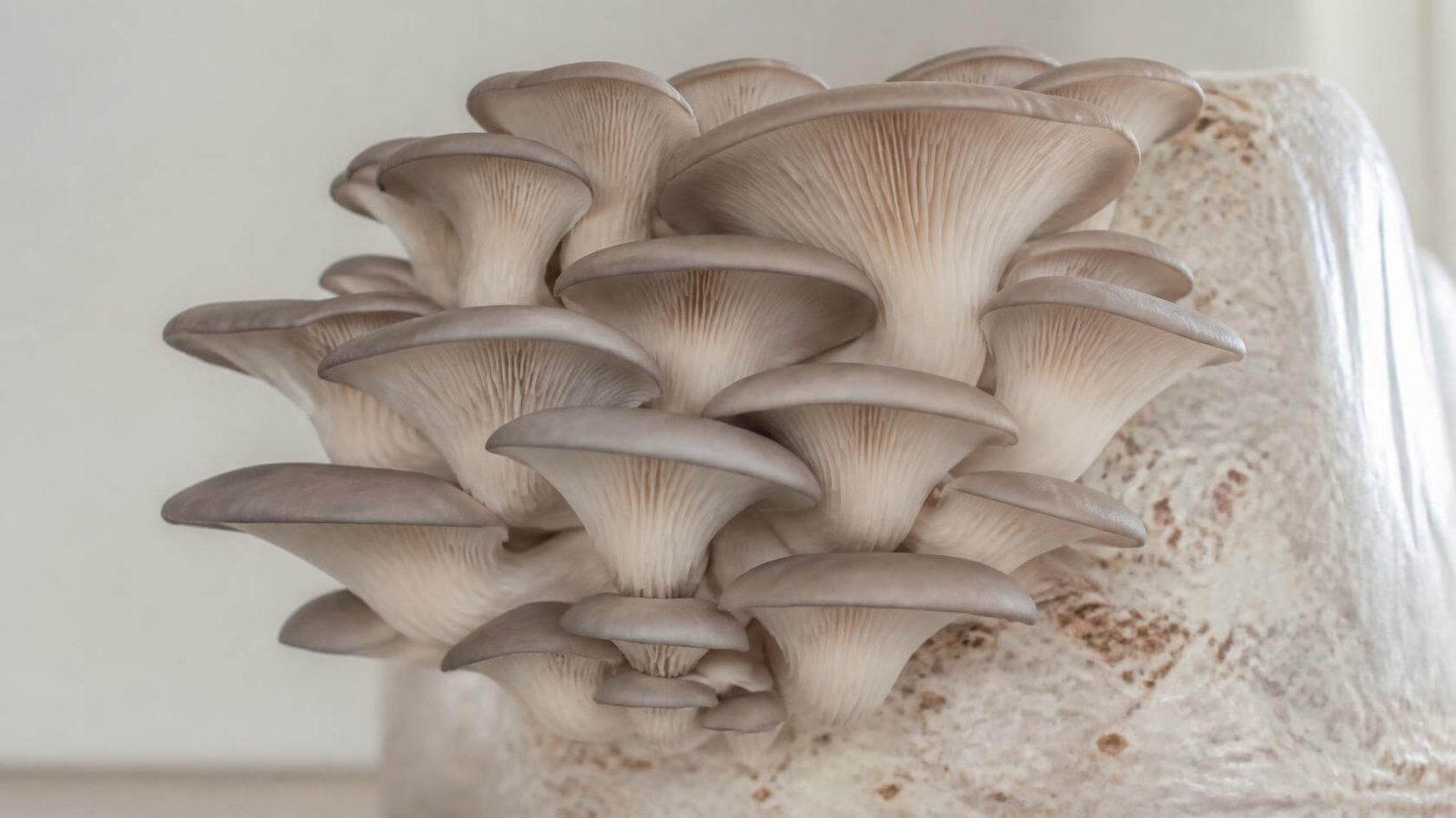
In the US, beginner mushroom kits usually cost around $20 to $35. Larger kits, bundles, buckets, outdoor systems, or monotub setups can cost much more.
|
Type of Kit
|
Typical Price Range
|
Best For
|
|---|---|---|
|
Small countertop kit
|
20–
35
|
Beginners, gifts, kids
|
|
Specialty indoor kit
|
25–
50
|
Gourmet mushroom growers
|
|
Multi-pack bundle
|
40–90
|
Families or repeat growers
|
|
Outdoor log/garden kit
|
30–100+
|
Gardeners
|
|
Monotub/grow chamber
|
100–300+
|
Advanced growers
|
The maintenance cost is usually low. You may only need water, a clean space, and sometimes a humidity tent. But if you want to grow mushrooms often, you may eventually spend more on substrate, spawn, bags, tubs, or humidity tools.
How Long Does a Mushroom Growing Kit Take?
Most beginner kits fruit within 1 to 3 weeks after you start them, but timing depends on the mushroom species and your room conditions.
|
Stage
|
Typical Time
|
|---|---|
|
Start kit
|
Day 1
|
|
First pins appear
|
5–14 days
|
|
Mushrooms grow larger
|
2–7 days after pins
|
|
First harvest
|
7–21 days
|
|
Rest before second flush
|
1–2 weeks
|
|
Possible second harvest
|
2–4 weeks later
|
Some brands say mushrooms can grow in 10 days. That can happen, especially with oyster kits, but it is not guaranteed for every home. Temperature, humidity, fresh air, and kit freshness all matter.
Where to Buy Mushroom Growing Kits Near Me
Big-box stores are convenient, especially if you want a simple countertop kit. But specialty mushroom suppliers often have more options, such as oyster, Lion’s Mane, shiitake, reishi, outdoor beds, and grow blocks.
What to Check Before Buying Locally
- Is the package sealed?
Does it look damaged?
Is there any bad smell?
Is the kit past its best-use date?
Does it include instructions?
What species does it grow?
Does the store accept returns?
Are recent reviews good?
Is the mushroom type beginner-friendly?
A cheap kit is not always better if it has been sitting too long in poor storage conditions.
Online vs Local Mushroom Growing Kits
|
Buying Option
|
Best For
|
Pros
|
Watch Out For
|
|---|---|---|---|
|
Home Depot / Big-box store
|
Fast pickup
|
Easy returns, low price
|
Limited species
|
|
Garden center
|
Local advice
|
Helpful staff, seasonal items
|
Stock may vary
|
|
Mushroom farm website
|
Best variety
|
Better species options
|
Shipping time
|
|
Farmers market
|
Local support
|
Fresh, direct advice
|
Not always available
|
|
Amazon / Marketplace
|
Convenience
|
Fast shipping
|
Quality varies by seller
|
If you want the simplest first kit, local stores are fine. If you want more species or better growing support, a mushroom-specific supplier may be better.
Mushroom Growing Kit vs Spores vs DIY Setup
|
Option
|
Best For
|
Difficulty
|
Beginner Friendly?
|
|---|---|---|---|
|
Mushroom growing kit
|
First harvest
|
Easy
|
Yes
|
|
Grain spawn
|
DIY growers
|
Medium
|
Somewhat
|
|
Spores
|
Advanced growers
|
Hard
|
Not ideal
|
|
DIY substrate
|
Budget growers
|
Medium-hard
|
Not first choice
|
|
Monotub setup
|
Serious growers
|
Medium-hard
|
Not for total beginners
|
If your goal is to grow your first mushrooms, choose a kit. If your goal is to learn cultivation deeply, you can later move to spawn and DIY substrate.
Can You Grow Oyster Mushrooms from Spores?
Yes, oyster mushrooms can grow from spores, but that is not the easiest route for beginners. Spores usually require cleaner technique, more time, and more steps. You may need agar plates, sterile grain, and proper inoculation methods.
For beginners, oyster mushroom grain spawn or a ready-to-fruit oyster mushroom kit is much easier.
A simple rule:
- Want the easiest harvest? Choose a kit.
- Want to learn DIY growing? Use grain spawn.
- Want advanced cultivation practice? Learn spores and agar later.
Can You Grow Button Mushrooms Without a Kit?
A simple DIY method may use a deep tray or box, well-prepared compost or manure-based substrate, button mushroom spawn, a moist casing layer, misting, and a dark or low-light growing space.
For beginners, this method is possible, but oyster mushroom kits are usually easier for a first grow.
Can You Grow Chanterelles from a Mushroom Growing Kit?
Chanterelles are not like oyster mushrooms or Lion’s Mane. They are usually mycorrhizal mushrooms, which means they grow in relationship with living tree roots. That makes them very hard to grow in a normal indoor kit.
If you want a realistic first harvest, do not start with chanterelles. Try oyster, shiitake, or Lion’s Mane instead.
Popular Beginner Option: Back to the Roots Organic Mushroom Grow Kit
The main trade-off is size. It is not made for huge harvests or advanced growing. Think of it as a first experiment, not a full mushroom farm.
If you want more species, larger harvests, or advanced control, you may want to compare it with specialty mushroom suppliers.
Common Mushroom Growing Kit Problems
White Fuzz on a Mushroom Grow Kit
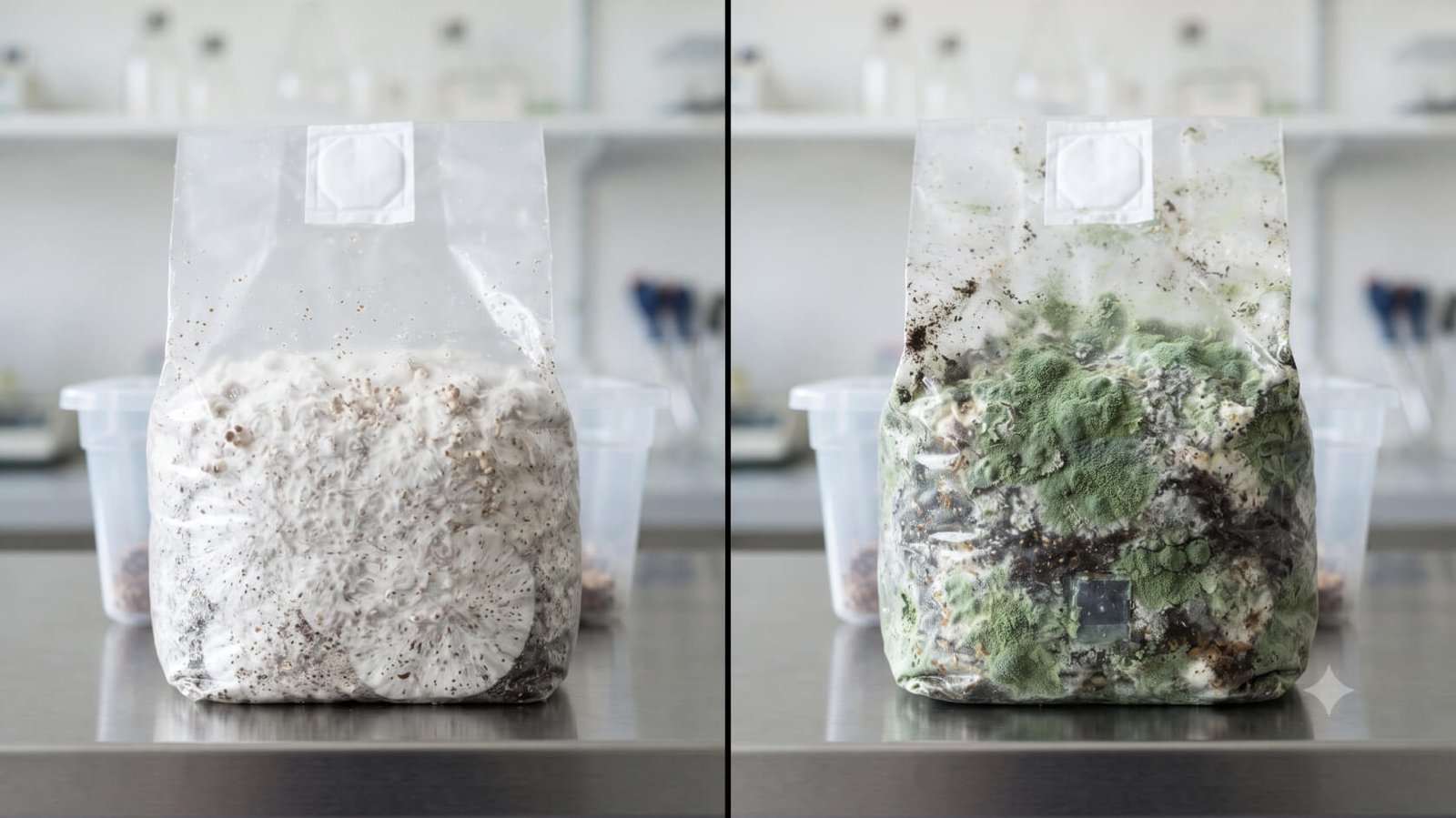
White fuzz is usually healthy mycelium, especially if it is bright white and smells earthy. But white fuzz can also appear when humidity is high or fresh air is low. Oyster mushrooms sometimes develop fuzzy stems, often called fuzzy feet, when they need more air exchange.
|
What You See
|
Likely Cause
|
What to Do
|
|---|---|---|
|
Bright white fuzz on block
|
Normal mycelium
|
Keep following instructions
|
|
White fuzz at stem base
|
Low fresh air / high CO₂
|
Increase airflow
|
|
Thick wet fuzz
|
Too much moisture
|
Mist less, improve air
|
|
Green patch
|
Mold
|
Stop, isolate, contact seller
|
|
Black or orange spots
|
Possible contamination
|
Do not eat, get support
|
|
Sour or rotten smell
|
Contamination
|
Discard safely
|
Kit Not Fruiting
If your mushroom growing kit is not producing mushrooms, common causes include not enough humidity, too much direct sunlight, not enough fresh air, room too hot or too cold, old kit storage, dried block, or incorrect opening. Follow the instructions first. If nothing happens after the expected window, contact the seller with clear photos.
Mushrooms Drying Out
Dry mushrooms on a mushroom growing kit often mean the air is too dry or you are not misting enough. Try misting more often, using a humidity tent if the instructions allow, moving the kit away from fans or heaters, and keeping the block moist but not soaked.
Mold on the Kit
Mold can be green, black, blue, orange, or yellow. It may smell sour, musty, or rotten. If you see colored mold spreading, do not eat mushrooms from that kit. Do not try to save a badly contaminated block. Check the USDA guide on molds on food to understand safety risks, and contact the seller if the kit arrived contaminated or failed early.
Safety Tips Before Eating Homegrown Mushrooms
Mushrooms from a trusted grow kit are usually safe when the kit is healthy and you follow the instructions. But you still need common sense.
- Only grow edible species from trusted sellers
- Do not eat mushrooms from a moldy or bad-smelling kit
- Do not eat unknown mushrooms from your yard
- Do not mix wild mushroom identification with kit growing
- Wash hands and tools before handling the kit
- Cook mushrooms before eating if the species requires it
Ask the supplier if your kit looks unusual
Important: Never eat a wild mushroom unless it has been identified by a qualified expert. Some poisonous mushrooms look similar to edible ones. Always consult a proper species guide or reach out to organizations like the North American Mycological Association.
How to Choose the Best Mushroom Growing Kit
Before buying a kit, ask these questions:
- What mushroom species does it grow? Oyster is usually best for beginners.
- Is it indoor or outdoor? Indoor kits are easier for first-time growers.
- How fast does it fruit? Many beginner kits fruit within 1–3 weeks.
- Does it include instructions? Clear instructions matter a lot.
- Does the seller offer support? A photo support option is useful if something looks wrong.
- What is the expected yield? Small kits usually produce small harvests.
- Does it need special temperature? Some species prefer cooler or warmer rooms.
- Are reviews recent and real? Look for photos from actual buyers.
- Is it a good value? A $20 kit is good for learning, but not always cheap food.
- Is it beginner-friendly? Avoid complicated kits for your first grow.
My Honest Take
If this is your first time using a mushroom growing kit, start simple.
A small oyster mushroom growing kit is the best first step for most people. It grows quickly, teaches you how mycelium behaves, and gives you the fun moment of seeing mushrooms appear from a block.
Do not start with spores if you just want your first harvest. Do not start with chanterelles if you want predictable results. And do not buy a huge setup before you know whether you enjoy the process.
Start with one kit. Learn from it. Then decide if you want to grow more. That is the smartest path for most beginners.
Frequently Asked Questions
Q1: Is a mushroom growing kit good for beginners?
Yes, using a mushroom growing kit is one of the easiest ways for beginners to grow mushrooms at home because the hard preparation work is already done.