
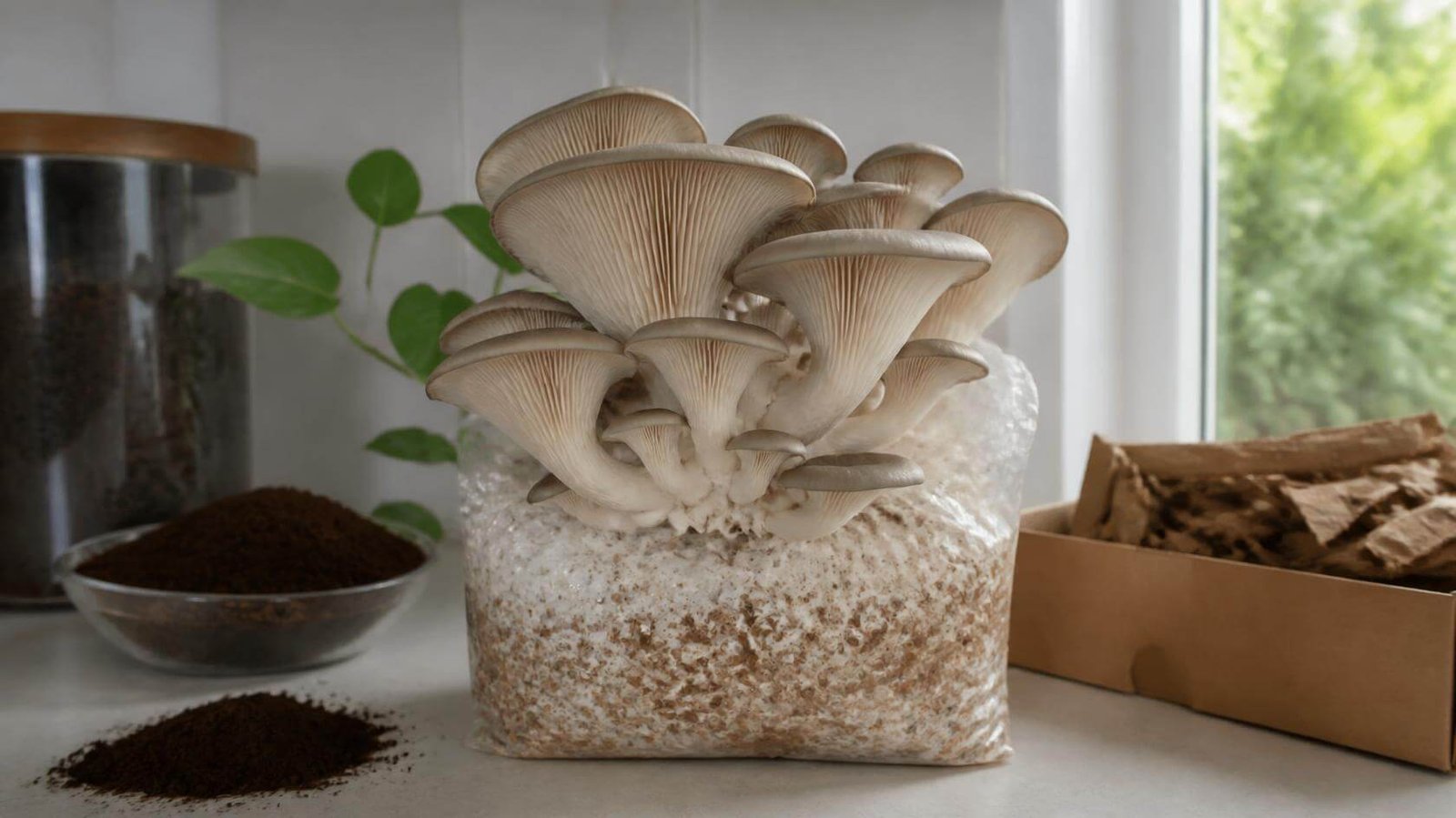
If you have ever thrown away used coffee grounds and thought, “This feels like a waste,” you are not alone. A lot of home growers use coffee grounds, cardboard, and a little oyster mushroom spawn to turn kitchen waste into fresh edible mushrooms. The good news: oyster mushrooms are one of the easiest mushrooms to grow at home. They grow fast, do well indoors, and thrive on simple household materials like straw, cardboard, sawdust, and used coffee grounds.The tricky part? Coffee grounds can mold fast if you handle them the wrong way.This guide shows you how to grow oyster mushrooms at home using coffee grounds and cardboard, with simple step-by-step instructions, harvest timing, safety tips, and common mistakes to avoid. Quick Answer : To grow oyster mushrooms, mix fresh used coffee grounds with clean soaked cardboard in a 2:1 ratio, add oyster mushroom spawn, place the mix in a clean bag or container, keep it warm and dark (65–75°F) for 10–21 days while the mycelium grows, then move it to indirect light and fresh air when pins appear. Harvest when the caps flatten but before the edges curl upward. Quick Facts Scientific Name : Pleurotus ostreatus (Pearl Oyster), Pleurotus columbinus (Blue Oyster), Pleurotus djamor (Pink Oyster) Best DIY Substrate : Used coffee grounds (2 parts) + soaked plain brown cardboard (1 part) Ideal Temperature : 60–75°F (warm, dark room during incubation) Time to Harvest : 2–4 weeks from mixing spawn to first harvest Difficulty Level : Beginner-friendly (low-cost DIY home cultivation) Expected Yield : 1–3 flushes (harvest rounds) per container REAL TEST CASE — : In our own indoor test grows, we compared 100% coffee grounds against a 2:1 coffee-to-cardboard mixture. The 100% coffee ground batch developed green mold (Trichoderma) within 6 days because the grounds packed too tightly and lacked airflow. In contrast, the 2:1 cardboard-mixed batch colonized into a solid, healthy white block in just 14 days and produced three full flushes of pearl oysters. Adding cardboard is the single most effective way to eliminate mold for home growers. What Are Oyster Mushrooms? If you want to learn how to grow oyster mushrooms, you will love that these soft, fan-shaped edible mushrooms grow in overlapping clusters. Recognized for their mild, savory, and slightly earthy flavor, they are a staple in home gourmet kitchens. They are especially popular with first-time growers because they colonize faster than many other mushrooms, thrive on everyday waste materials, perform excellently indoors, and taste incredible in stir-fries, soups, pasta, tacos, and rice bowls. Most home growers start with pearl oyster, blue oyster, pink oyster, or golden oyster varieties. For this DIY method, standard oyster mushroom spawn—particularly pearl or blue oyster—delivers the most reliable results. You can explore more varieties in our detailed mushroom guides. Is It Hard to Grow Oyster Mushrooms at Home? No, it is not difficult to grow oyster mushrooms at home. Among all cultivated fungi, oyster mushrooms are widely considered the absolute best choice for beginners.However, there is one honest warning you need to know: coffee grounds are highly prone to contamination.Because coffee grounds are rich in nitrogen and moisture, mold can take over rapidly if the grounds are old, soaking wet, or handled with uncleaned tools. This is precisely why successful home growers mix coffee grounds with cardboard. Cardboard adds structure, creates vital air pockets, and helps the substrate breathe naturally. If you want the simplest, most foolproof experience, start with a ready-made oyster mushroom grow kit. If you prefer a rewarding, low-cost DIY project, coffee grounds and cardboard work wonderfully when you practice basic cleanliness. Why Use Coffee Grounds and Cardboard? For beginners learning how to grow oyster mushrooms, coffee grounds and cardboard are free, accessible, and complement each other perfectly. Coffee grounds provide essential nutrients and moisture. Plain brown cardboard provides physical structure, cellulose, and air space. Oyster mushroom spawn provides living mycelium that consumes the mix. When enclosed in a perforated grow bag or container, the mycelium builds a robust block that fruits delicious mushrooms from the sides. Using coffee grounds alone is a common beginner mistake—the grounds pack too tightly, trapping moisture and suffocating the mycelium, which often leads to green mold or sour odors. Cardboard balances the mix by allowing oxygen flow. What You Need to Grow Oyster Mushrooms To learn how to grow oyster mushrooms safely at home, gather these basic household supplies before you begin: Fresh used coffee grounds (brewed within the last 24 hours) Plain brown cardboard (corrugated shipping boxes without wax) Clean filter-patch grow bag, food-safe plastic bucket, or container Fine-mist spray bottle filled with clean water Clean disposable gloves and scissors or utility knife 70% rubbing alcohol or hot soapy water for sanitizing surfaces Rubber band or bag clip Need high-quality oyster mushroom spawn for your DIY grow? Get lab-tested, fast-colonizing grain spawn that resists mold. Exclusive Reader Discount – Save $10! Apply Code: LEARNMUSHROOM Shop Arctic Chaga SAFETY ALERT : Do not use glossy, printed, colored, or wax-coated cardboard. Inks and waxes can inhibit mycelial growth or introduce unwanted chemicals. Use plain, non-shiny brown cardboard boxes. Best Conditions for Growing Oyster Mushrooms Understanding how to grow oyster mushrooms successfully requires a precise balance of temperature, moisture, and airflow across two distinct life stages: Incubation (Mycelium Growth) : Warm, dark place (typically 65–75°F / 18–24°C). No light is required while mycelium colonizes the substrate. Fruiting Stage : Indirect ambient light, high humidity (80–90%), and abundant fresh air exchange. Room temperatures around 60–70°F work best. Different oyster species have slight temperature preferences. Blue oysters prefer slightly cooler rooms (60–65°F), whereas pink oysters enjoy warmer conditions (70–78°F). To learn more about environmental variables, read the University of Florida’s research on oyster mushroom cultivation basics. How to Prepare Coffee Grounds Safely When mastering how to grow oyster mushrooms on coffee grounds, preparing your substrate correctly is critical for preventing contamination. Although brewing coffee sterilizes the grounds with hot water, they do not remain sterile once exposed to kitchen air. Mold spores land