
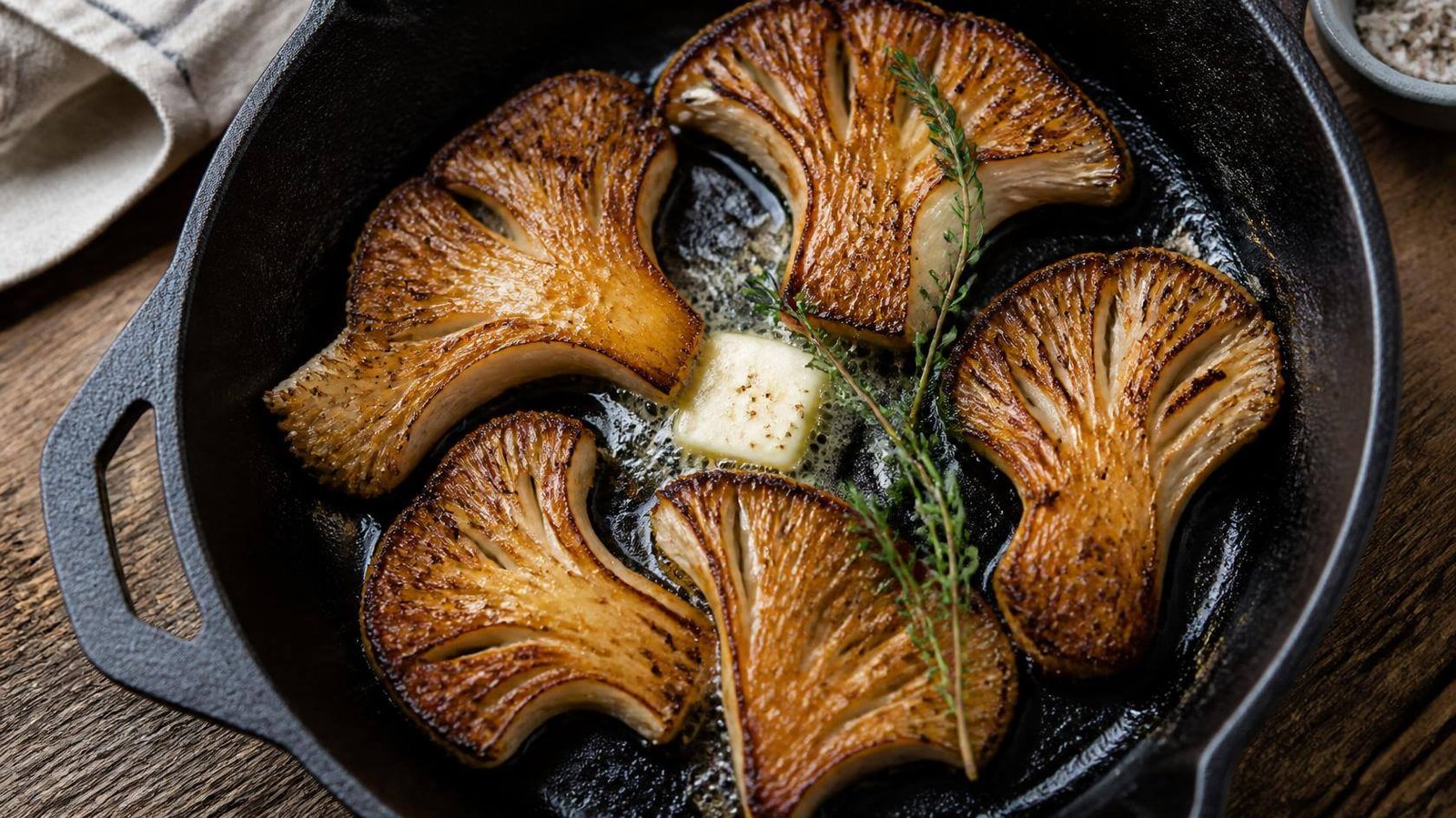
We may earn a commission from links in this post, at no extra cost to you. Learn more To cook lion’s mane mushroom, tear or slice it into ½-inch pieces, sear it in a dry pan first for 4–5 minutes until the water cooks off, then add butter or oil and brown both sides for another 3–4 minutes. Season at the end. That dry-pan step is what separates a golden, crab-like bite from a pale, squeaky mess. Most people skip it. They drop a wet mushroom into hot oil, wonder why it steams instead of browns, and decide lion’s mane is overrated. It isn’t. You just cooked it like a button mushroom. I grew my first lion’s mane in a grow bag on my kitchen shelf, and I nearly drowned it. I kept misting it because I thought more water meant faster growth. It doesn’t. The block stayed soaked, it went bad, and I lost that first flush.The second flush came out fine, and I made the next mistake in the kitchen: I crammed the whole harvest into one small pan. It steamed instead of searing. Gray, limp, squeaky against the teeth. Third time I gave it space and cooked it in two batches. Golden, crisp at the edges, pulled apart like crab meat. Same mushroom, same pan, same butter. The only thing that changed was crowding. Lion’s mane mushroom holds water like a sponge. Every step below exists for one reason: to get that water out before the browning starts. What Does Lion’s Mane Mushroom Taste Like? Cooked lion’s mane mushroom tastes close to crab or lobster — mildly sweet, savory, with a stringy pull that breaks apart in shreds instead of slices. Raw, it tastes like almost nothing, with a damp cotton texture nobody enjoys. The seafood comparison is not marketing talk. The shredded fibers hold butter the same way crab meat does, which is why “lion’s mane crab cakes” became the most repeated recipe on the internet. One warning: an older or overripe head can taste slightly bitter. Fix that in the prep section below. Is It Better to Eat Lion’s Mane Mushroom Raw or Cooked? Cooked. Always. Raw lion’s mane mushroom is not poisonous, but your body cannot break it down properly. Mushroom cell walls are built from chitin — the same fibrous material found in insect shells. Humans do not produce chitinase, the enzyme needed to digest it. Eat lion’s mane mushroom raw and most of it passes through you undigested, often with bloating, gas, or stomach cramps along the way. Heat breaks those cell walls open. Two things happen: It becomes digestible — no more bloating The active compounds become available — hericenones and erinacines, the compounds studied for lion’s mane’s brain benefits, are locked behind chitin walls until heat opens them Research backs this up: a 2022 digestion study in Frontiers in Nutrition found that Hericium erinaceus polysaccharides pass through saliva, stomach acid, and the small intestine largely intact — they only break down once gut bacteria get to them. So cooking is not only about flavor. Skip it and you lose most of the reason you bought the mushroom. 💡 The squeak test: Bite one piece. If it squeaks against your teeth, the chitin has not broken down yet — give it 2 more minutes per side. What You Need Nothing unusual. Five things: 8 oz fresh lion’s mane (about one medium head) 1 tbsp butter — salted works, browns better than oil 1 tbsp neutral oil — avocado or grapeseed, high smoke point Salt — kosher or sea salt, added at the end A cast iron or stainless skillet — nonstick will not give you a crust Optional but good: 1 clove garlic (crushed, not minced), 2 sprigs thyme, a squeeze of lemon. Fresh lion’s mane is worth the hunt, but it is not something most stores carry every week. On the days you cannot find it, a lion’s mane coffee gives you the same mushroom in a form that keeps in the cupboard. How to Prepare Lion’s Mane Mushroom Before Cooking Prep decides your texture before the pan gets involved. Three steps: Step 1 — Do Not Wash It Never run lion’s mane mushroom under the tap. Those soft spines soak up water instantly and hold it, which guarantees a soggy result no matter how hot your pan is. Instead, brush off dirt with a dry pastry brush or a soft kitchen cloth. For a stubborn spot, wipe with a barely damp paper towel, then pat dry. Wild-foraged and genuinely dirty? Rinse quickly, then spread the pieces on a towel and let them air-dry for 20–30 minutes before cooking. Step 2 — Trim the Base Cut away the tough, woody bottom where the mushroom attached to wood or the grow block. It stays chewy no matter how long you cook it. Any yellowed or brown spines come off too — those are the parts that turn bitter. Fresh lion’s mane mushroom is white to cream colored. Yellow means it is aging. Slimy means throw it out. Step 3 — Slice or Tear Both work, and they give you different results: Method Thickness Best for Texture Slice (knife) ½ inch Steaks, sandwiches, side dish Firm, meaty, holds shape Tear (hands) Bite-size shreds Tacos, pasta, “crab” cakes Stringy, shreddy, seafood-like For steaks, cut top to bottom through the head, not across. Cutting with the grain keeps the fibers connected so the slabs hold together in the pan. How to Cook Lion’s Mane Mushroom: Step by Step Total time: 12 minutes. Serves 2. Step 1 — Dry Sear First (4–5 minutes) Heat your skillet over medium. No oil yet. Lay the pieces flat in a single layer with space between them. You will hear a faint hiss and see steam rising. That is water leaving the mushroom. Let it happen. Do not stir, do not press, do not touch. The pieces will shrink by about a third and the surface will go