
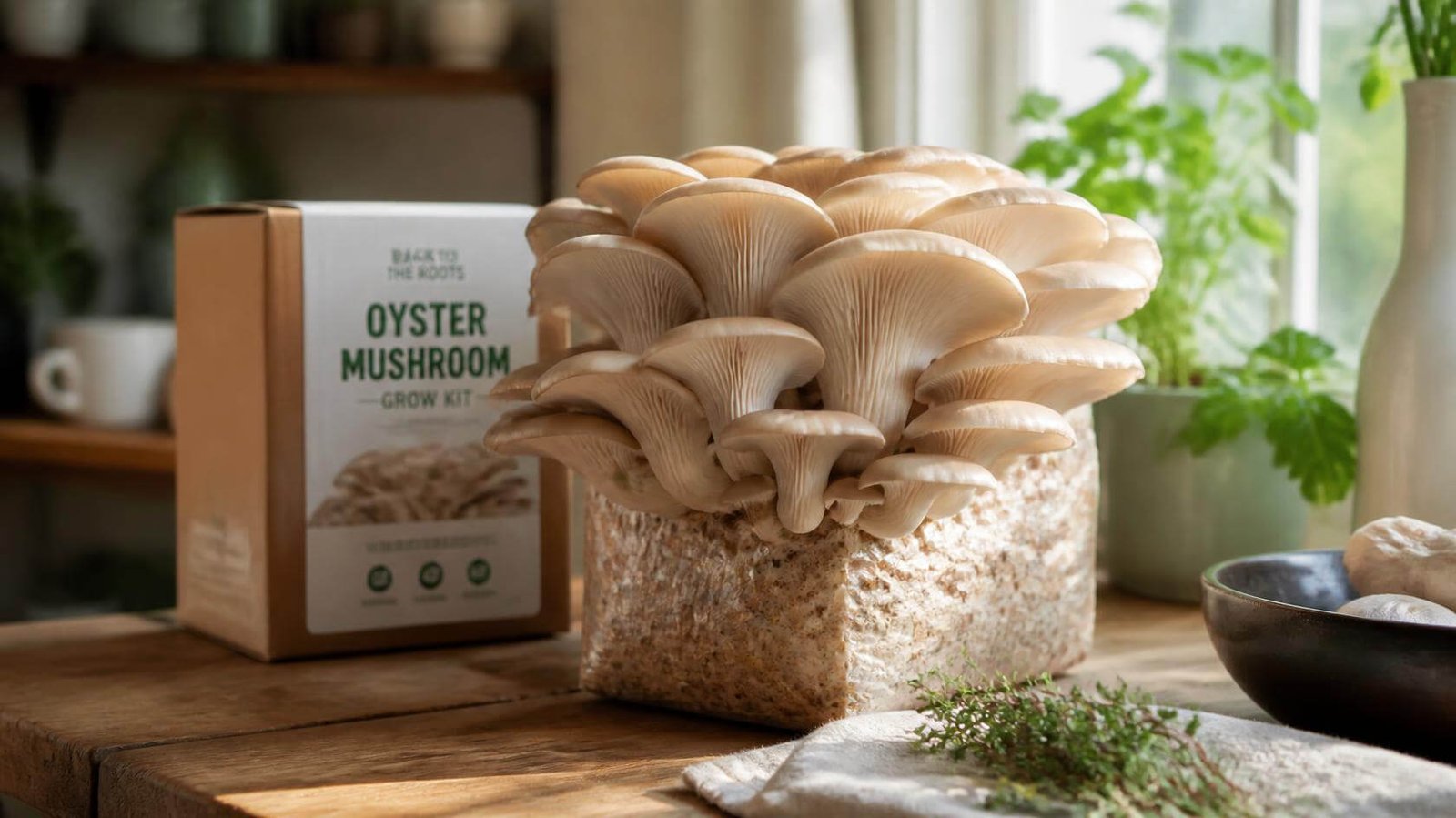
A mushroom growing kit is a ready-to-use setup that helps beginners grow mushrooms at home without starting from spores or building a full growing system. Most kits come with a colonized block, bag, or box that already contains mushroom mycelium. Your job is usually simple: open the kit, mist it, give it fresh air, keep it out of direct sunlight, and wait for mushrooms to appear. For most beginners, a kit is the easiest way to grow mushrooms indoors. It removes the hardest steps, like sterilizing substrate, inoculating grain, and keeping everything contamination-free.When I first looked at mushroom kits, I honestly thought they were all the same. Then I noticed one kit was for oyster mushrooms, another needed logs, and another looked like a science project. That’s when I realized beginners need a simple guide before choosing their first kit.This guide explains how mushroom kits work, which type is best for beginners, how much they cost, what problems to watch for, and whether buying one is actually worth it. What Is a Mushroom Growing Kit? A mushroom growing kit is a beginner-friendly product designed to help you grow edible mushrooms at home. Instead of starting with spores, agar, grain spawn, or homemade substrate, you get a prepared mushroom block that is already alive with mycelium. Mycelium is the white root-like network of the fungus. If conditions are right, that mycelium produces mushrooms. Most home kits are made for easy indoor growing. Some grow from a box. Some grow from a plastic bag. Others come as outdoor log kits, garden bed kits, or larger monotub-style systems. A basic kit may include: A colonized mushroom block A box or bag A spray bottle or mister Growing instructions A humidity tent or plastic cover Harvesting tips Sometimes recipes or educational material The goal is simple: make mushroom growing less intimidating. Are Mushroom Growing Kits Worth It? For beginners, yes — a mushroom growing kit is usually worth it if you want a simple first experience. It is not the cheapest way to grow mushrooms forever. But it is one of the easiest ways to learn how mushrooms behave without buying lab tools, pressure cookers, sterile bags, grain spawn, and substrate. A kit is worth it if you want: A simple indoor project A first mushroom harvest A gift for a food lover or gardener A kid-friendly science activity A low-risk way to try mushroom growing Fresh mushrooms without building a full setup A kit may not be worth it if you want: Large commercial harvests Full control over strain and substrate The lowest cost per pound Advanced cultivation practice Rare mushrooms that are hard to cultivate If this is your first grow, a kit makes sense. If you already know how to pasteurize straw, inoculate substrate, and control humidity, you may prefer a DIY method. What Comes Inside a Mushroom Growing Kit? Every brand is different, but most beginner kits include a colonized block. This block is usually made from sawdust, straw, compost, or another mushroom-friendly substrate. The block already contains mushroom mycelium. That means the kit has passed the hardest stage before it reaches you. A typical indoor kit may include: Item What It Does Colonized block The main growing material Plastic bag or box Holds moisture and protects the block Spray bottle Helps you mist the kit Instructions Shows when to open, mist, and harvest Humidity cover Helps keep moisture around the block Recipe booklet Gives ideas for cooking the harvest Some kits are very simple. Others include more tools. For beginners, simple is usually better. How Mushroom Growing Kits Work A mushroom kit works by giving mycelium the right conditions to fruit. The mycelium inside the kit has already grown through the substrate. When you open the kit and expose it to fresh air, moisture, and indirect light, the mycelium gets the signal to produce mushrooms. The basic process looks like this: Open the kit — Follow the instructions and cut or open the marked area. Mist daily — Most kits need regular misting to stay humid. Give fresh air — Mushrooms need oxygen. Too much trapped carbon dioxide can cause long stems or fuzzy growth. Keep it in indirect light — Mushrooms do not need strong sunlight, but they do need a light cue. Wait for pins — Tiny mushroom pins appear first. Harvest at the right time — Pick mushrooms before they dry out or overmature. A good kit does not need soil like a normal plant. Mushrooms are fungi, not vegetables, so their growing needs are different. Best Types of Mushroom Growing Kits for Beginners Before buying, exploring detailed mushroom guides can help you understand which species best suits your climate and home setup. Oyster Mushroom Kit Oyster mushrooms are one of the best choices for beginners. They grow fast, look beautiful, and usually respond well to basic indoor care. Many beginner kits use pearl oyster, blue oyster, pink oyster, or golden oyster mushrooms. Best for: First-time growers, fast results, kitchen counter growing, kids or family projects. Watch out for: Dry air, not enough fresh air, harvesting too late. Lion’s Mane Mushroom Kit Lion’s Mane is another popular option. It has a unique shaggy look and a mild seafood-like texture when cooked. Best for: People interested in gourmet mushrooms, food lovers, beginners who want something different from oyster mushrooms. Watch out for: Steady humidity, unusual appearance while growing, and browning if too dry. Shiitake Mushroom Kit Shiitake kits can be rewarding, but they may need more patience than oyster kits. Best for: People who like rich, savory mushrooms, growers willing to wait longer, indoor or log-style growing. Watch out for: Longer timeline, more specific care, slower flushes. Button Mushroom Kit Button mushrooms are familiar because they are common in grocery stores. But they are not always the easiest home kit. They usually prefer compost-based substrate and a casing layer. For total beginners, oyster mushrooms may be easier. Reishi Mushroom Kit Reishi is usually grown for tea or wellness use rather than normal